
Growing rules and taste of the Just Maria pear
Content
History of appearance
The "Prosto Maria" pear variety was developed by the Belarusian Institute of Fruit Growing. A team of breeders, led by Maria Myalik, likely the pear's name, worked on its development for over 30 years. The "Maslyanaya Ro" variety, not very popular in our country, and a hybrid form named 6/89-100 were used for the selection. In 2005, the result of many years of work was submitted to state variety testing, and five years later, the new variety, named "Maria," was registered and presented to the world. It was later renamed "Prosto Maria."
General characteristics
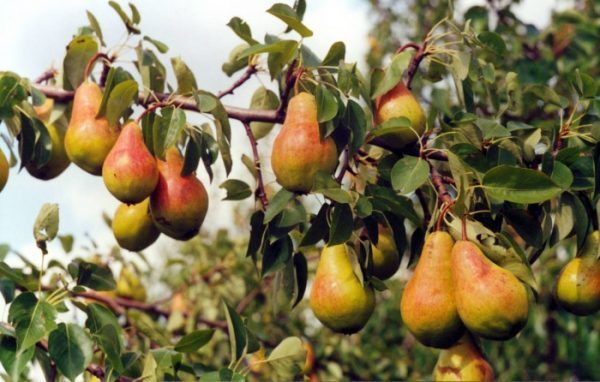
Trees of this variety are short (up to 3 m) and compact. The crown is pyramidal, medium-dense, and reaches 2.5 m in diameter. The main branches are arranged almost at right angles to the trunk, with few offshoots, and the ovaries develop primarily on the spurs and rings. The rich green leaves have a simple oval shape, without serrations or pronounced veins.
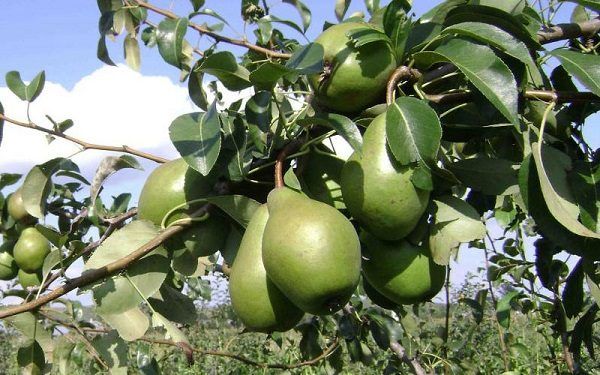
The fruits are quite large (180–200 g), with a uniform pear shape. The skin is smooth, without roughness, greenish-yellow, turning a rich yellow as it ripens and becoming covered with a diffuse pink blush on one side. The flesh is creamy or slightly yellowish, medium-firm, oily, and finely grained. The fruit has a very sweet flavor with a subtle tartness, due to its high sugar content.
The Just Maria pear tree begins to bear fruit early – 3–4 years after planting. Considering the trees' small size, the yield can be considered high. A mature tree produces 30–40 kg of fruit annually, and with good care, this figure can reach 50 or even 60 kg. The variety is distinguished by excellent frost resistance and self-healing properties. The plants can withstand temperatures down to -38°C, and even after freezing, they quickly recover.
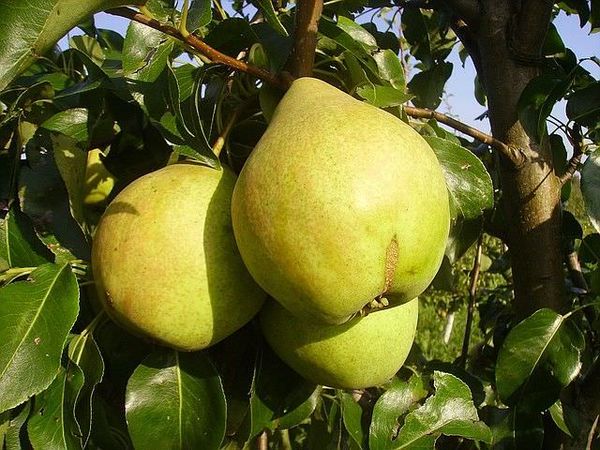
The Maria pear is a late-ripening variety. The fruits reach harvesting maturity in October, and the consumption period begins in early November. The harvested crop can be stored in a cool place for about three months, during which time the pears' flavor only improves. Ripe fruits can be used for preserves.
Planting and care features
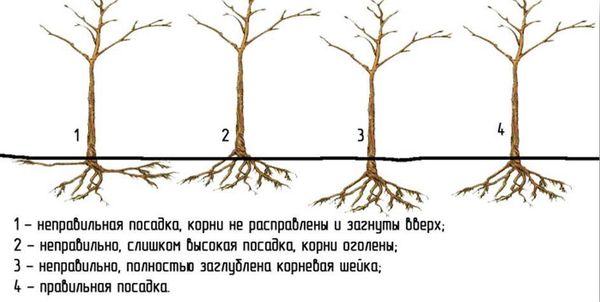
Pear tolerates light shade, but a sunny site at a slight elevation, away from groundwater, is preferable. Given the variety's good winter hardiness, seedlings can be planted in the fall, with the planting holes prepared about a month in advance. If planting in the spring, the holes should be prepared in the fall, adding peat, humus, and a mineral fertilizer.
The trees aren't demanding when it comes to soil—the main thing is that it's at least somewhat fertile. The soil should be neutral or slightly acidic, but not alkaline. Pear tree care involves the following processes:
- watering - regular and frequent in the first year, then 3-4 waterings per season;
- fertilizers, starting from the fruiting period: in spring – nitrogen, in autumn – potassium and phosphorus, during the formation of the ovary – a urea solution (0.4%) to improve the taste of the fruit;
- crown formation (shortening the central shoots) and sanitary pruning.
To avoid frequent loosening of the trunk area, the soil under the tree is mulched. For the winter, the trunk should be wrapped in a thick material to protect it from rodents.
Advantages and disadvantages of the variety
When describing the variety's pros and cons, it's worth first highlighting the exceptional taste of the fruit, which earned a tasting score of 4.8. However, some find the dessert pear's flavor too sweet. Other advantages include:
- excellent presentation and a very long shelf life of fruits;
- good yield;
- small tree sizes, allowing for saving useful space on the site;
- early fruiting – after 3–4 years, while other varieties require at least 5–6 years;
- resistance to frost and many diseases.
The variety has virtually no drawbacks, if you ignore gardeners' comments that when cold weather returns, the pear tree often sheds its flowers and ovaries.
Pollination and reproduction
The "Prosto Maria" pear, as the description suggests, is partially self-fertile. This means it requires nearby pollinators to maximize its yield. But these trees are unique in that any stone fruit growing in the garden can be used for pollination. The only requirement is that they should bloom at the same time, and it's best if they are planted close to each other.
Pear is propagated by grafting, layering or cuttings.
The most effective method is green cuttings. They can be planted under plastic or in a greenhouse. Optimal rooting conditions include a temperature of 20–25°C and ample watering at least 2–3 times a day.
Grafting onto rootstock is a bit more complicated and requires knowledge and skill, but layering is easy even for a novice gardener. Select the lowest branch, make several cuts in the bark, bend it to the ground, and pin it down. In about a month, with regular watering, the shoot will root, and the new plants can be transplanted.
Pest and disease control
The Maria autumn pear variety has good immunity to many diseases. However, in unfavorable weather (rain, fog), especially if the pear is grown near other fruit trees, it can be susceptible to fungal diseases. The most common of these are scab, septoria leaf spot, and bacterial canker.
These diseases share a common origin, so the preventative measures are the same: 2-3 treatments with antifungal agents during the season. In the spring, before bud break, spray the branches with a solution of Nitrafen (300 g/10 l of water). Immediately after flowering, and then 2-3 weeks later, treat the crown with a 1% solution of Bordeaux mixture. And don't forget to promptly remove and burn fallen leaves, as they carry fungal spores.
Video "Reproduction of fruit trees"
This video will show you how to propagate fruit trees.