
What diseases cause pear leaves and fruits to turn black?
Content
Main reasons
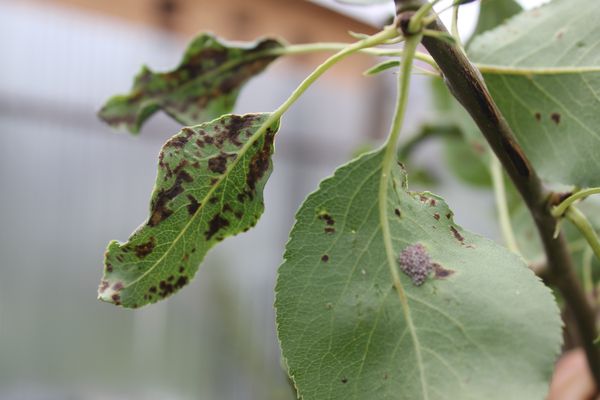
Browning of pear tree leaves can be a confusing situation for novice gardeners. This condition can have various causes. Before you begin treating your tree, it's important to understand the underlying cause.
Mistakes in care
Often, discoloration and leaf deformation can be caused by poor tree care. Insufficient nutrients can even cause branches to take on an unnatural shape, causing the pear tree to lag behind in development and lose its healthy appearance.
If the color of the leaves changes starting from the edges of the leaf blade and moving to the top, it means that the tree lacks calcium. When watering the pear tree, fertilize it with calcium nitrate every second time to restore its normal condition.
Boron deficiency manifests itself through slow deformation of young seedlings. In this case, the disease can be treated by applying boric acid. This helps promptly replenish the micronutrient deficiency and restore the tree's immunity.
Pear leaves also curl due to dry air. If your region has low humidity, the foliage may lose its natural appearance due to the constant heat. In this case, drip irrigation will help. Don't have access to it? Then you can sprinkle the garden twice a day.
Insect invasion
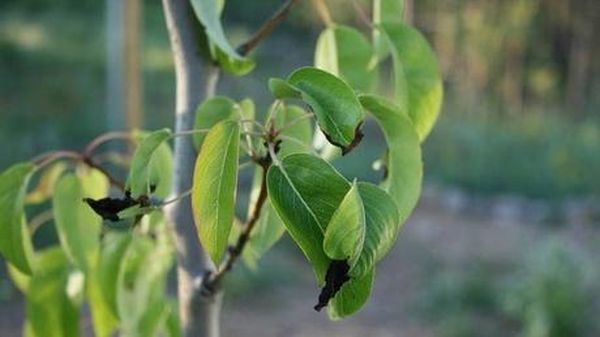
Black spots on pear leaves are often caused by pests. The most common causative agent is aphids. These small insects feed on the tree, causing the pear leaves to curl and turn black.
The leafhopper is a dark-colored winged insect that feeds primarily on young leaves. This deforms branches and causes flowers to fall off. The parasitic larvae leave behind a sticky mass that harbors sooty mold.
The pear gall mite is a pest that's not easy to spot. The parasite hides in tree buds and emerges with the onset of warm weather, covering young foliage with black spots.
Scab
Scab is a common fungal disease of fruit trees. It can affect leaves, shoots, flowers, and fruit. Its causes include:
- Weather conditions. An excessively humid climate creates favorable conditions for the development of the disease;
- Variety instability. Some pears (Forest Beauty, Phelps, etc.) are more susceptible to this pest;
- Plant age. Old-growth and young trees are at risk.
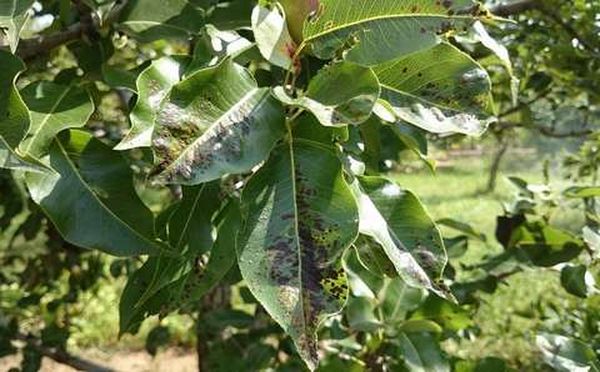
Fallen leaves are a breeding ground for scab spores. They remain there during the winter, so it's highly recommended to remove all fallen leaves in the fall. The disease reaches leaves through cracks in the bark. It multiplies quickly and is very difficult to eradicate, so prevention is easier. This can be accomplished by treating trees with Bordeaux mixture in the spring.
Fire blight
Pear bacteriosis is one of the most dangerous diseases, which can completely destroy a tree without proper treatment. Bacteria multiply in the tree's vascular system, penetrating every corner of the plant. Signs of bacteriosis include:
- blackened leaves and branches (outwardly the blackening looks like a trace of fire);
- pear tissue necrosis;
- falling of leaves, flowers and fruits.
The pest enters the plant through cracks in the bark and spreads through the vascular system. Gardeners can also spread it by using infected tools on healthy trees.
If you neglect a bacterial infection, you will almost certainly lose the tree. Rapid spread of the disease can cause significant damage to the garden and crops.
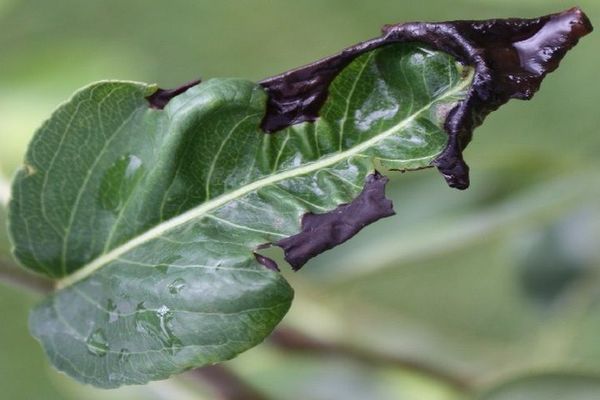
This disease causes pear leaves and fruit to turn black, with the first signs noticeable around June. During this period, a characteristic brown discoloration of the leaf margins appears. Excessive fertilizer may be one cause. There are also reports that late-ripening pears, overloaded with fruit, are also at risk.
The most obvious signs of bacterial infestation can be seen during hot periods. Then, leaves curl and shoots turn black. The tree literally dies before your eyes.
Tree treatment
Once you've determined why your pear tree's leaves are curling and covered in black spots, begin treating the plant immediately. What and how should you treat trees? Treatment depends on the specific condition.
Scab, for example, is quite resistant to destruction. To combat the fungus, you need to remove all affected green matter. It must be cut off and burned. This is best done in the fall.
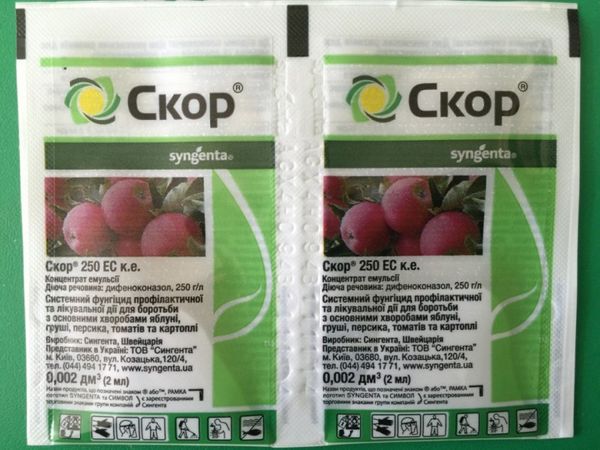
After this, treat the affected plants to kill the pest spores. In this case, you can use products such as Skor, Horus, Agat-25K, and others. Bordeaux mixture is also a good option. Don't forget that pear trees need fertilization. A comprehensive approach will help get rid of the pest most effectively.
What should you do if aphids are causing blackening of pear tree leaves? In the early stages, spraying with soapy water, celandine, or an onion-garlic infusion can help. Advanced cases can be treated with products such as "Tornado," "Karate," and others.
Bacterial infestation can be eliminated by cutting off the blackened parts of the plants. Apply a copper sulfate solution to the cut areas. The crown of the plant should then be treated with one of the following antibiotics: rifampicin, streptomycin, or gentamicin.
If these methods fail to save the affected trees, they are cut down and burned to prevent the spread of the disease. All vegetation within 3–5 meters of the affected tree is also destroyed.
Prevention
Now you know why pear tree leaves turn black and how to combat it. It's worth noting that the easiest way to treat tree diseases is to prevent them rather than treat them.
Prevention can be carried out by the following actions:
- seasonal crown pruning;
- ensuring sufficient space for each plant to grow;
- feeding trees with mineral fertilizers.
These simple processes will help keep your garden healthy and ensure you have a bountiful harvest.
Video: "Pear Tree Leaves Turn Black"
This video will show you how to treat a pear tree whose leaves are turning black.