
How to properly plant and care for a columnar pear tree
Content
How to choose a seedling and a planting site
Planting a columnar pear must be preceded by the correct selection of seedlings and a suitable growing location.
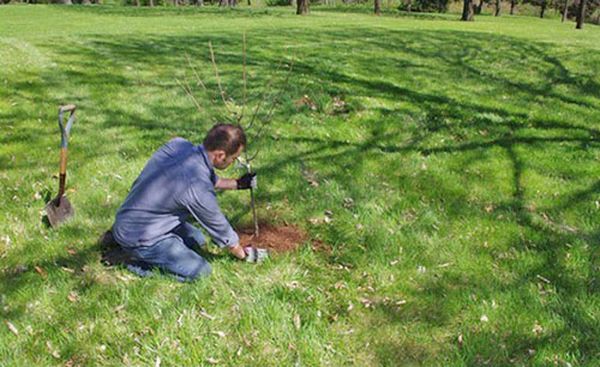
Purchase seedlings from a reputable nursery. Avoid buying planting material from untrusted sources or untrusted sellers, as this can result in a diseased tree or the wrong variety.
When purchasing, consult with the seller about the tree variety and care instructions. Remember that the columnar pear variety should be suitable for your region's climate, soil requirements, and garden plot size.
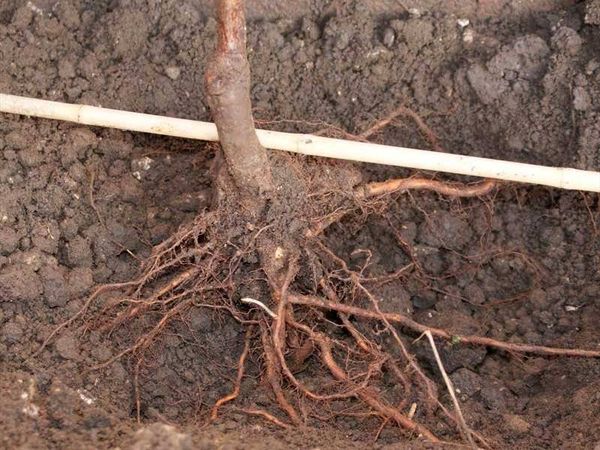
When purchasing a tree, you'll be asked to dig the seedling out of the ground so you can inspect its root system. At this point, it's important to carefully inspect the entire rhizome for parasites, signs of rot, or other diseases. Also, pay attention to the entire trunk: if you scrape the bark with your fingernail, you should find a green, fresh surface. The seedling should be free of leaves, dead shoots, or rotten branches.
Purchase one-year-old columnar pear seedlings, as older planting material does not take root well in a new location.
The next step should be determining where to plant the pear tree and how to prepare the soil for planting.
According to farmers, dwarf pear varieties are undemanding in terms of both planting site and soil. However, due to their small size, planting pears in windy areas is not recommended, as strong gusts can break or knock over young trees. For northwestern regions, it's recommended to choose the sunniest spot on the plot; in the south, pears can benefit from light shade. It's also important to remember the dangers of close groundwater, which can lead to root rot.
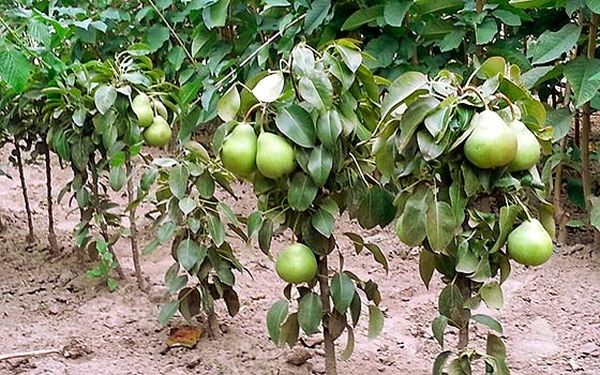
This pear tree variety tolerates almost any soil, even clay soil. However, the soil must be nutritious, with a moderate hydrogen ion content. To prepare the soil, weed it in the fall and add compost. If the soil is too acidic, add wood ash.
Preparing the hole and the planting process
It's best to plant pear trees in spring, in late April or early May, when there's no risk of frost. The seedlings are pre-soaked in a solution of water and potassium sulfate for 24 hours. Then the roots are dried and examined for the last time.
Planting a dwarf pear tree isn't particularly difficult. To allow the soil to settle, planting holes should be dug at least a month in advance (or even in the fall). The hole should be no more than 70 cm deep and no more than 60 cm wide. The distance between trees can be as small as 50–60 cm, but it's best to leave at least a meter between rows.
Pour 10 liters of water into the hole and add a layer of sand and compost. The soil removed from the hole is mixed with a small amount of compost, superphosphate, and potassium fertilizer. The seedling is then placed in the hole, the roots are carefully spread out, and a layer of prepared soil is added, leaving 5 cm of the root collar exposed. After this, the planted tree is watered with 15 liters of water, and the soil around it is firmly tamped down.
After planting, a wedge up to 70 cm long is installed next to the future tree, to which the trunk is tied.
Watering and fertilization requirements
Caring for a columnar pear begins with developing a watering schedule. On cool days, the soil can be watered once every 5-6 days; in winter, the frequency should be reduced to once every 12 days. In spring and summer, the frequency increases to eight times a month, and in hot weather, the tree is watered every two days. The amount of water depends on the tree's age, but it should be no less than 5 liters and no more than 15 liters.
To help the soil retain moisture longer, mulch it with a mixture of wood ash, compost, and straw. To ensure adequate oxygen supply to the roots, loosen the soil weekly. Mulching is also beneficial in winter, as it helps protect the roots from freezing.
There are two irrigation technologies that a gardener can choose at his own discretion.
The first technique involves watering into a hole around the trunk. This method delivers moisture directly to the root system.
The second method is considered more effective, although it requires larger volumes of water. There's a concept called the "feeding area"—it's drawn as a circle and represents the area of the root system's growth. For younger trees, the radius is 70–80 cm, while for older trees, it can reach 130 cm. Applying water across the entire feeding area ensures even nourishment for the tree's roots.
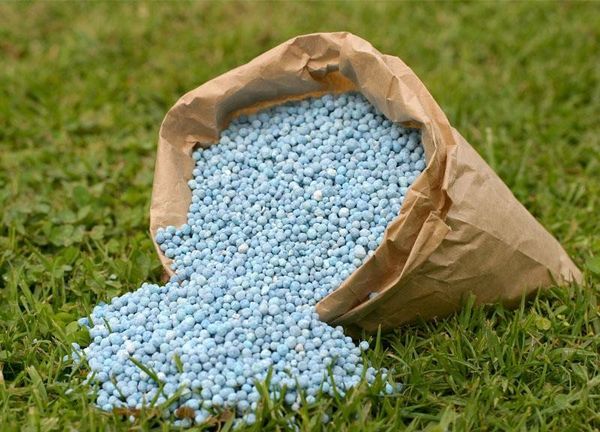
Caring for a columnar pear also includes fertilizing. This can be applied in either solid or liquid form. Five fertilizing sessions are recommended for dwarf pears throughout the year:
- The first feeding is done in early spring and should consist of humus and nitrogen fertilizers, which promote the development of greenery.
- After the green leaves appear, a solution of 10 g of urea and 2 liters of water is added.
- The third feeding is made from the same composition, but is applied 2 weeks after the last one.
- For the fourth time, a composition of urea and water is applied 4 weeks after the last feeding.
- For the fifth time, in mid-to-late summer, phosphate and potassium fertilizers are applied to promote fruit formation.
Pruning a columnar pear
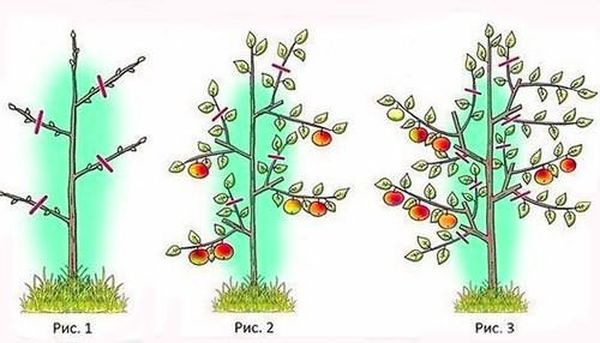
Pruning of columnar pears should be done in the spring, before the tree begins to sap. Spring pruning involves removing dead, diseased, and old branches, as well as any overcrowding.
During spring pruning in the first year after planting, remove all flowers, as the tree must devote all its energy to root development and establishment. The following year, a few flowers can be left. A harvest can be expected in subsequent years.
Pruning is done with an oblique cut, removing weak shoots growing from one bud, and shortening the branches by 1/3.
To ensure a bountiful harvest, excess shoots should be trimmed annually, and after the plant has been alive for 20 years, special attention should be paid to removing dying branches.
Protection from diseases and pests
To grow a healthy fruit tree, it must be properly cared for, protected from diseases and pests.
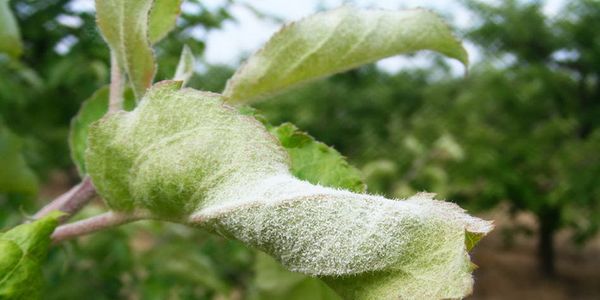
First and foremost, proper preventative care should be ensured. Overwatering the tree is highly undesirable, as excess moisture can lead to root rot. Fallen leaves, dry branches, and rotten fruit should be regularly removed from around the pear tree. This is especially important in the fall, when parasite larvae hide and overwinter in the dry leaves. Spraying the trees with a copper sulfate solution is also helpful as a preventative measure.
To protect a pear tree from freezing, it needs to be prepared for winter. To do this, the soil around the trunk is mulched and covered with spruce branches, and the trunk is wrapped with roofing felt or thick fabric.
The most dangerous pests of dwarf pears include aphids, spider mites, codling moths, and leafhoppers. Timely cleaning of the area around the tree and, if infestation occurs, insecticide spraying will help prevent their occurrence. Insecticides and removal of infected parts of the tree will also help combat diseases (scab and powdery mildew).
To combat insects and rodents, strong-smelling herbs are used and planted around the pear tree.
Video: "Pear Tree Care Details"
This video will show you how to properly care for a pear tree.