
What to do and why are pear tree leaves turning yellow?
Content
Main reasons
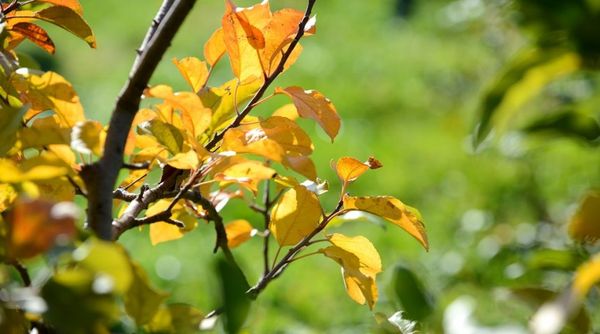
In spring, pear trees usually delight owners with all shades of green—from light green to deep emerald. If, instead, the pear tree's leaves turn yellow, become spotted, wrinkled, blackened, and fall off, it's time to sound the alarm. There could be several possible causes:
- improper planting or care of the tree;
- unsuitable or insufficiently nutritious soil;
- lack of fertilizers, nutrients and macronutrients;
- bacterial infections and fungal diseases;
- uncomfortable climatic conditions;
- pest attack.
Fertilizer deficiency
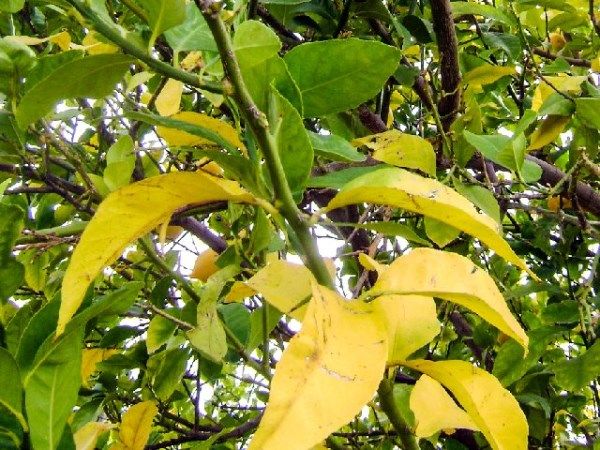
First of all, yellow leaves can be a sign that there is not enough potassium in the soil. In spring, the deficiency doesn't manifest itself, but in summer, the processes intensify and the first signs appear. A lack of iron and magnesium can also cause yellowing. These elements are involved in photosynthesis and chlorophyll production. The appearance of the leaf will tell you what the pear tree is lacking: a pattern of yellow dots indicates low magnesium levels, while yellow leaves on young trees indicate iron deficiency.
Mosaicism
Another reason why pear leaves turn yellow and dry out could be a viral disease. Some pear varieties are highly resistant to this disease, but most trees are not immune. The infection can be transmitted by contaminated tools during planting, grafting, or pruning. Pests, particularly aphids, can also carry the infection.
Incorrect watering
Drought resistance is one of the pear tree's strengths. However, prolonged hot weather and lack of precipitation can cause the plant to stop receiving nutrients from the soil, even if you regularly fertilize it. The root system becomes depleted and can no longer perform its primary function. It's important to remember that overwatering is also detrimental to the tree: the root system gradually rots, leading to rot and a high risk of fungal infections. Spraying and watering pears in warm, sunny weather can cause leaf burn.
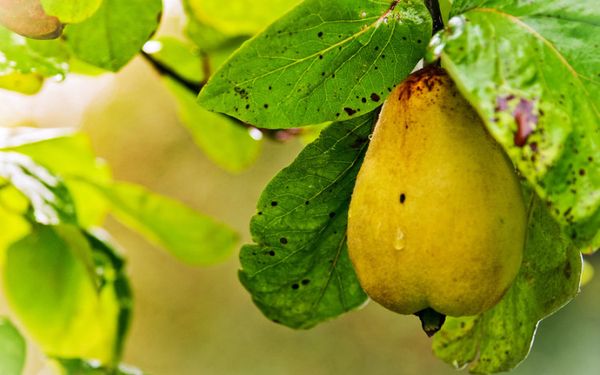
One of the most common reasons why pear tree leaves turn yellow in May is night frosts. If the variety isn't frost-hardy enough, the problem is inevitable. Rodents and hares can also cause irreparable damage to the tree, especially young ones, by gnawing at the bark.
Solution to the problem
Once the source of the problem has been identified, it's important to address it and prevent its recurrence. Otherwise, disruption to photosynthesis will not only result in foliage loss but also prevent the pear tree from forming fruit buds and properly preparing for winter. In the spring, the consequences will impact the tree's flowering and fruiting.
Iron deficiency in the soil can easily be remedied with foliar iron fertilization. However, preventative measures against iron deficiency can also be taken. To do this, periodically (in spring and fall) treat the pear tree with a solution of ferrous sulfate or Bordeaux mixture.
If the soil in your region is highly acidic, the tree will likely suffer from a magnesium deficiency. Therefore, it is recommended to feed the tree with wood ash, dolomite flour, and mineral fertilizers. For best results, apply a liquid potassium-magnesium fertilizer, which is more readily absorbed.
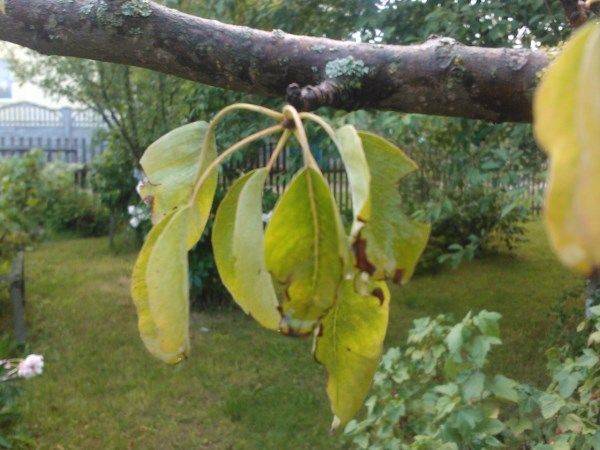
To prevent the pear tree from suffering from drought in the absence of precipitation, it should be watered once a month. Young trees require more frequent watering. Hot weather and sandy or sandy loam soil also require increased volume and frequency of watering. In hot, windless weather, sprinkler irrigation is recommended. It's best to spray the plant in the evening: the moisture will be absorbed well with minimal evaporation, and the leaves will dry without sunburn.
As soon as you notice the first signs of mosaic disease, the damaged areas should be immediately removed and burned, and the remaining branches treated with Bordeaux mixture. The disease is quite difficult to treat, and the tree typically dies slowly. To prevent infection of other trees, if a large portion of the pear tree is infected, it is best to burn the entire plant. However, it is possible to control the virus carrier—aphids. To do this, preventatively treat the plant with insecticides and a solution of tar soap and tobacco. It is also important to disinfect the tools used for pruning and grafting.
Remember: if your pear tree's leaves turn yellow and fall before autumn, it's a distress signal. But why risk it? Provide the tree with proper care and expect a bountiful harvest.
Video: "Leaves Turning Yellow on Apple and Pear Trees"
This video will tell you what to do if the leaves on your fruit trees turn yellow.