
Why does pear tree bark crack and how to fix it?
Content
Causes of cracking
First, let's look at the reasons why the bark on pear trees cracks.
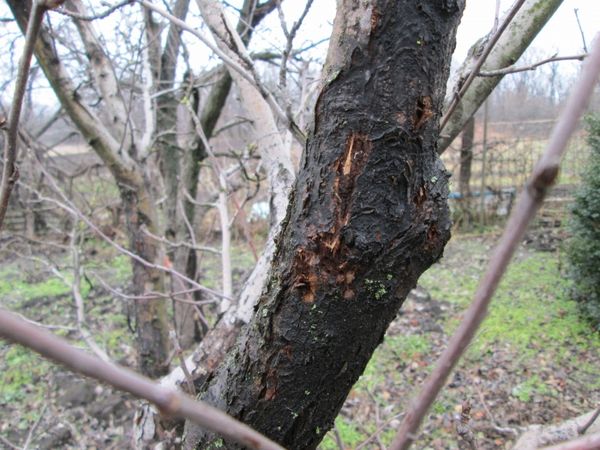
Freezing
Bark often cracks due to frost, especially during snowless winters. Sudden temperature changes and high humidity are dangerous: during a thaw, water droplets get into microcracks, and when the temperature drops again, the water turns to ice and expands, causing the bark to crack.
In addition, when heated, the trunk and bark themselves expand; when it gets cold, the bark contracts faster than the trunk, and, like clothing that is too tight, tears appear on it (so-called frost cracks).
This process can be repeated several times, increasing the damage. Frosts and variable winters are especially dangerous for non-regional varieties.
The problem may be caused by overfeeding with nitrogen fertilizers, which stimulate the growth of young shoots in late summer and fall. The shoots don't have time to strengthen before the cold weather sets in and eventually crack due to frost.
Insects and fungi
The bark beetle, which eats the bark, can cause the peeling of the bark. Furthermore, many insect pests overwinter in cracks or lay eggs there, causing further bark peeling.
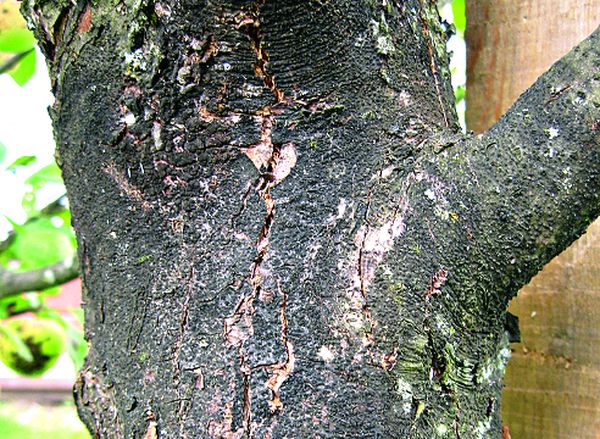
Often, pear tree bark peels due to a fungal infection: once a small wound is penetrated, the infection begins to eat away at the tissue. This causes the trunk to become covered in black spots. In advanced cases, the bark peels off and even comes off in chunks.
Sunburn
Bark can crack due to sunburn in winter or early spring. Cold, clear days when the dark trunk is exposed to direct sunlight are especially dangerous. Areas damp from recently melted snow are particularly susceptible.
What to do with damaged bark
What to do if the bark is cracked?
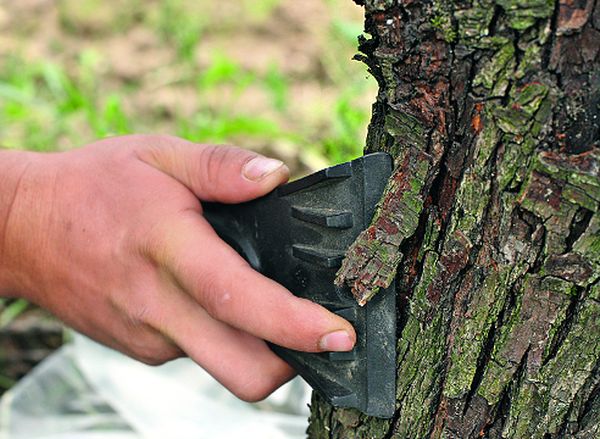
First, the cracked trunk should be cleaned down to healthy tissue with a sharp, well-disinfected garden knife. Allow the wound to dry slightly, then treat it with Bordeaux mixture (1–3%), an antifungal agent, or iron sulfate. After this solution dries, cover the wound with garden pitch or make a slurry of clay and mullein (1:1). Finally, apply a breathable bandage made of cotton or burlap.
Some experts recommend treating a cracked trunk with sorrel: apply a thick layer (up to 2 cm) of crushed fresh leaves to the previously cleaned area and tie it off. Repeat the procedure 3-4 times during the summer.
If damaged bark isn't addressed promptly, the crack can develop into a cavity. In this case, remove all rotting wood, treat the wound with copper sulfate, and completely seal the hole with clay or cement.
Take care of the tree's mineral nutrition - this will help it restore its cover faster.
Prevention of cracking
The appearance of cracks can be avoided if preventive measures are taken in time.
From frostbite
A good protection against frost cracks is provided by bindings that “cushion” temperature changes and protect the trunk from drying wind and sun.
Many gardeners use regular newspapers for tying—they allow air to pass through well and prevent the bark from freezing or rotting. They should be wrapped in several layers. Spunbond or lutrasil tapes can also be used. It's advisable to cover both the trunk and the primary branches. This is especially important for varieties with low frost resistance, whose bark is prone to cracking in winter, and for young seedlings.
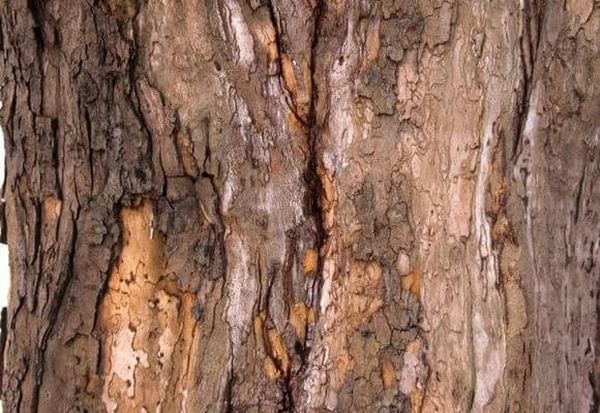
Grooving is a good preventative measure against cracking. This procedure is necessary for trees seven or eight years old and is performed in the spring. Using a sharp, clean knife, make two or three intermittent cuts on the north side of the trunk. Each cut should be no more than 12 cm long (to avoid exposing wood), with gaps of 2–3 cm between them. The total length of each cut is 1.5–2 m. The cuts are quickly covered by young, elastic bark. This reduces tension in the bark and, among other things, prevents cracks from occurring due to temperature fluctuations.
From fungus and sunburn
To protect your pear tree from the harsh winter sun, whitewash the trunk and skeletal branches with 20% lime slurry. To ensure the whitewash lasts as long as possible, add a little clay to the solution.
Preventative treatments with fungicides or copper sulfate will protect the pear from fungus and harmful insects.
To combat bark beetles, between snowmelt and bud break, treat with pesticides such as Calypso, Antizhuk, and Confidor. After flowering, spray with insecticides such as Clipper, Bifentrin, and Krona-Antip.
When treating with preparations, special attention should be paid to scratches and cracks, even small ones.
Video: "How to Combat Gum Flow"
This video will tell you what gummosis is and how to deal with it.