
Rules for transplanting a pear tree to a new location in spring
Content
When is a transplant needed?
Pear trees can be replanted in spring or fall. If replanted in the fall, the tree will have time to establish roots before frost, and by spring, new shoots will emerge. In warmer weather, the plant may go dormant later. For this reason, it's best to replant the pear tree in late October or even early November. Young trees are replanted in the spring.
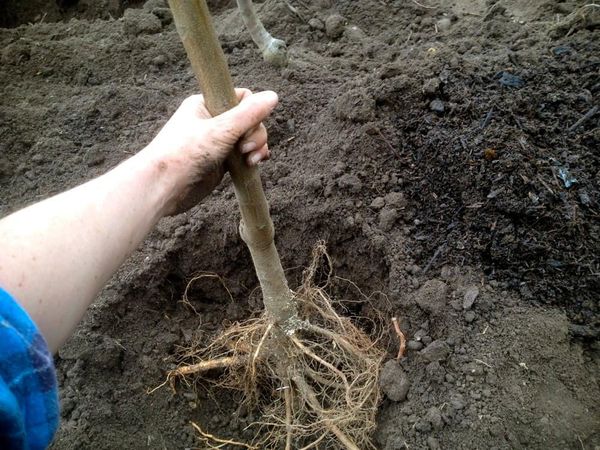
Many beginning gardeners ask: is it possible to transplant a plant in winter? The answer is yes, but only if the climate is mild. Furthermore, the tree must be mature. However, it should be remembered that the older the plant, the worse it tolerates transplantation. Two- or three-year-old seedlings take root well. Pear trees can be transplanted at a more mature age, but only if they are up to 15 years old, and only if the tree is healthy.
Site requirements and pit preparation
Choosing a site for replanting a pear tree is a very important task; if it's not done well, the plant may not survive. Pear trees already don't tolerate root disturbance, which is inevitable when relocating. This plant doesn't tolerate groundwater and requires full sunlight. The tree should be planted at least 4 meters (13 feet) away, or preferably 5 meters (16 feet) from other trees and structures. Pear trees thrive in solitude, although other pear trees can be planted nearby for cross-pollination.
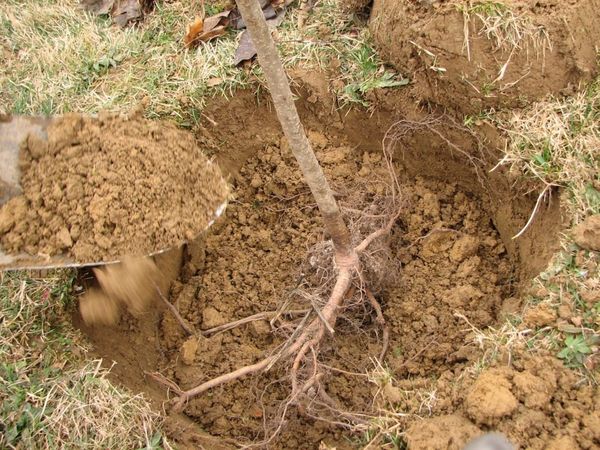
The planting hole is prepared in advance, at least 30 days in advance, if the transplant will be carried out in the fall.
If you decide to transplant your pear tree in the spring, prepare the hole in the fall. A couple of weeks before digging the hole, dig the entire area. In loose soil, dig up to 80 cm deep, and in clay soil, up to 120 cm. The width should be 60–70 centimeters. In clay soil, add drainage material to the bottom of the hole to prevent the roots from getting wet. Then add fertilizer and fill the hole with alkaline water. Leave the hole for about a week.
Planting a tree
Before replanting a pear tree, it needs to be dug up. Let's talk about how to do this correctly to minimize stress on the tree. In the spring, dig up the soil around the crown and prune out any intruding roots:
- if the tree is less than 5 years old, a circle is dug around the trunk at a distance of 70 cm from the trunk, and a lump of earth is formed in the shape of a cone;
- a trench 50 cm wide is dug around the lump;
- roots that extend beyond the boundaries are cut off.
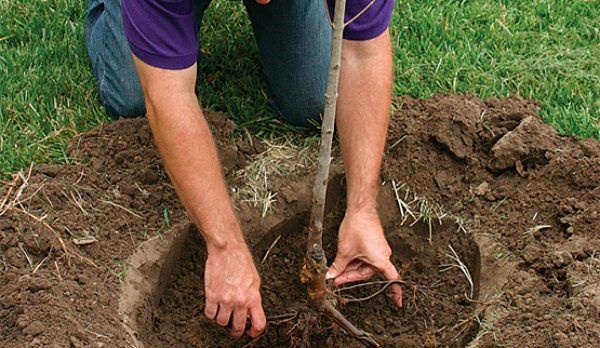
The tree has been removed. Now it's time to figure out how to properly replant the pear tree. First, soak the roots in soft, clean water. It's best to plant early in the morning and out of direct sunlight. When lowering the plant into the hole, make sure the root collar remains above the soil. Lightly bury the roots and add a few buckets of water. Apply mulch. In hot weather, water the tree every two weeks.
Aftercare
Properly replanting a pear tree is only half the battle. The transplanted tree needs care to ensure its survival. If the transplant was done in the spring, it will require special attention throughout the summer. In late May and early June, the pear tree should be fertilized with a special solution. In extremely dry weather, the plant needs to be watered generously. Pruning should only be done in August.
Minimal growth after transplantation is observed only during the first year, and then the pear tree will develop normally.
Video “Transplanting a fruit tree”
This video will show you how to properly transplant a fruit tree.