
How to effectively combat scab on pear trees
Content
Reasons for occurrence
Interestingly, the pathogen that causes this fungal disease reproduces by spores. This process is most active in the spring. Wind carries the spores, which can even reach your pear tree. Temperature also plays a significant role. Typically, scab spore reproduction is more active when the air humidity is relatively high and the temperature is above 20°C.
Treating scab is not necessary for a pear tree owner. However, if the tree is weakened after winter, the bark is cracked, some branches are broken, or the plant produced a generous harvest last season and is therefore depleted, learning how to combat scab is essential.
It may be that you've already treated the tree last fall or summer, but infected leaves still remain on the tree. Even though they've fallen with the onset of cold weather, the pear scab on them persists. If you don't properly clean up your orchard, the same problem will befall you next spring.
Signs of the disease
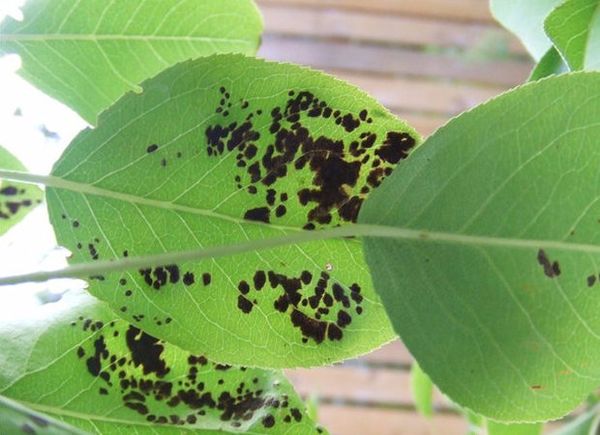
Sometimes the symptoms of a fungal disease on a plant can be difficult to detect. This isn't the case with pears. Scab is noticeable, so you can diagnose this condition by looking for the following signs:
- brown spots appear on ripe fruits;
- Over time, brown spots with an oily coating also cover the tree's leaves;
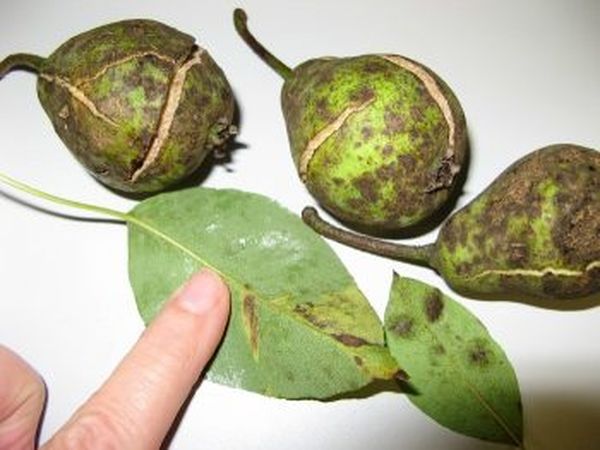
- On an infected tree, the fruits stop developing normally, their shape becomes distorted, and they look unattractive;
- If a plant suffers from a fungal disease from the beginning of spring, the diseased tree may simply drop any flowers or ovaries;
- The bark on affected shoots cracks. Characteristic swellings also appear, indicating that the fungal mycelium has begun actively reproducing. If the first signs of swelling and cracking are visible on pear shoots, they should be destroyed immediately, as treatment with pesticides is unlikely to yield any significant results.
Before deciding on treatment options to get rid of scab on your fruit tree, carefully inspect it and confirm that you're dealing with this fungal disease. It can be cured, but treatment should be started as soon as possible.
Treatment methods
How can you completely get rid of scab on a pear tree? If you've encountered this problem, it's worth carefully considering all possible treatment options. Many rely solely on store-bought products. They are potent, so treating your pear with them will definitely produce the desired results.
However, chemicals aren't always the best solution if the fruit plant is severely weakened or the disease is in its early stages. Therefore, traditional methods are a good alternative. We'll discuss the advantages of these methods below.
Chemicals
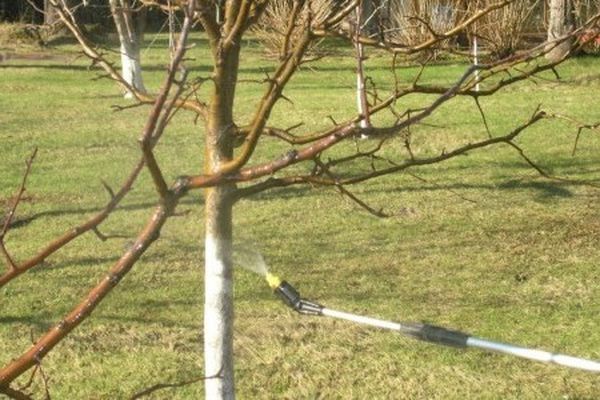
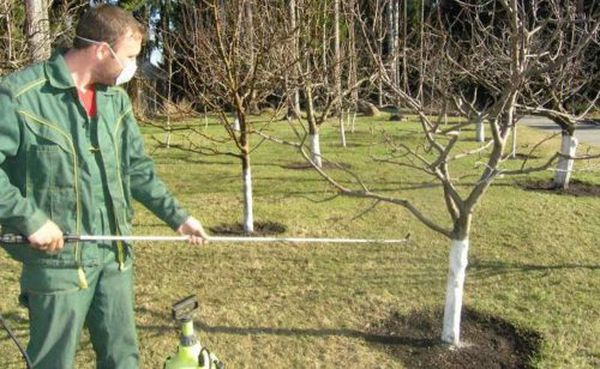
Treating pear trees in the spring with store-bought products should only be done if the tree has suffered extensively from a fungal disease. The best spray depends on your preferences and budget. The best option is to purchase several different chemicals and treat the trees with them one at a time. Among the most common products are Topsin M, Merpan, Horus, and Tridex.
Sometimes experienced gardeners prefer to treat pear trees for scab in the spring with mineral fertilizers. For example, a 10% solution of ammonium nitrate or potassium salt will not only rid your pear tree of scab but also enrich it with beneficial minerals. Remember: stop treating the plant at least three weeks before harvest.
Folk
Treating pear scab in spring or summer is quite possible, and not only with professional treatments. Chemicals are best used as a last resort, when the plant is so damaged that folk remedies are ineffective against this fungal disease. However, if the pear is only partially affected, folk remedies are highly likely to help.
Among the most common mixtures suitable for treating pears are mustard powder, horsetail, table salt, and potassium permanganate. Of course, these home remedies won't work as quickly as chemicals. Their main advantage is their environmental friendliness.
Preventive measures
You can also treat your pear tree for scab in the spring as a preventative measure. Don't assume that just because your fruit tree wasn't affected by the fungal disease last season, it will be fine next year. Spraying the tree is essential, as fungal spores can spread from neighboring areas. In addition to preventative treatment, consider several effective measures to combat scab:
- The choice of location for planting a pear is of great importance - it should be spacious, well-lit and ventilated;
- Regularly inspect the tree for broken branches or cracked bark - this is a favorable environment for the development of fungus;
- weakened branches must be removed, and it is recommended to treat the cut areas with a special agent;
- fallen fruits should be collected immediately, since the fungus can initially settle on them;
- With the onset of cold weather, begin a "general cleaning" of the garden - all leaves and branches that have ended up on the ground must be removed.
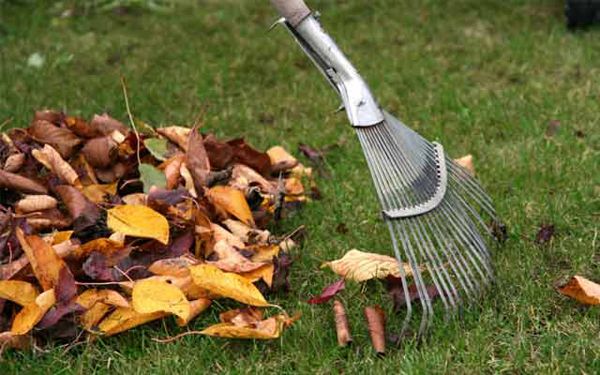
Take preventative measures, and the treated pear will delight you with healthy fruits free of any pests.
Resistant varieties
To avoid scab treatment altogether, you can purchase pear varieties that are highly resistant to this disease. Belorusskaya Pozdnyaya, Annushka, Yanvarskaya, Rusanovskaya, and Orlovskaya Krasavitsa pear varieties do not require scab treatment because they are resistant to the disease.
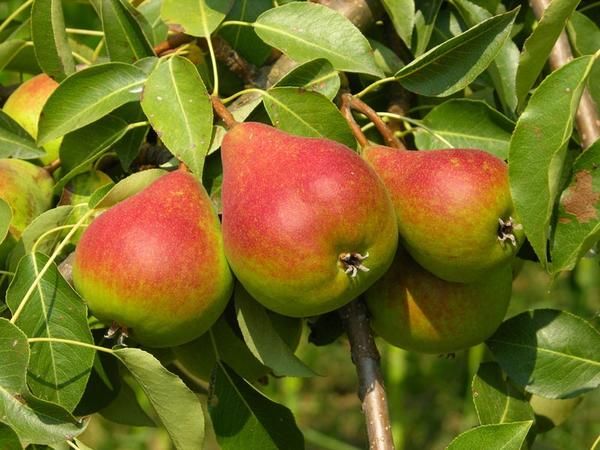
However, there's no 100% guarantee that even these varieties won't be affected by fungal disease. Therefore, prevention is a must for every gardener. Take it seriously: spray your pear tree in the spring to ensure that full, healthy fruit forms and ripens on the tree during the summer.
Remember that scab is a disease that can cause significant damage to a fruit tree.
It's best to begin treatment as soon as possible, but it's even better to spray the plant as a preventative measure. Only then can you be sure your pear tree won't be harmed by fungal disease.
Video: "Fighting Scab on Pear Trees"
In this video, an expert will explain how to treat pear scab.