
Description and cultivation of the autumn pear variety Otradnenskaya
Content
History of origin
This variety was created by crossing the popular Lesnaya Krasavitsa and Tema pears, which boast excellent characteristics. The pear tree was born at the Moscow Agricultural Academy, and its "parents" were renowned breeders S. P. Potapov and S. T. Chizhov, creators of many popular pear varieties. The tree is cultivated in the central and northwestern regions.
Description and characteristics
The tree is a medium-sized, standard-type tree with a spreading, moderately dense, heavily foliated crown. The crown shape changes as the plant grows: initially funnel-shaped, then oval. The bark is a rich gray, and the branches are also gray in a lighter shade. The skeletal branches form a right angle to the trunk. The shoots are thin, flexible, and brown. New shoots form rarely and grow slowly. However, buds emerge frequently and are vigorous. The leaves are small, elongated oval in shape, smooth and thin, slightly concave inward.
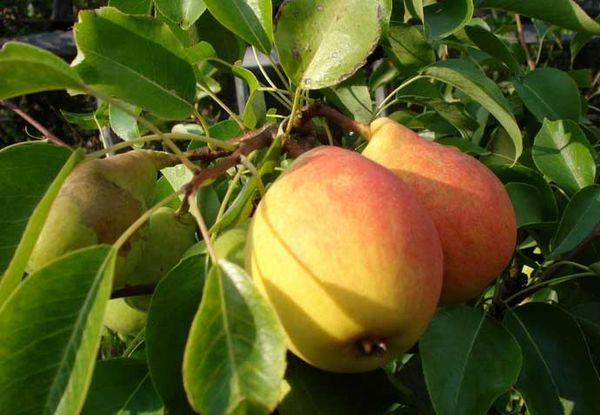
The racemose inflorescence consists of 5–7 medium-sized flowers. The buds are dense, with closed petals and white color. The fruits are medium-sized, weighing approximately 100 g. They are oblong-round in shape, resembling a low jug. The skin is thin, with a smooth, matte surface and slight subcutaneous granulation.
The pears are a rich light green with a deep red blush. The flesh is quite tender, creamy, and has a subtle aroma. The fruit is sweet with a pleasant tartness. The pears aren't particularly juicy. However, for many pear lovers, this isn't a problem. And it's a big plus for transportability. The fruits can be stored for about 4 months.
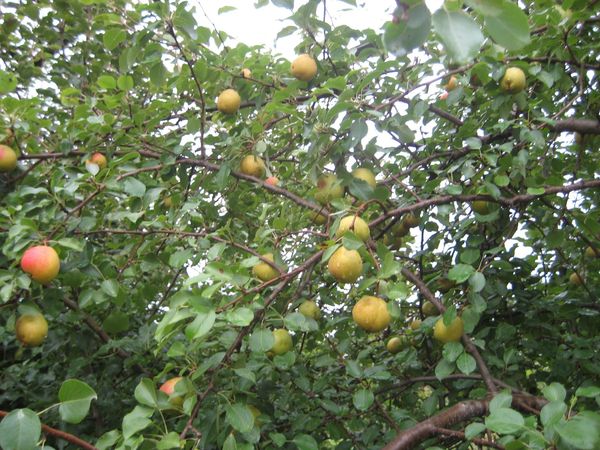
This self-fertile variety begins bearing fruit quite early. To improve yield, it is recommended to plant it among suitable pollinators. It bears fruit regularly, consistently, and generously. The fruits ripen in the last ten days of September. Due to their small size, the fruits practically do not fall off. It tolerates adverse weather conditions well and is frost-resistant. It is resistant to scab and fungal infections.
Features of cultivation
Otradnenskaya can be planted in either spring or fall. It's best to purchase seedlings in containers, so they can be planted at any convenient time when weather conditions are favorable. Experienced gardeners recommend spring planting, as the tree may fail to establish itself or may lag in development in the fall. If you purchased the seedling in the fall, this isn't a problem: simply bury it in a cozy spot and cover it for the winter.
One of the most important steps in planting a pear is choosing the right location. A well-chosen location is key to a healthy tree and abundant fruit production. The Otradnenskaya pear variety isn't known for its vigorous growth and development, but it should be planted so that it isn't crowded by other trees. The seedling also requires adequate light and good ventilation, but no drafts.
Make sure that neither buildings nor other mature trees shade the young pear tree, otherwise the crown will form incorrectly. There are no special soil requirements, but the main thing is that it is not depleted or dry.
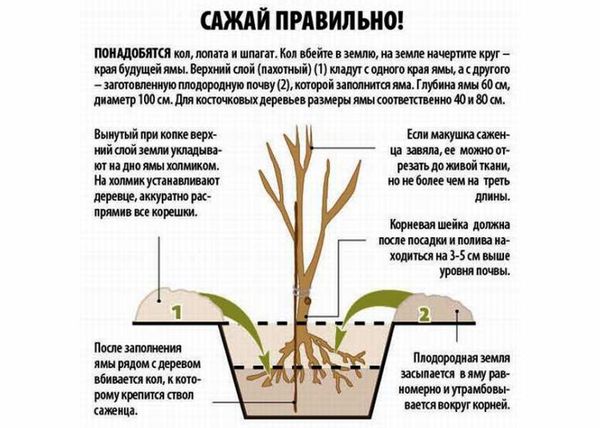
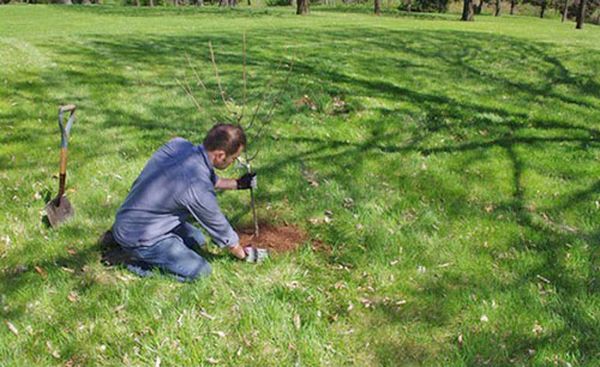
Planting Otradnenskaya pears is no different from planting other varieties. A two-year-old sapling is best. The tree is placed in a hole that needs to be prepared in advance: moisten the soil and apply fertilizer. Then, the sapling is carefully covered with soil, not compacting it, but also leaving no air pockets. A small mound is made on top and compacted. It's important to remember that the root collar should remain above ground. Finally, the young tree is tied to a support and watered generously into the groove around the trunk.
We mentioned the variety's resistance to pests and diseases earlier. However, preventative measures are always a good idea. In early spring, before buds form, the pear tree should be treated with a 10% ammonia solution to protect it from pests and viruses and disease vectors. Insecticide treatments are recommended before and after flowering to prevent spider mites, flower beetles, and codling moths.
It's also important to monitor the health of the tree's bark, promptly removing rotten and dead branches and fruit. Damaged areas should be protected and treated with a copper sulfate solution. Promptly removing weeds, moss, lichen, and damaged parts of the tree will prevent the development of parasites and fungal spores.
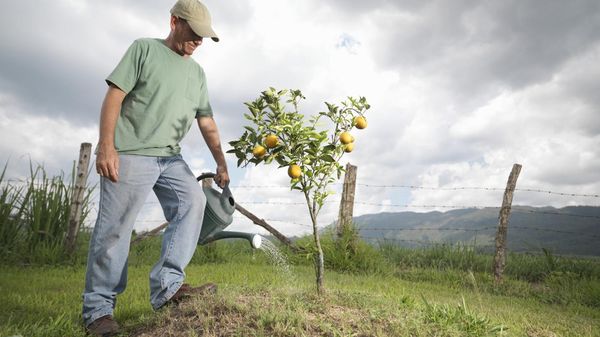
The pear tree is watered as needed, based on the amount of precipitation - a young tree more often, and an adult tree less often.
The soil around the plant should be loosened periodically to allow moisture to be absorbed more quickly. It's important not to overwater, as pear trees do not tolerate excess moisture. Fertilizers are applied seasonally. In spring, organic and mineral fertilizers are used, and nitrogen is also recommended to promote vigorous growth of young shoots.
In the fall, to prepare the tree for winter, it should be fed with a potassium-phosphorus complex fertilizer. Early pruning is done to shape the crown. However, regular sanitary pruning should be performed later, ensuring the tree's rejuvenation, crown ventilation, and access to light at all levels of the tree.
Advantages and disadvantages
The only downside to this variety is the fruit's taste. However, its advantages, such as high transportability and yield, frost resistance, early fruiting, and disease resistance, completely outweigh these.
Video: "Rules for Watering a Pear Tree"
This video will show you how to properly water a pear tree in your garden.