
How to plant and grow the Yakovleva Autumn pear variety
Content
Description of the tree and fruits
The tree of this variety is easily recognizable by its description: very large, spreading, growing up to 15 meters tall, it has strong skeletal branches and twisted, dark-brown shoots that droop as they mature. The crown is quite sparse, and can have a wide, pyramidal or highly rounded shape. The pear tree's leaves are medium-sized, with a pointed tip and serrated edges, slightly curved along the central vein, as if about to curl in half. Fruit forms on fruiting twigs and rings.
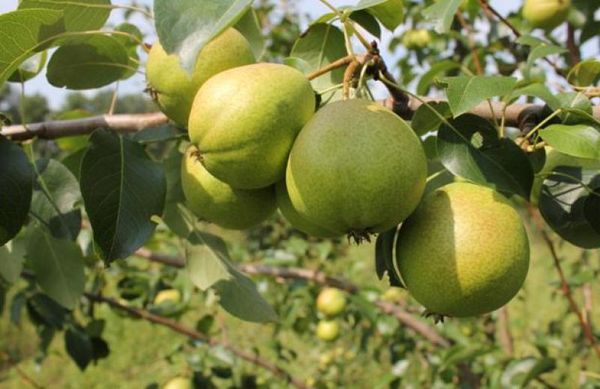
This variety is self-fertile, but a yield can be achieved without special pollinators. However, the yield will be higher if other varieties are planted nearby. Cross-pollination with varieties such as Avgustovskaya or Lada is beneficial, but not essential.
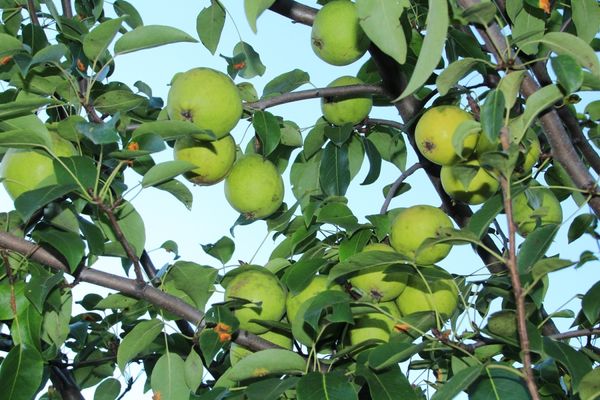
The fruits ripen in the second half of August; if the summer is cool and rainy, the harvest is collected later, in September. The ripeness stage is characterized by a green color with a slight blush on one side. Pears typically weigh approximately 150 g, but can be larger—up to 250 g. They have a traditional pear shape or a rounded diamond shape.
After some time, the fruits reach consumer maturity, turning yellowish-green with a diffuse red blush and brown spots beneath the skin. The flesh acquires a delicate, melting consistency, and the pears become juicier and sweeter, slightly reminiscent of the Bera variety. They can be stored in a cool place for up to 3 months.
The late-ripening Osennyaya Yakovleva pear is characterized by good drought tolerance and moderate frost resistance. It can withstand temperatures as low as -25°C, and a mature tree can even withstand temperatures as low as -32°C. However, experienced gardeners recommend covering the trees for the winter. Fruiting begins at age 5.
Planting seedlings
Plant pear trees in the spring, as soon as the weather permits, or in the fall, a month before frost. The soil should be nutritious, not too heavy, slightly acidic, and have a good water table. Choose a sunny location, leaving up to 12 meters between seedlings.
A planting hole is dug 50–70 cm deep and up to 1 m in diameter, with a stake driven into the center. A drainage layer of pebbles and walnut shells is placed at the bottom, then a mound of fertilized soil is added, topped with regular soil from the hole. The seedling is placed, the roots are spread out, covered with soil, the soil is compacted, the trunk is tied to the stake, and watered thoroughly.
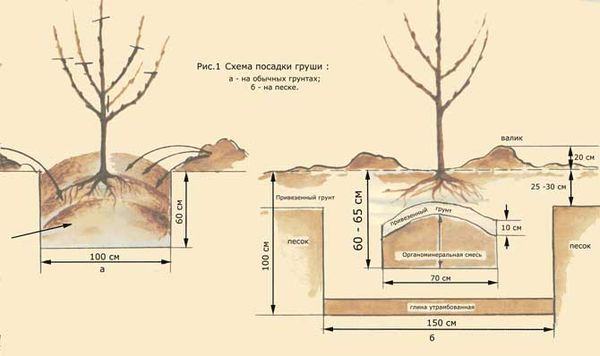
For bare-root seedlings, trim off any leaves and damaged or unhealthy roots before planting. The root collar should be level with the ground after planting.
Proper care
At first, the young tree grows in moist soil, watered frequently, mulched, and periodically fertilized with organic matter. Pruning is done annually in March to shape the crown and stimulate new growth.
In spring and autumn, the trunk is whitewashed; in winter, the trunk circle is covered with a thick layer of mulch; the trunk is wrapped or the entire tree is covered with non-woven material or spruce branches.
A mature tree is fed with mineral and organic fertilizers and watered several times per season. In spring and fall, it is treated with Bordeaux mixture and copper sulfate.
Pros and cons of the variety
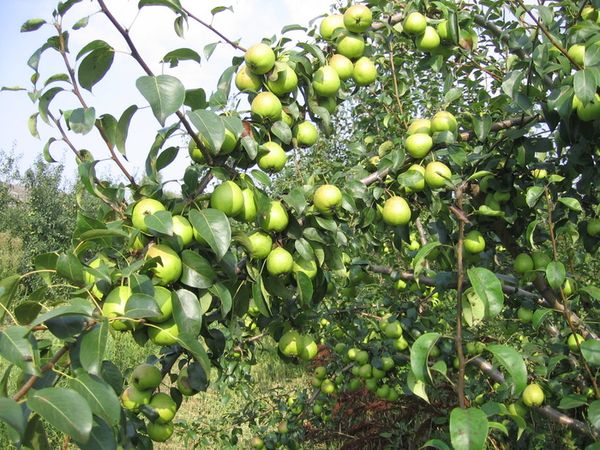
The main advantages of this variety are its excellent fruit flavor, good shelf life, and consistently high yields. Its ease of care, low maintenance, and ability to withstand periods of drought without damage, as well as its cold tolerance, are also undeniable advantages.
Disadvantages often considered include the tree's large size and the need for annual proper pruning, which, if done incorrectly, can lead to excessive crown density or uncontrolled branch growth. A major drawback is its susceptibility to scab. Many complain of a delayed onset of fruiting.
Diseases and pests
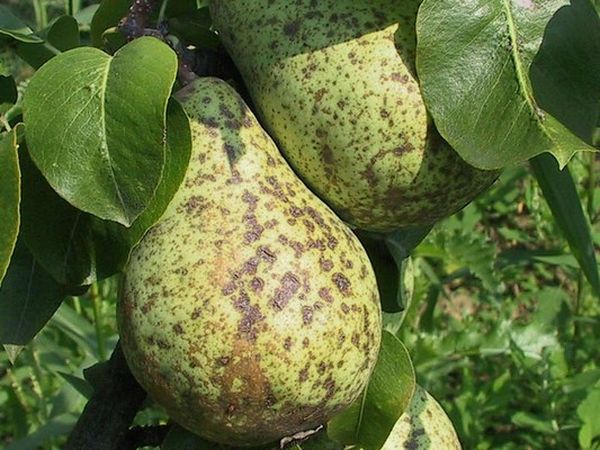
The variety description emphasizes that the pear is resistant to many traditional diseases, but is susceptible to scab, black canker, and white leaf spot. Bordeaux mixture is used to combat scab, and trees are also treated with it if light spots appear on the leaves. If the bark begins to crack and becomes vulnerable to fungal attack, it is treated with copper sulfate.
Pears are often infested by aphids. These small pests feed on the sap of leaves and young shoots, and can destroy the tree. When the first insects appear, the tree should be treated with a solution of garlic infusion mixed with laundry soap. A wormwood infusion can be helpful in combating the pear codling moth. Small rodents often try to settle at the base of the trunk, feeding on the tree's bark and roots. They can be repelled by treating the trunk with copper sulfate and wrapping it with spruce branches.
If the tree receives proper care, all the necessary fertilizers for healthy growth, and fallen fruit and plant debris do not accumulate around the tree, then diseases and pests will not disturb the pear.
Video: "Pear Tree Planting Guidelines"
This video will show you how to plant a pear tree in your garden.