
Why doesn't a pear tree bloom after winter and how to save it?
Content
When should a pear tree blossom?
Bud development begins during winter. Gradually, the buds burst, turning first green and then white. The first flowers on pear trees begin to appear in early spring. This depends on the climate zone and tree variety.
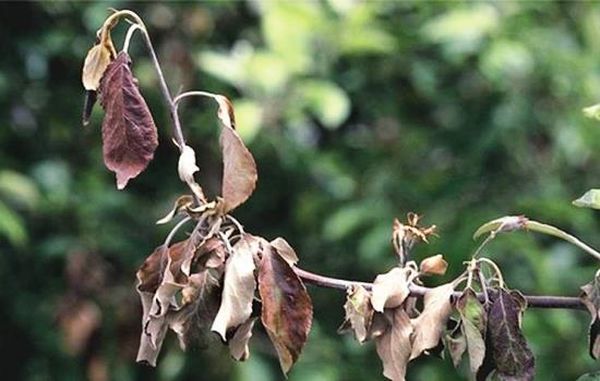
If you planted your pear tree a couple of years ago and it still hasn't started blooming, don't worry. Flowers often appear on pear trees in their fifth or sixth year.
What should you do if a tree that used to bear fruit has died? How can you protect the rest of your garden and revive the plants that are still in good health? First, it's important to understand what's causing the drying out.
Main reasons
There can be various reasons for a pear tree to dry out. Much depends on weather and climate conditions and the plant's care. The plant's resilience and overall appearance depend on the tree's age, variety, and soil quality.
Defects in care and planting
Pear trees require more careful planting than apple trees. They thrive on hillsides or slopes. The plant loves loose soil into which water and air easily penetrate. The tree also requires a sufficient amount of water.
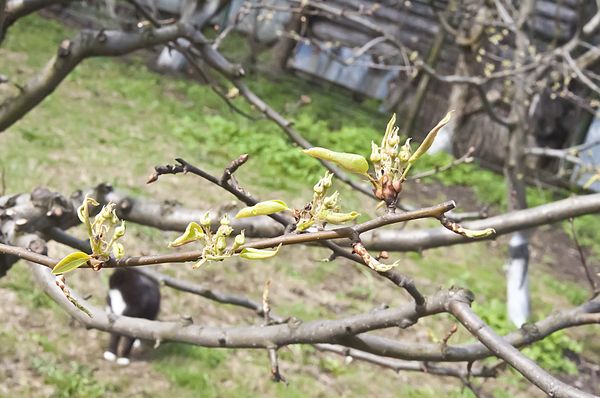
To ensure the soil receives the seedling well, it needs to be prepared. In the fall, the area should be evenly fertilized and dug over. Lime should be added to acidic soil. The planting hole should be 0.9–1 m wide and 0.5–0.6 m deep.
When preparing the hole in the spring, ensure the transition from the trunk to the root is 3–5 cm above ground level. The pear tree can freeze if the root collar is too exposed. Therefore, if it protrudes, be sure to cover it with soil.
Weather and climate conditions
A pear tree can also dry out due to various environmental factors. If the pear tree's leaves and small branches are dry, it means something is wrong with the tree's root system. Excess groundwater may be the cause.
Frequent rainfall promotes the development of various diseases. Overly wet soil deprives plants of essential air, causing root rot. The pear tree gradually dries out, causing leaves to fall off and shoots to die.
Root waterlogging is most often observed in mature trees whose root systems reach deep groundwater. This can be avoided by planting trees in areas with clay or sand underneath. Also, ensure that the groundwater table is no higher than 2 meters.
Overly wet soil can be drained by adding compost. However, caution is advised here: too much peat can cause the roots to dry out.
If you live in a dry area, consider setting up drip irrigation for your trees. This will help your pear tree recover more quickly after winter.
Pest infestation
Why is my pear tree drying out even though I've created ideal conditions? Moles and other pests could be the cause.
The tunnels dug by moles prevent the plant's roots from absorbing the nutrients they need to thrive. This leads to the leaves drying out, and eventually the entire tree.
You can get rid of rodents in the following ways:
- abundant watering of the plant, which will help destroy the burrows and give the roots free access to the soil;
- Install special devices that make noise in the wind. These are sold in specialty stores, but you can also make your own.
In addition to moles, pear trees are also at risk from fungal infections. Failure to disinfect pruning tools after pruning increases the risk of spreading the disease. The fungus has the following symptoms: initially, pigmentation appears on the leaves, which will eventually spread to the flowers and fruit.
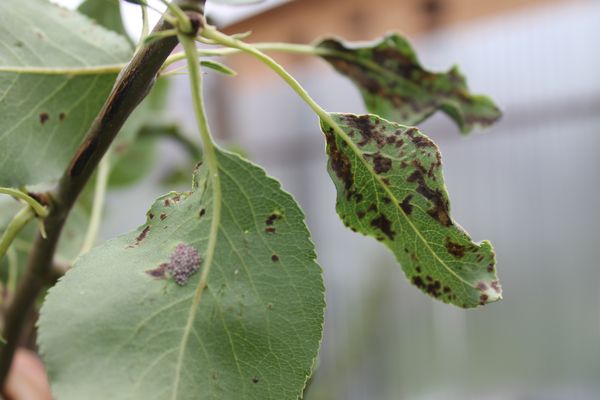
Here, timely pruning of affected branches will be helpful. The resulting wounds should be treated with garden pitch.
An unblown tree may also be affected by scab. In this case, antibiotics are used, and the affected foliage is cut off and burned.
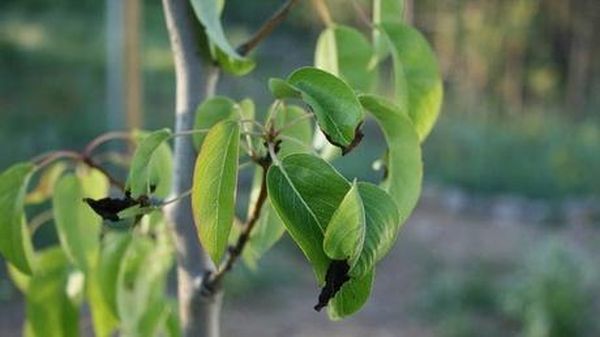
Bacterial infection is a common disease. Often, cuttings and young trees die from what's known as fire blight. Its first symptoms include blackening of the leaf margins, after which the disease spreads, and curled, blackened leaves appear throughout the tree. The plant tissue quickly dies, and the remaining part can be saved by spraying with antibiotics and removing the dead areas.
How to save a tree
If your pear tree has been frozen or black spots have appeared on its leaves, you need to act immediately. Before taking any decisive action, determine why your tree is refusing to wake up or has begun to die.
First, assess whether your plant is in a bright location. A pear tree should receive at least six hours of sunlight per day. Late-blooming flowers may be a sign that your tree requires more UV light. Try to provide it with more sun by pruning any branches or shrubs that may be blocking it.
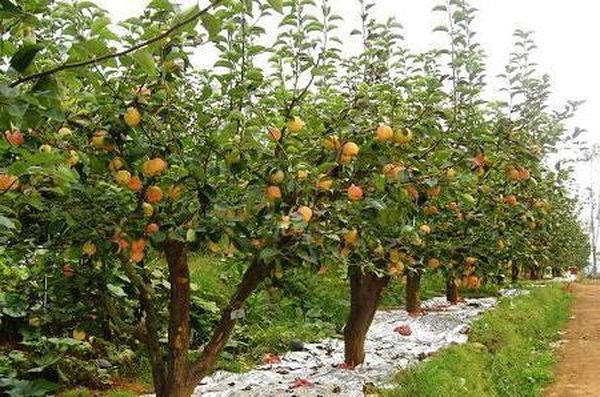
It's also important to provide the pear tree with sufficient moisture. Water it at least once a week to ensure a good harvest on time. If the soil is too waterlogged, try to drain it using peat moss or compost.
Remember that overfertilization is often the cause of flowering failure. If your tree was previously blooming without issue, but now, after fertilizing, the flowers have disappeared, try to avoid overfertilizing the plant in the future. This often promotes the growth of branches and leaves, delaying flowering.
Incorrect pruning is another factor affecting yield. Pear trees produce flowers on short shoots. Without proper pruning, flowering and fruiting can be significantly delayed.
A pear tree infected with fungus or bacteria can be saved using specialized treatments and pruning away dead parts. The dead parts should be burned to prevent the spread of the parasites.
Proper preparation of a tree for winter
Often, pear trees fail to bloom on time due to improper preparation for winter. To ensure the tree thrives, it's essential to perform a fall cleanup: remove all fallen and spoiled fruit, as well as fallen fruit.
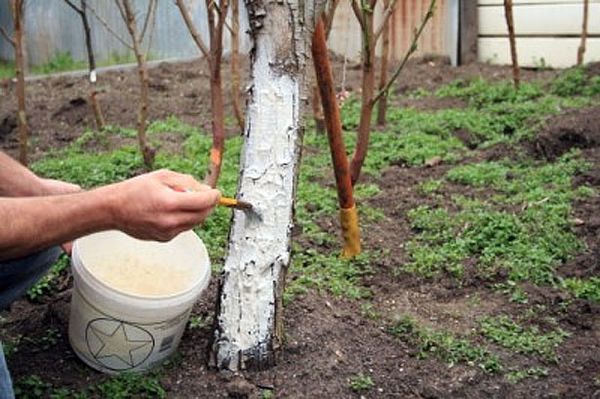
Fallen leaves are burned or composted. Why shouldn't they be left to feed the trees? This significantly increases the risk of pest infestation. Naturally, this deprives the soil of its usual nutrients, but it's better and safer to replenish them with mulch or fertilizer.
The next step in preparing the tree for winter is pruning. All damaged branches are removed, and the crown is sprayed against scab. Any existing bark defects are cleaned and treated with a copper sulfate solution.
To prevent trees from freezing, you can increase their resilience with phosphorus or potassium fertilizers. Nitrogen-containing fertilizers are not suitable in this case.
A pear tree won't bloom after winter if the fall was dry. In this situation, it's worth resorting to moisture-replenishing irrigation—pour up to a ton of water under each mature plant.
Rodents often hinder the tree's spring revival. To repel them from young plants, wrap the trunks with burlap or special plastic covers. Pear trees are quite sensitive, so pay due attention to them in the fall to ensure a good harvest.
Video: "Treating Fire Blight on a Pear"
This video will show you how to treat fire blight on a pear tree.