
Detailed description and recommendations for growing the Marble pear
Content
Description of the variety
This variety was created through selective breeding and crossing two popular cultivars—Lesnaya Krasavitsa and Michurin's Winter Bere. However, despite one of its "parents" being a winter-hardy pear, the Marble pear is not particularly frost-resistant. During spring frosts, the blossoms can freeze completely and disappear.
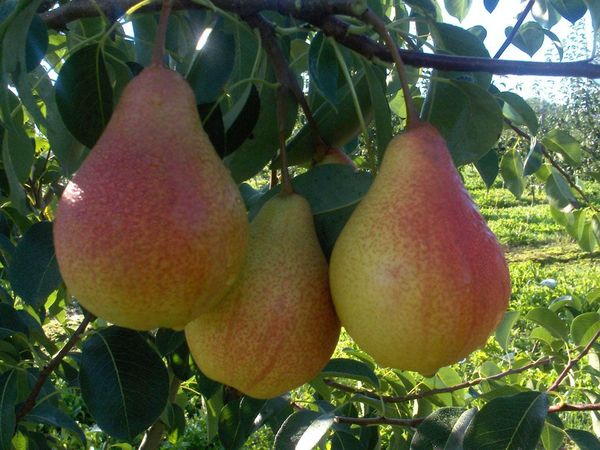
The tree is relatively short, rarely growing more than 4 meters in height. The crown is moderately dense and broadly pyramidal. The branches are strong and grow straight upward. Shoot formation is weak and inactive. Young branches are reddish-brown, while the bark on the trunk and mature branches is pale green with a grayish tint. Small lenticels densely cover the trunk. The buds are curved away from the branches, triangular in shape, and brown in color. The leaves are bright green, glabrous, oval-shaped, and pointed. The petioles are short and pale.
The pear tree blooms with small, white, double-flowered flowers. The saucer-shaped flowers have slightly closed petals and parallel pistils and stamens. The plant begins to bear fruit in the sixth to seventh year. The fruits are classically regular in shape and medium in weight. The skin is dense, glossy, yellow-green with burgundy spots. The flesh is coarse-grained and softly creamy.
Landing features
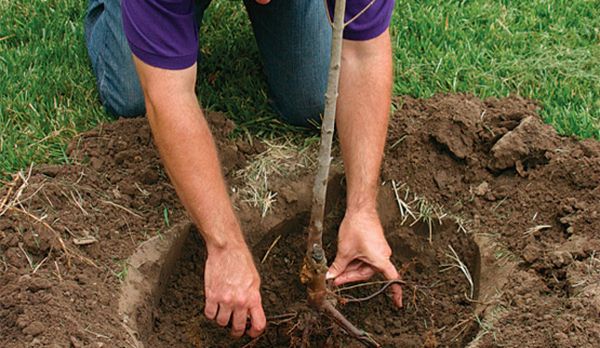
To ensure a tree takes root, grows vigorously, and thrives, you need to select a healthy seedling and the ideal location. Of course, it's also important to follow proper planting practices. It's recommended to purchase planting material from specialty stores or fruit nurseries. The ideal age for a seedling is two years: its root system is already sufficiently developed, but not so large that it could be damaged during digging. The roots should be healthy and well-developed, without any damage.
It's best to choose a tree with a root ball that remains attached to the roots. The crown should consist of several branches. Ensure the trunk is undamaged. It's recommended to plant the pear in a sunny location, away from drafts and strong gusts of wind. Choose a site with loose loamy soil and a water table at least three meters away.
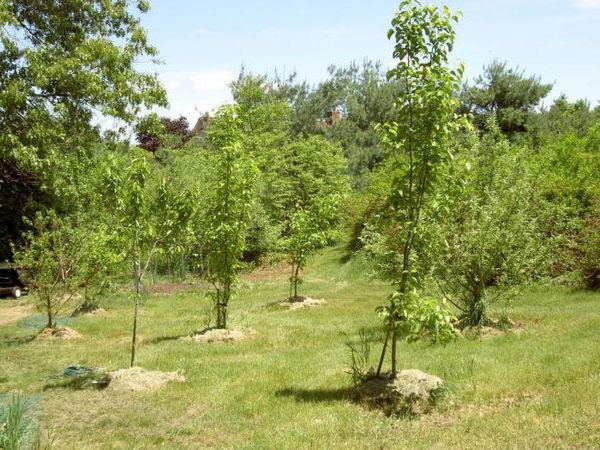
The planting hole should be prepared in advance, about 10 days before planting the tree. The depth and width are determined based on the size of the roots and the root ball. It should be at least half a meter in diameter and 70 cm deep. Fertilizer is then added to the hole. The top layer should be a mixture of mineral and organic matter. Ash, superphosphate, potassium, and humus can be used.
If the groundwater level is close, drainage will be essential – walnut shells, limestone, pebbles.
First, drive in a support for the seedling. The support should be taller and thicker than the pear tree to provide support during wind and precipitation. Then, inspect the seedling. Dried roots can be revived by placing the seedling in a clay-water solution. If no damage is detected, place it in the center of the hole and carefully fill it with soil, ensuring the soil remains loose.
The root collar should be a few centimeters above the soil level. Once the hole is completely filled, compact the soil and dig a small trench for watering. Tie the seedling to the support with elastic bands or simple cloth. After planting, water the seedling generously and mulch the soil with leaves, sawdust, and straw.
Necessary care
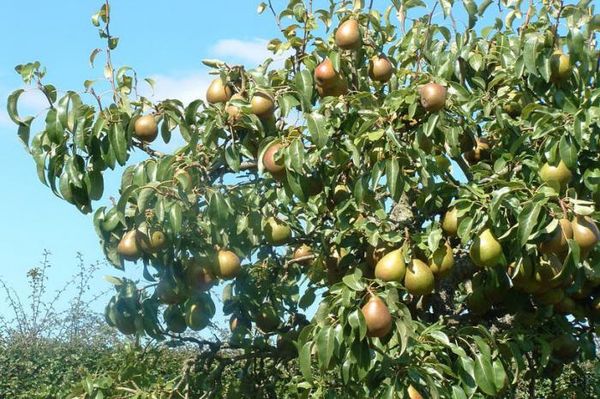
The Marble pear is relatively low-maintenance. However, timely watering, pruning, and fertilizing will positively impact the yield. The variety is not drought-tolerant, but excess moisture also negatively impacts the tree. It's best to irrigate it with small amounts over an hour. You can also dig a trench near the pear and pour water into it. The intensity of watering depends on the time of year and the amount of rainfall.
Fertilizer types are selected based on the tree's growth stage. During the period of active flowering, nitrogen-containing fertilizers should be applied, and after fruiting, organic and phosphorus-containing fertilizers should be applied. Before frost, the tree should be fed again with nitrogen-containing fertilizers to prepare it for the cold season. Pruning is usually done in the spring: damaged and dead branches are removed, and the crown is shaped.
Ripening of the crop and its storage
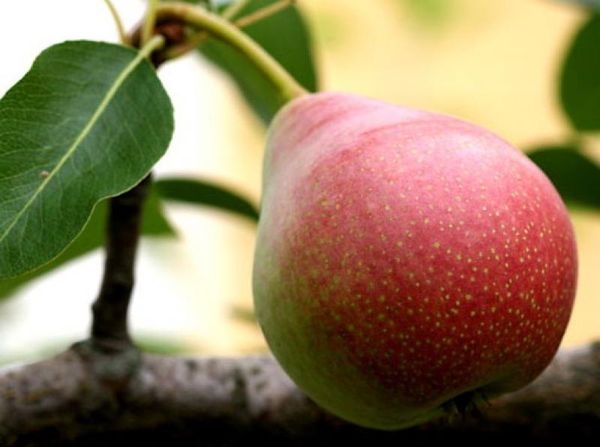
The harvest is collected in late summer or early autumn.
It's possible that the pears may drop earlier if there were any care errors. However, with timely and proper care, the Mramornaya variety produces quite high yields. The fruit can be harvested even when not fully ripe. Properly processed, they will not only retain their flavor but will also keep for about two months. The fruit's dense, thick skin ensures good transportability and shelf life.
Pests and diseases
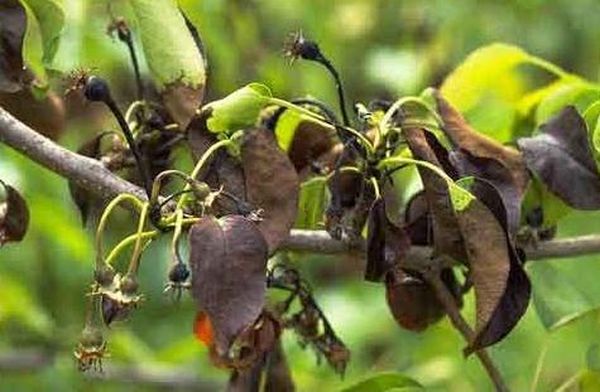
The Marble pear is fairly resistant to various fungal diseases. However, rust, cytosporosis, and black canker can sometimes affect the tree. Signs of these diseases primarily appear on the leaves and bark. Therefore, at the first sign of disease, the plant should be treated with Bordeaux mixture, copper sulfate, or garden pitch. The pear is also susceptible to pests, such as pear mites, codling moths, and hawthorn moths. Trees are treated with specialized chemicals to combat these pests. While combating disease or pests, it's essential to also treat neighboring trees as a preventative measure.
Pros and cons of the variety
This variety has both advantages and disadvantages. Mramornaya is an early-fruiting pear with excellent flavor and attractive fruit. Its chemical composition and excellent transportability are also excellent. It is highly productive and resistant to powdery mildew and scab. Disadvantages include mediocre winter hardiness, susceptibility to freezing in spring frosts, lack of drought tolerance, and sensitivity to excess moisture.
Growing a pear tree is definitely worth a try. Proper care and a well-chosen location will ensure excellent results.
Video: "Spring Fertilizing of Pear Trees"
This video will show you how to properly feed a pear tree in the spring.