
The best pear varieties for growing in the spartan conditions of the Urals
Content
Features of cultivation
The Ural region is characterized by unfavorable soil and climate conditions. The terrain here is varied, but heavy podzolic and marshy soils predominate, making pear cultivation in the Urals significantly challenging. The weather is generally unpredictable, and you never know what to expect. Sometimes, temperatures reach summer levels as early as April, while in other years, frosts can occur as early as June, causing fruit drop from pear trees.
These conditions dictate specific requirements for choosing a pear variety for the Urals. For example, planting high-yielding columnar trees here makes no sense, as they are very heat-loving. Given the short summer season, it's better to choose early, fast-ripening varieties or winter-hardy varieties for this region. Self-fertile trees are also desirable, as the weather can be unfavorable and pollinating insects will be scarce.
Planting and caring for pears also has its own characteristics. To grow a good harvest in this region, it is necessary to pay close attention to processes such as fertilizing, shaping pruning, and winter insulation. Planting holes should be prepared in advance. Since the soil is very dense, a good drainage layer is needed, topped with a layer of organic fertilizer to ensure the seedlings' full development during the first few years.
When young, pears are very sensitive to cold, so they need to be well insulated or buried in a snow mound for the winter. Once fruiting begins, the trees' winter hardiness will increase, but for the first 5-6 years, winter preparation must be thorough. Many frost-related problems can be avoided by planting frost-resistant Ural pear varieties, such as Uralochka, Novogodnyaya, Chelyabinskaya Zimnyaya, and Tonkovetka Uralskaya. There are many such varieties. Below, we'll look at five of the best pears for the Urals, each with a different ripening period.
Talitsa
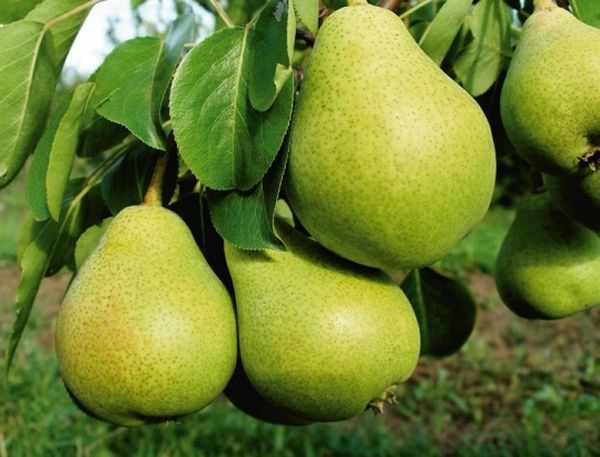
This variety is also known as Skorospelka Sverdlovskaya for its early and rapid ripening. The fruits reach harvest maturity 75–80 days after flowering, in mid-August, but they have a short shelf life (up to 10 days), making them difficult to transport and sell. When left on the tree, the pears quickly fall off. Despite all this, the variety is considered successful, yielding up to 40 tons per hectare in any conditions and possessing high resistance to scab.
The trees are vigorous, with a spreading, pyramidal crown. The branches are thin, often sagging under the weight of the fruit and requiring support. The fruits are small (100–115 g), round, and apple-like. The skin is pale yellow, slightly rough, with hardened subcutaneous spots visible beneath. The flesh is creamy, dense, and quite juicy, with a sweet-tart flavor and a light honey aroma. The Talitsa pear is self-sterile, but it accepts any pollinator with a similar flowering period.
Taken care of
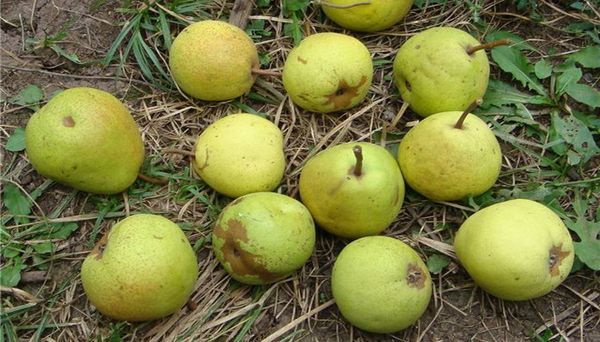
A mid-late pear with outstanding flavor and marketability. It was developed through artificial mutagenesis using the Bere Yellow variety, which is why it is sometimes called Bere Yellow Improved. Experts consider this pear to be among the best varieties for the Urals. It combines high yield, a long lifespan and fruiting period, and resistance to frost, as well as most diseases and pests.
The trees are compact, medium-height, with a rounded and fairly dense crown. They begin bearing fruit in the fourth or fifth year, producing a stable annual harvest. The fruits are not very large (up to 120 g), uniform in size, and a uniform yellow color. The skin is thin and smooth, with few subcutaneous spots. The flesh is yellowish and medium-firm. The pears are ready for harvest in mid-autumn, have a long shelf life (up to 130 days in a cool place), and become very sweet when ripe.
Zarechnaya
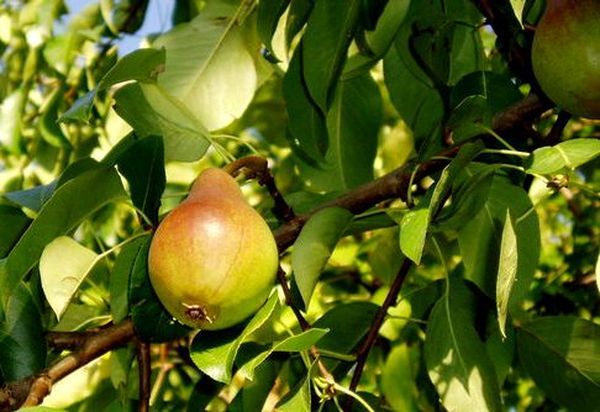
According to its creator, Professor L. A. Kotov, this pear is one of his best works among late-summer varieties. The trees are fast-growing, yet small and neat, with a rounded, slightly spreading crown. They bear fruit in the fifth or sixth year, are exceptionally winter-hardy, and are resistant to gall mites. The yield is consistently high.
The fruits, according to the author, are distinguished by their noble shape. They are smooth and uniform, not very large (110–140 g), but attractive in appearance. The skin is thin, golden-yellow when fully ripe, with a beautiful reddish blush. The pear flesh is fine-grained, moderately dense, and very sweet.
Pears ripen in late August, but since they don't fall off, harvesting can be done in several stages. They have a short shelf life of up to one month.
Sentyabrina
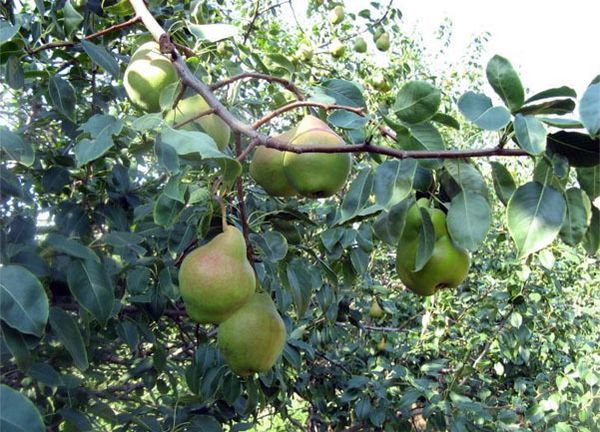
Another winter-hardy variety, bred by L. A. Kotov for the northern regions of the country. The trees are medium in size and height, and grow quickly. The crown is pyramidal, slightly spreading, and can be formed without pruning. The pear tree blooms in May, and the flowers and ovaries are resistant to subsequent frosts. It also exhibits high resistance to scab and gall mite. This variety is partially self-fertile, so it is best to plant pear trees with similar bloom times nearby.
Sentyabrina pears are fairly large (180–200 g), uniform in size, and have a classic pear shape. The skin is smooth and green, turning lemon-yellow as it ripens, with a light brown blush on one side. The flesh has a wonderful, sweet-tart flavor, is juicy, and free of hard spots. The pears ripen by early September. Their shelf life is approximately one month. During this time, the pears retain their marketable appearance and are easy to transport.
Sverdlovsk resident
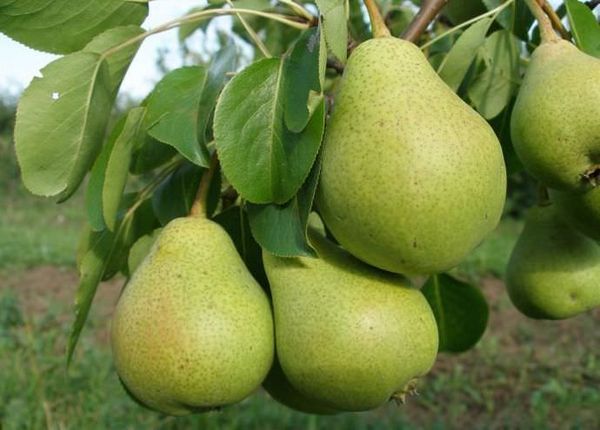
A very common summer-autumn variety in the Urals. It boasts not only outstanding fruit flavor but also a long shelf life. The trees are very frost-hardy, surviving winters well even without shelter, no matter how severe the frosts. They are short, with a rounded crown that becomes slightly more spreading with age. They begin bearing fruit at the age of four. Yields are stable and high – up to 200 centners per hectare. The variety is self-sterile and requires a pollinator with a similar flowering period.
The fruits are quite large (130–180 g), with a beautiful elongated pear shape. The skin is smooth, green when ripe, and acquires a slight yellowish tint and a slight blush during storage. The juicy, oily flesh, according to tasters, deserves high marks. Its slightly tart flavor develops into a very rich dessert-like aroma with a distinctive pear aroma as it ripens.
The fruits can be used in any way: for preparations (drying, drying), canning, and also fresh.
Video: Preparing a Hole and Planting a Sapling
This video will show you how to prepare a hole and plant a fruit tree seedling.