
Description of the autumn pear variety Forest Beauty
Content
Description and characteristics
A description of the variety should begin with the fact that the Forest Beauty is a very promising pear. Its seedlings have been used repeatedly in breeding, and over 30 new pear varieties, including columnar ones, are now known, derived from the Forest Beauty. Over the course of its history, the variety has undergone several names. Initially, it was called "Forest Pear," later "Flemish Beauty," in honor of the Flanders region of Belgium where the tree was discovered.
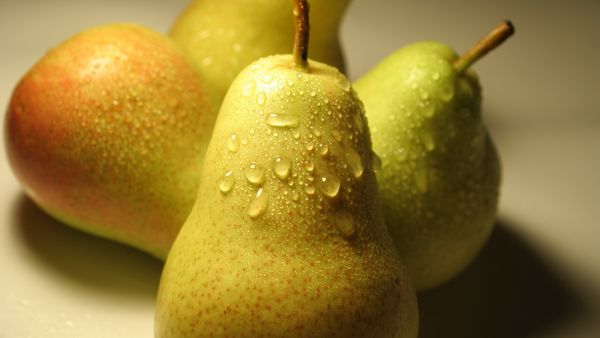
It was only later that the name "Forest Beauty" became established, a name that has remained to this day. Forest Beauty trees are not very tall (up to 5 m), but are neat, with a broad but even pyramidal crown of medium density. The shoots are strong, dark brown, with a few lenticels, and slightly drooping at the edges. The leaf blades are oblong, bright green, with slight serrations along the edges. The pear tree blooms in mid-April. The flowers are small, pinkish in color, and are highly resistant to temperature fluctuations and are not damaged by recurrent frosts.
Cold resistance is a distinctive feature not only of flowers, but also of trees. The Lesnaya Krasavitsa pear variety easily tolerates the low temperatures of northern regions, where the thermometer drops to -45°C in winter. Immunity to fungal diseases is low. Even the slightest moisture can cause scab, various types of rot, and, less commonly, rust and powdery mildew. The variety is partially self-fertile. To increase yield, it is recommended to plant pollinators nearby—such as Limonka and Williams pear varieties.
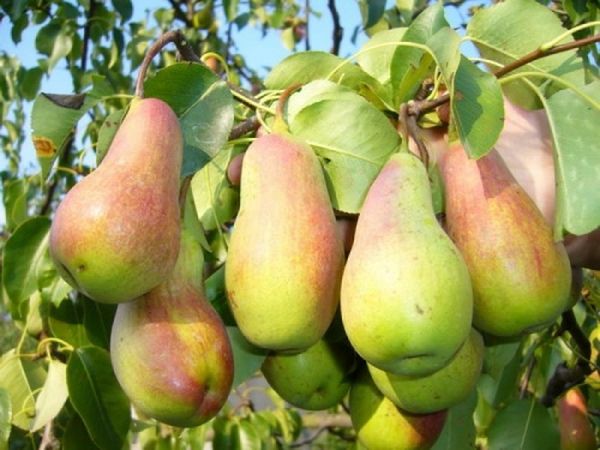
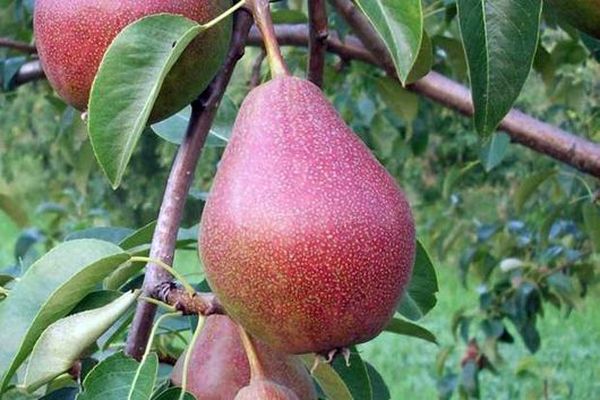
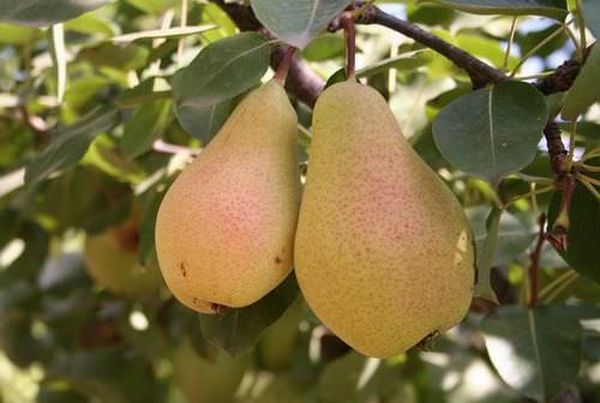
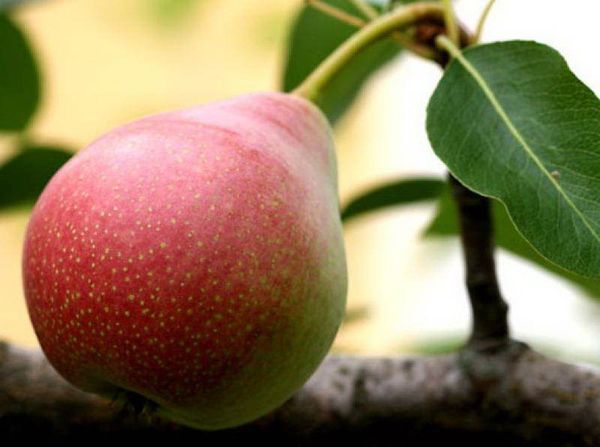
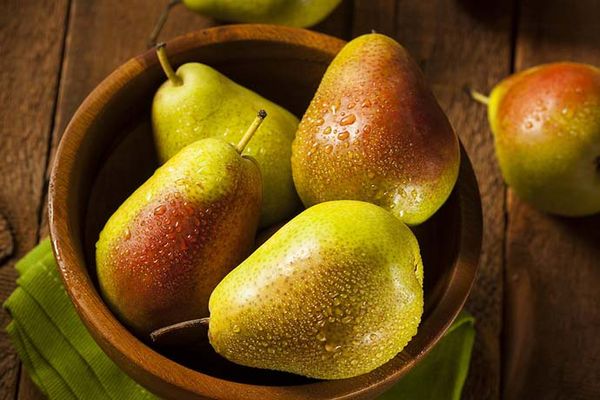
The fruits of the Forest Beauty are prized for their unrivaled flavor and attractive appearance. They are uniform, beautifully ovoid, and medium-sized (150–170 g), though individual specimens can reach even larger sizes. There are known cases of pears weighing around 300 g ripening in the upper part of the crown. The skin is thin but firm, with a slight roughness. As it ripens, its color changes from greenish-yellow to golden-amber. A deep blush appears on one side, facing the sun.
The pear's flesh is white with a light creamy tint and aromatic. The texture is tender and soft, and when fully ripe, it's buttery and rich in juice. The flavor is dessert-like, very sweet, with a subtle tart aftertaste. The saucer is shallow, the heart is outlined by rocky formations, and the seeds are large and brown. These pears don't have a long shelf life, but when fully ripe, they are the best dessert varieties.
Features of cultivation
Growing the Lesnaya Krasavitsa pear is simple, but it does have some peculiarities. These undemanding trees don't have high soil requirements. They thrive in both moderately moist and relatively dry soil, but they thrive and produce better fruit in fertile, loose soil.
It is not recommended to plant seedlings in clay soil, which prevents the normal development of the root system and negatively affects the growth of trees.
The most favorable time for planting seedlings is spring, from mid-April to mid-May, once the snow has completely melted. The best location is a sunny, slightly breezy spot on a slightly elevated surface. This will prevent moisture from lingering on the leaves, preventing disease. Strong winds are harmful to pear trees, causing premature fruit drop. Planting holes should be small – 80 cm wide and the same depth. Add a mineral compost mixture along with humus or compost to the bottom.
Caring for pear trees involves watering, fertilizing, and shaping the crown. To avoid the need for constant weeding and loosening, the area around the tree trunk is mulched. While the seedlings are young, water them once a week until they are fully established. Mature trees are watered three times a year, with 8-9 buckets of water: before flowering, during fruit ripening, and in the fall, about a month before wintering.
During hot summers, especially if the pear tree is shedding its flowers or fruit, additional watering is required. Fertilizers are added starting in the tree's second year. In early spring, humus (2–3 kg/m²) can be scattered around the trunk; during flowering, a weak solution of saltpeter (1:50) can be applied. In mid-season (June to early July), a potassium phosphate fertilizer (Nitrophoska, Ammophos) will support the tree before fruiting. Alternatively, an ash solution (2 cups/bucket of water) can be used. After harvest (September), potassium chloride is added to the trunk circle at a rate of 10 g/m² and superphosphate at a rate of 20 g.
Starting in the second year, the young tree needs to be trained, shortening the main shoots by about a third. Once the pear tree begins to bear fruit, the crown should be thinned annually, removing excess growth and damaged branches. The Forest Beauty tolerates winter well and can survive without shelter. However, pest protection is essential. Whitewashing the trunk with a mixture of lime and copper sulfate, combined with wrapping it with a hard material, will prevent rodents from approaching the tree.
Pest and disease control
The variety is highly susceptible to scab, which can develop even from nighttime dew. In particularly wet summers, trees are also susceptible to other diseases, including powdery mildew, rust, and fruit rot. Cytosporosis and fire blight are also common in pears. Preventative measures can reduce the risk of these diseases: treating the crown with copper-containing fungicides, whitewashing the trunks, and collecting and burning fallen leaves.
To prevent scab (brown spots on leaves and fruit), it is recommended to spray the crown with copper oxychloride (0.5%) in the spring when the buds open and then immediately after flowering. In the fall, after harvest, spray the leaves with a solution of Bordeaux mixture (1%). These agents also protect the pear tree from powdery mildew and rust.
Effective treatments for fruit rot include "Hom" (40 g/10 l of water) or "Oxyhom" (20 g/10 l of water) – spray the solution in early spring and after flowering. These treatments will also protect the tree from cytosporosis (brown, dead areas on the bark). Bacterial blight can be identified by the appearance of black, burnt-looking leaves. In the early stages, treatment with copper sulfate (3 tablespoons/10 l of water) helps combat the disease.
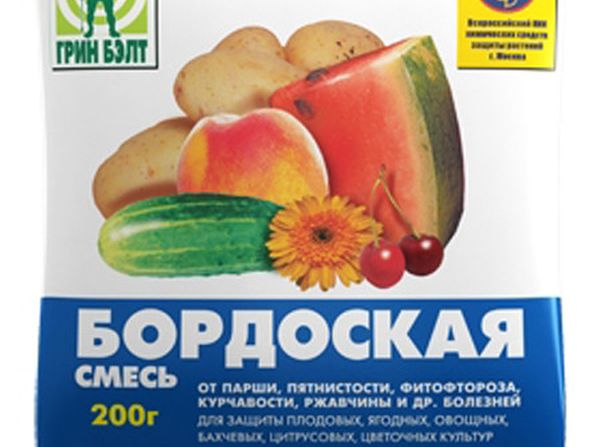
Bordeaux mixture is a universal fungicide that protects fruit trees not only from diseases but also from pests. Treating the crown with a 3% solution in the spring helps prevent insects such as pear psyllids, red spider mites, and pear fruit moths. While the larvae are in the ground (early spring and before winter), it's advisable to water the soil around the tree with a 3% urea solution. If the pest population increases despite preventative measures, insecticides such as Karbofos, Fufanon, Fitoverm, or Colloidal Sulfur should be used according to the instructions.
Harvesting
The fruits reach harvesting maturity in the last ten days of August, but since they quickly overripe and fall off, it is recommended to harvest them a week earlier. Forest Beauty is a very productive variety. One mature tree can yield around 200 kg of pears per season, and even more in a good year. Therefore, plan your harvest so that it doesn't take longer than a week. Remember that in dry and hot weather, the fruits fall off faster, while in cool weather they can remain on the tree longer – up to 10 days.
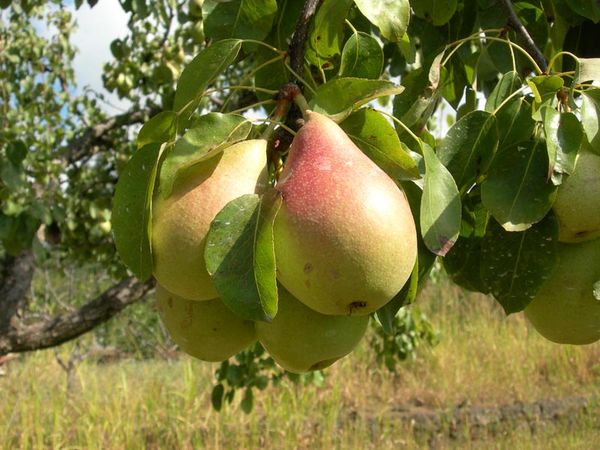
Pears' ripeness is judged by external signs: yellowing of the skin, a slight blush on one side of the fruit, a change in the flesh's density (it becomes slightly oily), darkening of the seeds, and the fruit's ease of removal from the vine. The shelf life of picked pears is short—a maximum of three weeks. To ensure they acquire their characteristic amber color and unrivaled dessert flavor during this time, care must be taken to store them properly.
Take lattice boxes or baskets and line the bottom and sides with parchment paper. Next, arrange the pears stem-side up, interleaved with parchment paper between each layer, and store in a cool place (0–1°C) with 80–90% humidity. Under these conditions, they retain their marketable appearance well and can withstand long-distance transport. Ripe pears are versatile. They are delicious fresh as a dessert, and they also make excellent jams, candied fruits, preserves, and compotes.
Advantages and disadvantages
Domestic gardeners speak very positively of the Forest Beauty, noting its advantages and minor disadvantages that every variety has.
The list of advantages includes:
- good adaptability of the tree to heat, drought, and soil composition;
- phenomenal frost resistance;
- high yield;
- perennial fruiting and long life of the tree;
- Excellent taste and presentation of ripe fruits.
The main disadvantages of the variety include the high susceptibility of pear trees to scab, the shedding of ripe fruits, and the short shelf life of the harvest.
Video "Forest Beauty Pear"
In this video, you will hear a description of the Forest Beauty pear variety.