
Causes and treatment of bacterial blight of pear
Content
Causes of occurrence
The disease is caused by the highly pathogenic bacterium Erwinia amylovora, a member of the Enterobacteriaceae family (which also includes E. coli and Salmonella). Erwinia amylovora often infects trees in association with other bacteria and harmful fungi that attack the pear inside and out, so gardeners must contend with a range of diseases.
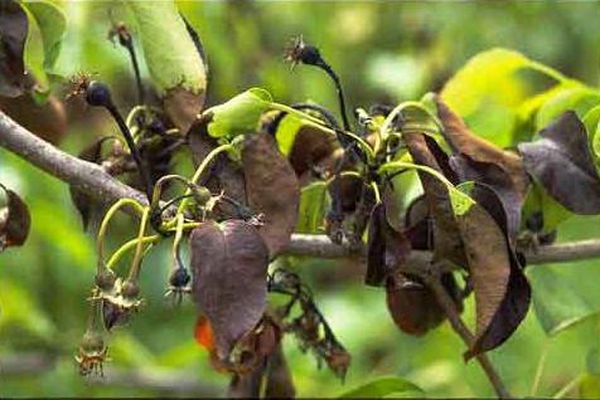
Some time after infection, thick, milky or amber-colored droplets containing bacterial colonies appear on the bark, leaves, and fruit of the diseased tree. When an insect or bird touches these droplets, they become carriers of the infection and can eventually infect numerous other trees. This is especially dangerous in the spring during flowering. Rain and wind also facilitate the movement of the bacteria.
Bacteria enter the pear tree on the beetle's snouts, through wounds on the leaves, and through microcracks in the bark. Because they attack the upper part of the plant first—this is where the first infected leaves turn black and curl—many gardeners miss the onset of the disease.
The disease more often affects seedlings than mature trees. Favorable factors include excess nitrogen in the soil, humid air, and warmth (bacteria multiply at 18°C; at temperatures above 25°C, this process becomes especially active).
Symptoms of the disease
Fire blight most often manifests itself during flowering, although infection could occur in the fall.
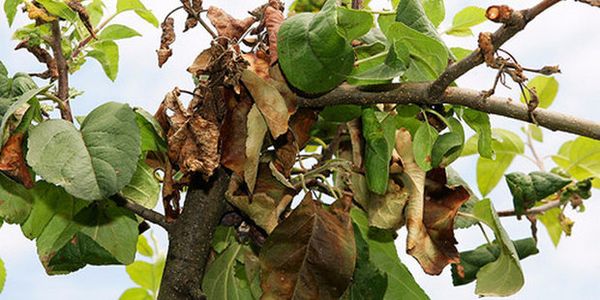
If pear tree blossoms first dry up and then suddenly turn black, but don't fall off the branch, these are the first symptoms of the disease. After the blossoms die, the bacteria spread throughout the plant. Buds die, leaves darken and curl, but like the blossoms, they remain on the branches. Young shoots begin to curl into hooks. Gradually, the infection spreads deeper, and dark necrotic spots appear on the trunk. Subsequently, the bark dries out and cracks, begins to peel, and the blackened area spreads. A blackened trunk indicates the advanced stage of the disease—unfortunately, at this stage, the chances of saving the tree are minimal. The dead tree has a charred appearance (hence the name).
The problem is that this disease is often confused with bacterial canker, and the true diagnosis can only be made in a laboratory. To do this, take pear leaves to a quarantine station when they begin to curl.
Treatment Features
If a pear tree is affected by fire blight, treatment must be immediate. Let's find out what to do if you notice pear leaves turning black and curling.
Methods of combating the disease can be mechanical and chemical.
A mechanical (or surgical) method is used if less than a third of the tree is affected. In this case, all branches with even one curled leaf are sawed off or pruned with pruning shears. The cut should be 20-40 cm below the affected area. All tools must be disinfected after use, and the affected areas must be burned (but never buried or composted, as bacteria will continue to multiply there).
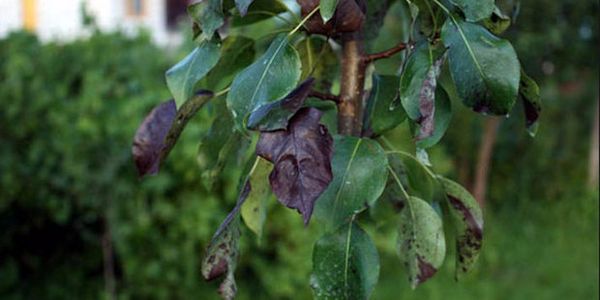
In the late stages of the disease, when necrotic spots appear on the trunk, it is recommended to destroy the tree, as treatment is now futile. Another sapling should not be planted in the same place for two years, otherwise it will suffer the same fate.
Chemical treatments include fungicide treatments, biological preparations, and antibiotics. Gamair has proven effective as a preventative measure. This biological preparation poses no health risk and can be used in warm weather. An infusion is prepared at a rate of 2 tablets per 1 liter of water. It should be sprayed on pears 2-3 times (at weekly intervals) from the moment the buds open.
Streptomycin and tetracycline are effective antibiotics. In both cases, two ampoules of the medication are diluted in 5 liters of water. The first spraying is done in June, then several more times at three-week intervals. The entire tree should be treated, not forgetting the top, as bacteria primarily attack it. To strengthen the tree's immunity, additionally use stimulants (Immunocytophyte, Zircon, etc.). It's important to change the medications every one to two years, as over time, the bacteria mutate and develop immunity to them.
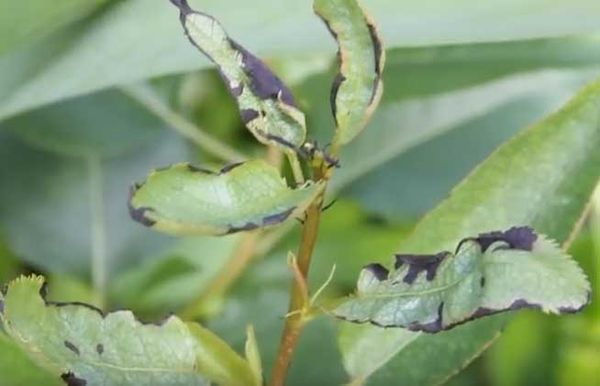
In case of severe damage, use Fitosporin, which slows down the rotting process.
Ofloxacin is a powerful, innovative drug. It aggressively targets lesions, but requires strict adherence to dosage and safety precautions.
Preventive measures
Preventative treatments, including rodent and parasite control, can help prevent the disease from appearing in your garden. These treatments weaken the tree's immune system and carry bacteria. If possible, choose pear varieties resistant to fire blight. For example, Bere Hardy, Favoritka, Konferentsii, and Lukashovka have good resistance to this disease.
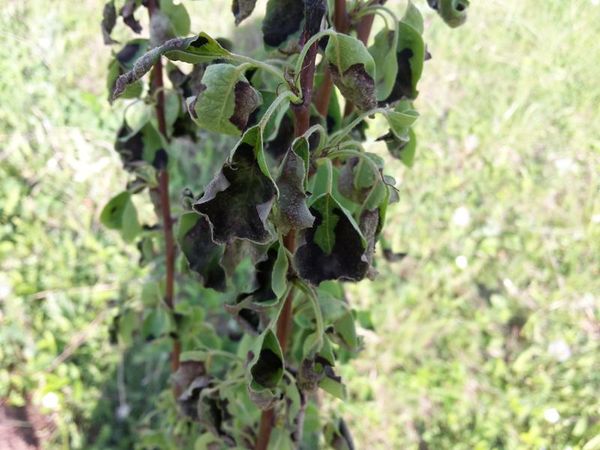
Inspect seedlings carefully before purchasing: dark spots on the leaves often mean that the tree is infected.
It's important to prune old and damaged branches after winter. Disinfect all tools before use, and treat cut areas with garden pitch.
Do not overuse nitrogen fertilizers; feeding should be done in a balanced manner.
Video: "Treating Bacterial Cancer on Pear Trees"
This video will show you how to treat bacterial canker on pear trees.