
What do red spots on pear leaves mean?
Content
Main reasons
Why do pear tree leaves turn red? There are several common diseases that can cause this phenomenon. These include problems with the tree's root system, fertilizing errors, improper grafting, fungal infections, and more.
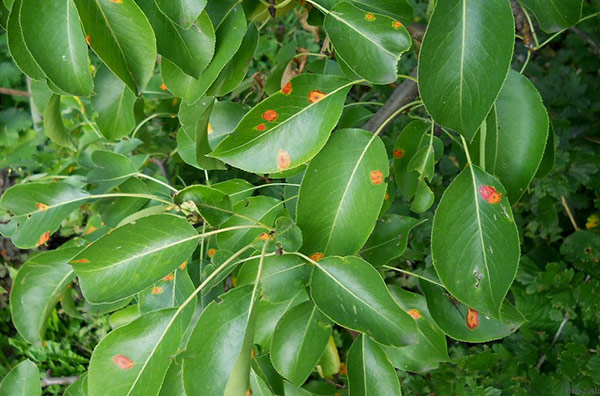
Let's take a closer look at why spots appear on pear tree leaves. You must carefully investigate the cause, as saving the tree will depend greatly on it.
Problem with roots
Leaf swellings often result from root problems. One common cause is excess moisture.
The leaves of a pear tree growing in a place where the groundwater is too close to the soil surface may become covered with small spots. This is a consequence of rotting roots, which die due to oversaturation of the soil with water.
In this case, the foliage doesn't receive the necessary nutrients. The main method for combating this problem is to create a system of drainage channels to drain excess moisture. If the tree is newly planted, it can be replanted in drier soil.
Leaf spots can appear due to improper planting. A hole that's too deep can sometimes lead to root rot. The entire tree's nutrition is disrupted, and the foliage becomes spotted and curled.
This can be avoided by following proper pear planting guidelines. The root-trunk transition should be level with the topsoil.
The reason is in the fertilizer
Red leaves often appear due to mineral deficiencies. This is primarily due to a lack of phosphorus. This can be identified by the way the leaves develop spots: initially, the lower part of the leaf blade is affected, then the disease progresses, affecting the entire leaf, which curls inward.
How can this be combated? A solution may be spring fertilization with complex fertilizers like Amofoska. This will ensure normal flowering and protect the pear tree from disease.
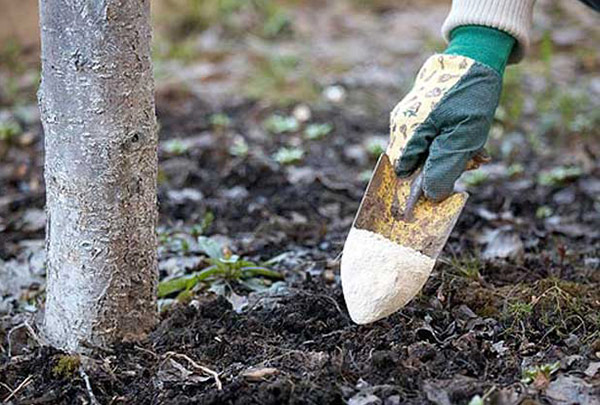
Be careful when fertilizing pear trees in the spring, applying a precisely defined amount of fertilizer. It's worth noting that in the summer, the plant should be treated with an Ammophos solution every 10-14 days.
Incorrect vaccination
Incompatible rootstock is another common cause of pear tree leaves turning red. Beginning gardeners often buy seedlings from specialized stores, knowing that grafting is not an easy task. However, poor-quality planting material is often encountered. Sometimes, clonal rootstocks (obtained from cuttings of a mature tree) are grafted onto seedlings, leading to problems with the growth and development of the seedling.
To prevent leaf spotting, select seedlings grown from seed as rootstocks. This will ensure a high-quality, trouble-free grafting. These seedlings accept scions from other pear varieties well. This ensures the tree will bloom and bear fruit.
Other reasons
Red spots on pear leaves are also caused by a fungal infection. The leaves become spotted and eventually curl up.
One such disease is rust. It initially appears as green spots that gradually turn orange-red. This disease is quite dangerous: once it affects one plant, it quickly spreads to others if left untreated.
Carefully inspect your tree's leaves. If cone-shaped growths have formed on the undersides, this means fungal spores are already multiplying and spreading throughout your garden. If you want your pear tree to bloom and produce the expected harvest, don't delay treatment.
Treatment and prevention
Are your pear tree leaves covered in red spots? It's time to take action to save your garden. Once you've determined the cause of your pear tree's disease, follow these steps:
- Waterlogged soil. Provide a drainage system. If the tree is still young, try replanting it in more suitable soil;
- The pear tree is planted too deep or not deep enough. In the first case, dig in the soil so that the soil reaches the root-trunk transition. In the second case, replant the young plant to the required depth;
- Phosphorus deficiency. Apply a complex fertilizer to the soil. Spray the tree with an Amofoska solution every two weeks;
- Incorrect rootstock. Sadly, in this case, the tree cannot be saved. The sapling should be removed and replaced with a new one;
- Rust. At the first sign of disease, remove all affected leaves. Avoid placing trees near junipers, which are ideal breeding grounds for the fungus. If you live in an area with high humidity, it's a good idea to spray the trees with Bordeaux mixture.
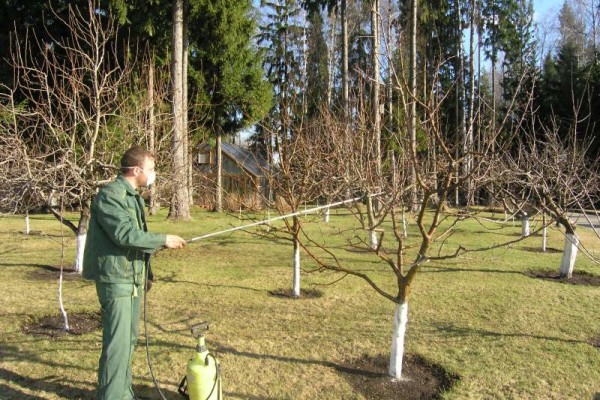
Preventative measures that will help prevent pear leaves from turning red include pruning branches in the spring and disinfecting the trees. The latter is done using a five percent solution of copper sulfate.
At the first signs of leaf disease, you can also treat the plants with Abiga-Peak or Raek solutions. This should be done at least twice.
Remember, don't delay treating an infected tree. This could result in the death of the pear tree or the spread of the disease to other plants.
Video: Rust on Pear Leaves
Rust is one of the most common fungal diseases of pears. What it is, what preventative measures are needed, and how to treat a diseased fruit tree—in the next video.