
Description of the early autumn, unpretentious pear variety Kokinskaya
Content
Description and characteristics
According to the variety description, Kokinskaya grows to 3–4 meters tall, forming a slender, compact tree with a smooth trunk and a broadly pyramidal crown. The medium-sized crown spreads up to 3 meters wide and requires regular pruning to stimulate new growth. The variety's characteristics are promising: fruiting begins four years after planting, a mature tree produces an average of 100 kg of beautiful fruit, requires no pollinators, tolerates winter well, and rarely gets sick.
Experienced gardeners note that scab resistance is indeed high, with the fruit being more resistant than the leaves. Trees of this variety are very rarely affected by other diseases. Frost is not a problem for mature trees; in a severe winter, only the flower buds may freeze, which will affect this year's harvest, but the fruit will recover later. The pear is self-fertile, but some homeowners prefer to plant Bergamot Moskovsky or one of the Yakovlev varieties nearby, which bloom at the same time, to ensure a bountiful harvest.
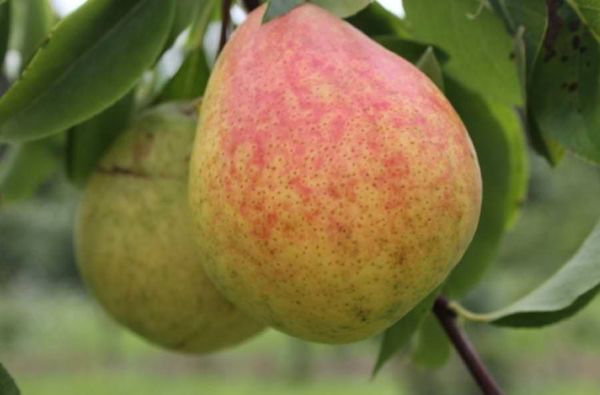
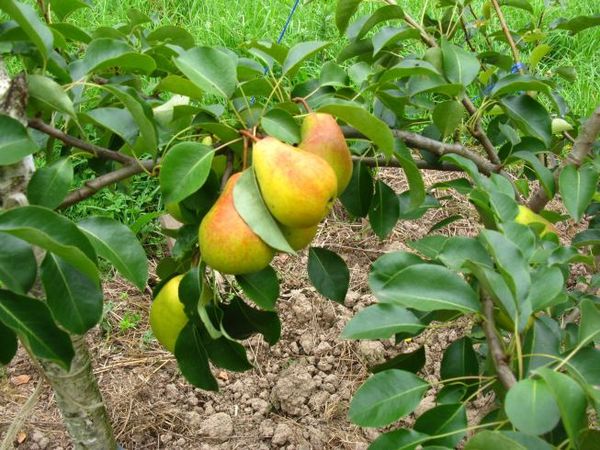
The fruits are of a regular pear shape and weigh from 120 to 250 g. When ripe, which occurs in the first week of September, they are yellow-green with a pinkish-red blush on the sunlit side, with clearly visible subcutaneous spots. The creamy flesh is very juicy, aromatic, and buttery in consistency. The taste is pleasantly sweet with a subtle tartness (or even none at all). They are eaten fresh, stored until November at temperatures between -1 and +2°C, and used to make jams, candied fruits, marmalades, and wines.
Features of cultivation
The pear tree should be planted immediately in its permanent location; it doesn't like being transplanted. Choose a well-lit location, but protected from drafts and north winds, with a deep water table. A gently elevated site in the southwest corner of the garden is ideal. Kokinskaya pears are not fussy about soil, which should be well-drained, fertile, and slightly acidic. Loam or sandy loam is best; too sandy soil will cause the tree to grow too quickly, potentially causing cracks in the trunk, which can open the door to infection.
A young tree can be planted in spring or fall. Choose a healthy, two-year-old tree, indicated by a straight, smooth trunk at least 85 cm long, flexible, not over-dried roots, and white roots at the cut. The day before planting, soak the roots in a growth stimulant. Fertilizer is added to the bottom of the hole. The root collar should be 3–5 cm above the ground. The mulch should not touch the trunk.
At first, the tree is watered weekly, then the frequency is reduced. A mature tree is best watered by sprinkling as needed.
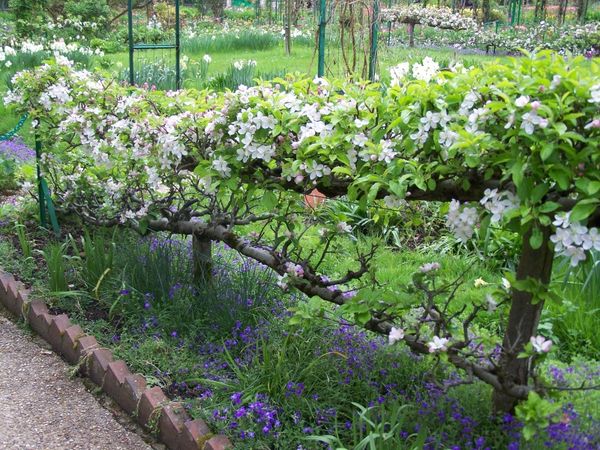
During the first 4 years, mandatory formative pruning is carried out, then only sanitary pruning, and after 10 years – rejuvenating pruning.
Organic fertilizers are applied every 3-4 years, and mineral fertilizers are applied annually, before flowering and after harvest. Nitrogen fertilizers are added if the annual branch growth is less than 40 cm. To apply root fertilizer, a small trench is dug around the perimeter of the tree's trunk.
The harvest is collected in the first half of the day, before the fruit gets too hot in the sun, but after the dew has dried – this way they will be stored better.
Pros and cons
The Kokinskaya autumn pear variety is perfect for those who enjoy fragrant, honey-sweet fruits in early autumn. It offers a huge yield—100–120 kg per tree—and is easy to transport, storing for 2–2.5 months in the refrigerator or cellar. This allows you to not only satisfy your family's needs but also generate commercial profits.
High resistance to scab and other diseases significantly facilitates the gardener's work, along with such qualities as self-fertility, the ability to not suffer from frost, and to withstand periods of drought.
This variety doesn't have many drawbacks. In years with a particularly large harvest, the fruit may be much smaller than usual. If the summer is cool and rainy, scab may appear on the tree's leaves—though not on the fruit, it's still unpleasant.
Video: "Proper Pruning of a Pear Tree"
This video will show you how to properly prune a pear tree.