
Description and cultivation of the Asian pear variety Kieffer
Content
Description and characteristics
The Kieffer pear variety was developed in 1863 in Philadelphia, USA, by American breeder Peter Kieffer. In fact, the name of the new pear variety was derived from the breeder's name. According to unconfirmed reports, the Kieffer is a hybrid of the Chinese sand pear pollinated by the Bere Anjou variety (according to some sources) or the Duchesse variety (according to other breeders). For example, the fruits of the Kieffer and Duchesse pears are very similar.
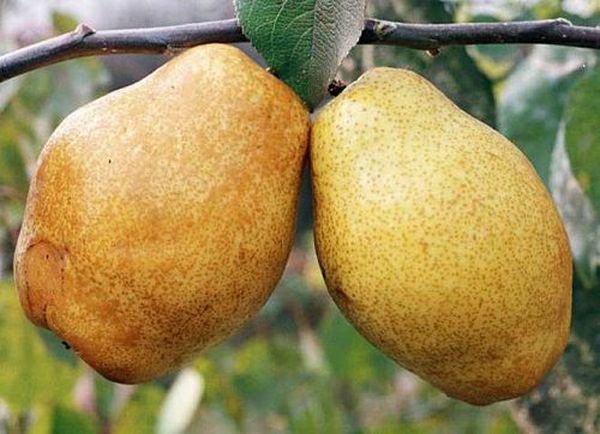
The Kieffer fruit tree is widely grown in Asian countries, particularly Japan, Korea, and central China. Perhaps this widespread distribution is why farmers often refer to this crop as the Asian, Oriental, Japanese, or Chinese pear. Gradually, the variety gained popularity and began to be cultivated in Russia, Ukraine, and Moldova.
What does a Kieffer pear tree look like? What characteristics are characteristic of this fruit tree? Let's begin our acquaintance with a description of the variety. So, the Kieffer pear belongs to the medium-sized fruit trees and has a dense, pyramidal-shaped crown. The bark of the trunk is colored gray, and the trunk itself is densely covered with deep cracks.
The trunk branches are darker in color (the color of wet asphalt). The skeletal branches are angled 25–30 degrees relative to the trunk. Young branches are of medium thickness, straight, and even. The bark on the shoots is an attractive greenish-brown with a slight red tint.
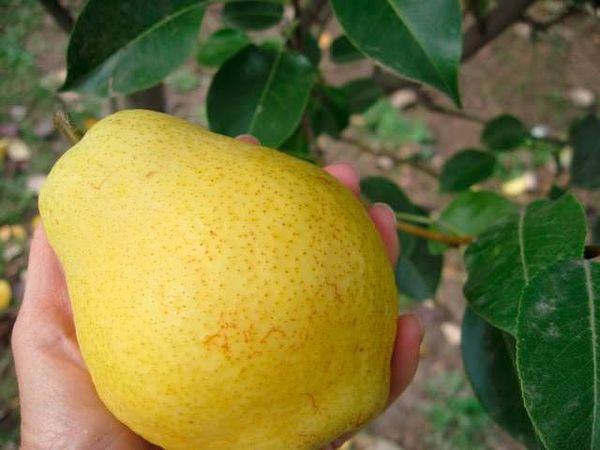
The leaves are large, ovoid, dark green, and have pointed, elongated tips. The outer surface of the leaflet has a glossy finish. The leaf blade is dense and slightly curled upward, with broadly serrated edges. The petioles are thin and short, with burgundy skin. In autumn, the foliage takes on a beautiful burgundy-red hue.
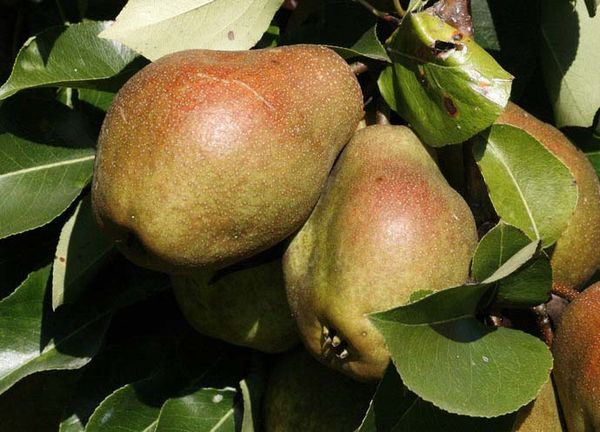
Kieffer pears are medium-sized, weighing between 120 and 150 grams. However, some pears can be quite large, weighing up to 300 and 400 grams. The fruit is barrel-shaped or oval-pear-shaped, slightly bumpy, and may have ribbing at the base. The skin is thick and dry, with a slight roughness. At harvest, the skin is light green, and as it ripens, it turns golden yellow with numerous rusty spots.
The flesh of the ripe fruit is white-yellow. The pear is juicy and crisp. However, unlike the Duchess variety, the Kieffer pears have a sweet, tart taste, with a turpentine aftertaste.
Features of cultivation
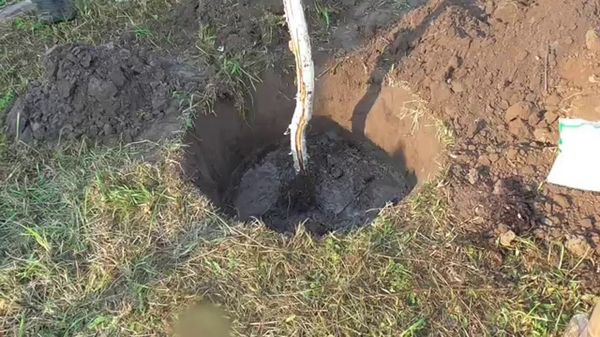
Kieffer pear is considered an easy-to-grow fruit tree. It will grow and thrive in any soil, even clay soil. It's recommended to choose two- to three-year-old seedlings for planting, as they have a high survival rate. A 70x100 cm planting hole is prepared in the fall. Early spring is considered the optimal time for planting a pear seedling. Before planting, the young tree's root system is soaked in water to ensure all roots are well-spread and saturated with moisture.
Pear trees don't like overly wet soil. A single, generous watering during active flowering is sufficient, and then repeat the process 3-4 times during the summer. Don't forget to prune branches; by the time the tree reaches five years of age, it should form a multi-layered crown. If the tree is allowed to grow without removing old branches and pruning new shoots, the crown will gradually become overgrown, which will negatively impact fruiting.
This variety requires fertilization with mineral and organic fertilizers. The following fertilization schedule may be used:
- nitrogen fertilizers – once a year (before flowering);
- potassium-phosphorus fertilizers – once a year (in autumn).
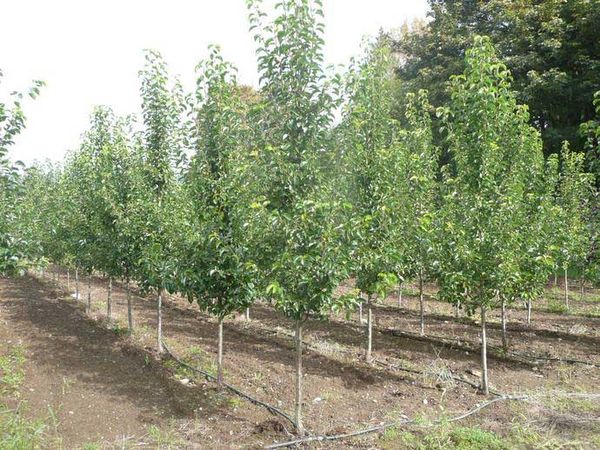
To protect the tree from harmful insects, it is recommended to annually cover the trunk and the base of the skeletal branches with lime.
Essential pollinators
This pear variety is self-pollinating. However, fruiting is sporadic. Experienced gardeners note that to increase yields, it's necessary to plant pear trees of other varieties in the plot. The best pollinators for Kieffer pears are Conference, Bonne Louise, and Saint-Germain. Fruit trees can be cross-pollinated even if the distance between the two trees is 200–300 m.
Advantages and disadvantages
Not sure if you want this pear tree variety in your garden? The positive and negative qualities of the Kieffer variety will help you make the right decision.
Advantages:
- absence of fallen fruit during the fruit ripening period;
- high yield (with proper agricultural care, 25-year-old plants produce about 280–300 kg of harvest);
- undemanding to soil;
- excellent drought resistance;
- good resistance to fire blight and scab;
- can be used to develop new varieties of pears.
Flaws:
- average early maturity (the tree begins to bear fruit in the 5th–6th year of life after planting the seedling);
- requires cross-pollination;
- insufficiently high winter hardiness (requires wrapping during cold weather);
- average recovery capacity in case of freezing of branches;
- unique gastronomic qualities of the fruits (there is astringency and a distinct turpentine flavor).
Video "Secrets of Growing Pear Trees"
This video will teach you how to grow pears properly.