
How to properly graft a pear tree for a beginner
Content
Why is vaccination necessary?
Grafting a fruit tree may seem like a complicated process at first, but that's only the beginning. Understanding the nuances is key. Grafting is used when a gardener is dissatisfied with the quality of the fruit (unpalatable, small, etc.) or when the first harvest is undesirable (some varieties begin bearing fruit quite late). Grafting can solve these problems, as the scion grafted onto the older tree will bear fruit well. Pear trees can also be grafted to create new varieties.
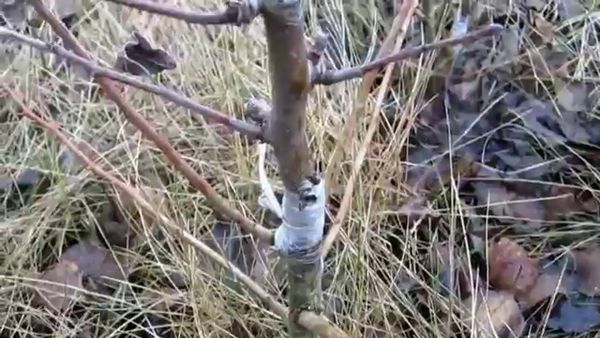
Selecting scion and rootstock
A grafted fruit tree has two parts: the scion and the rootstock. The scion is the part of the tree that grows above ground, and the rootstock is the root system. When they grow together, they form a new organism.
Quince, serviceberry, and chokeberry are all suitable rootstocks for pears, often called "wildings." You can also graft pears onto rowan or plum trees. Rowan pears produce very tasty fruit. Grafting a pear onto a pear of a different variety is also possible. In the latter case, it's important to avoid grafting trees with different fruit ripening times. This can shorten the tree's life cycle.
Good results can be achieved by grafting onto rowan (the fruit will be quite compact), quince, serviceberry, and chokeberry trees. The "quince" graft is considered the most common option because it produces good results. It reduces the height of the grafted tree, and the fruit itself becomes sweeter and tastier.
Is it possible to graft a pear onto an apple tree? Yes, this is entirely possible, as apple is a popular fruit tree, and its rootstock fuses well with pear scions. Pears can also be grafted onto plums, which are a fairly strong rootstock for all fruit trees.
When to graft a tree
The entire grafting process depends on the time of year. So, when should you graft a pear tree? Many gardeners agree that the best times to graft a pear tree are spring and midsummer. Also, choose the right day for grafting: it should be sunny and windless—trees react very differently to cloudy weather.
Methods of grafting at different times of the year
Grafting a pear tree in spring—what can we say? It's best to perform all procedures before the sap begins to flow. Remember that spring grafting shouldn't coincide with the tree's flowering period. Also, be mindful of frost, as it can damage the grafted shoots. Monitor the air temperature: the shoots will take root if it's more or less constant.
The most suitable time for grafting is mid-April – early May.
If for some reason you missed the spring grafting, you still have the second half of summer to do so. Early July is the best time. Remember that it's best not to graft pear trees in late summer. Grafting in the fall is also possible. However, keep in mind that the weather at this time is unstable, and as a result, the tree won't take root.
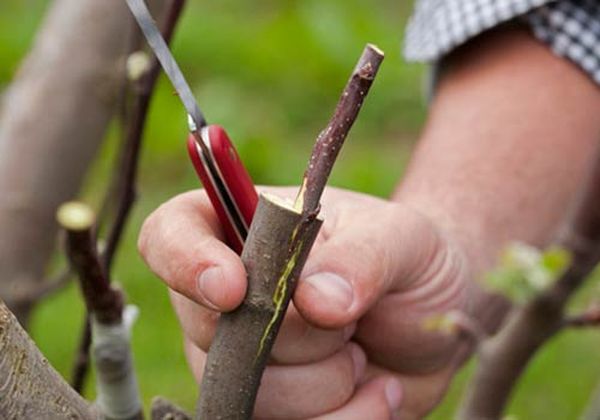
When figuring out how to graft a pear tree in the spring, decide on a grafting method. There are three options:
- budding method;
- under the bark;
- into the cleft.
Budding involves cutting the rootstock trunk, then applying the scion to the cut; the two branches are firmly grafted together. The "under the bark" method is used when the scion is significantly smaller in diameter than the rootstock. To do this, cut the bark in a T-shape and insert the scion. After this, tie the trunk with strong rope, and coat the junction of the two branches with garden pitch. This is necessary to prevent infection.
The final method—cleft grafting—is used when the rootstock's diameter is several times larger than the scion's. A branch is cut from the rootstock, and a cleft at least 5 cm deep is made at the cut site. The scion is inserted into this cleft. The next step is the same as the previous grafting method.
Step-by-step instructions
How to properly graft a pear tree? Let's break it down step by step:
- Remove soil from the rootstock trunk until the root collar is visible. Carefully remove all small branches, then wipe this part of the trunk with a damp cloth. Make a 3-cm-long T-shaped cut in the root collar.
- Take the cutting and cut off the bud with a sharp knife.
- Spread the bark in the cut you made and insert the bud there, pressing it well with your fingers.
- Wrap the grafting site with plastic tape so that one bud is visible.
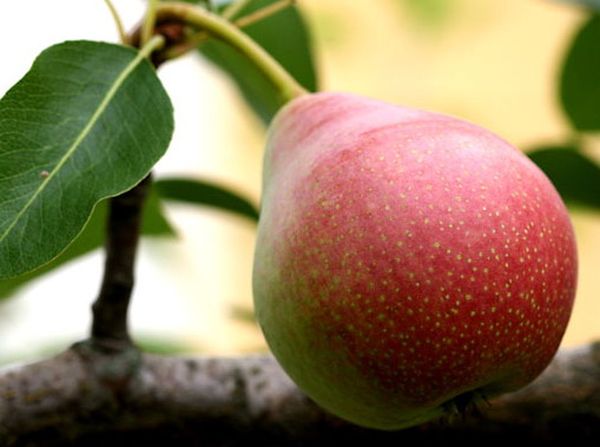
After 2-3 weeks, the grafted trees are inspected: if the bud is green, it has taken root. The grafting material is not removed until the following spring. Be sure to water the pear tree regularly throughout the spring and summer, and loosen the soil. After a year, select a permanent location for the tree, then replant it.
Video: "Pear Grafting"
This video will show you how to properly graft a pear tree.