
How to choose the right seedling and plant a pear tree in spring
Content
How to choose the right seedling
Planting and caring for pear trees will yield excellent results if you know in advance which varieties are best for a given region. Purchase healthy pear seedlings and look for step-by-step instructions or at least a general guide to the planting process.
When choosing seedlings, inspect them carefully, choosing the healthiest specimens. In the south, you can plant a one-year-old seedling, while in more northern regions, it's best to buy a two-year-old, or stronger, tree. It is essential to inspect the trunk: it should be straight, flexible, without any damage to the bark, and 80–85 cm high.
If the roots are exposed, they should also be carefully inspected. Healthy roots bend easily, have no dried or rotted parts, and should be white when cut. When pear seedlings are sold in containers with the roots covered, you can dig up the soil above to assess their condition.
In the fall, there's usually a wider selection of planting material (this is the strongest argument for fall planting in temperate climates). You can buy it in advance and then bury the roots according to the recommendations to ensure the tree survives until spring planting.
Landing site requirements
Pear trees thrive in a sunny, full-bodied location. They prefer fertile, slightly acidic soil that allows air and water to reach their roots. However, water shouldn't linger, otherwise the roots will rot. The groundwater table should be at least 3 meters below the soil surface. Planting a pear tree on a raised bed will keep its roots away from the groundwater and prevent other trees from shading it.
When considering how to grow a pear tree, you need to choose a sunny spot, but protected from north winds and drafts. This can be the western or southwestern part of the garden. There are additional requirements for the chosen location: there should be no rowan or hazel trees, from which pests could spread to the pear tree; the tree should be at least 3 meters from the nearest building.
Between pear orchard seedlings, you need to leave free space in accordance with their maximum height: between dwarf trees - 3 m, between semi-dwarf trees - 4 m, between tall trees - 5-6 m. There are varieties where it's best to leave 10 meters between seedlings—that's how wide their crowns spread. Leave 6 meters between rows.
Preparing the pit
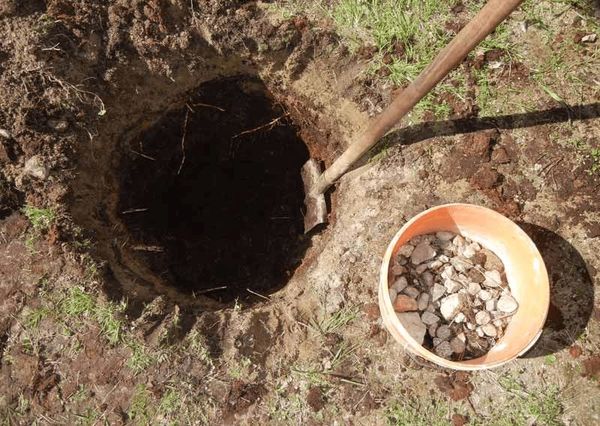
Even if we plant a varietal pear in the spring, we still prepare the planting hole in the fall. After the harvest, when the main gardening work is complete, we need to find the optimal location where the pear will be easy to grow. Regardless of what you planted there previously, the area should be cleared of weeds, dug over, removing stones and perennial grass roots, and then dig a hole 70x80 cm deep and with a radius of 70x80 cm.
How do you plant in different soil types? If the soil is too acidic, add lime or at least dolomite flour when digging. If the soil is too heavy, add a little sand or peat. If the soil is too sandy, it's best to add some black soil or even clay; in sandy soil, the pear will quickly stretch upward, its bark will crack, and this can lead to delayed fruiting and infection. However, all the work to structure, deacidify, and fertilize the soil can be done within the hole itself, in which case it should be made even wider and deeper (30–40 cm larger than the intended root zone).
A drainage layer of gravel, walnut shells, or any small stones is placed at the bottom of the hole. At least 20 kg of compost or humus mixed with soil is added on top. Next, add the top fertile layer of soil removed from the hole, mixed with wood ash, potassium, and phosphorus fertilizers. This is then covered with the remaining soil removed from the hole. If the fall is dry, add a few buckets of water to the hole, cover it with plastic wrap, and leave it until spring.
Experienced gardeners recommend placing a dozen raw chicken eggs at the bottom of the hole when preparing it: they will gradually rot, becoming excellent fertilizer for the tree.
Step-by-step planting process
There are no great secrets to planting a pear tree in the spring. It's recommended to soak the pear tree roots for an hour in water, adding a growth stimulant or simply dissolving a tablespoon of honey in 10 liters of settled or rainwater. If the roots are too dry, you can soak them for up to a day, and the entire tree can be submerged for a couple of hours. Before soaking, remove all leaves from the tree (it's often recommended to even remove branches) and trim off the top. The ideal planting material should look like a smooth, flexible stick with healthy bark and a well-developed, elastic root system.
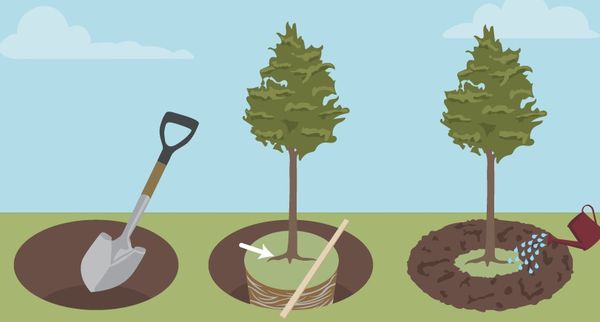
While the roots are soaking and absorbing moisture, the planting hole prepared in the fall is opened, the soil is removed to a depth corresponding to the root length, and the soil is formed into a mound. The bottom is loosened, and furrows are made in the sides. A sturdy stake is driven almost in the center of the hole on the south side, so that it rises 50–60 cm above ground level.
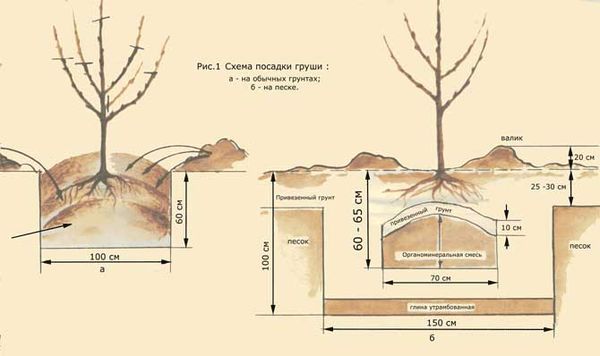
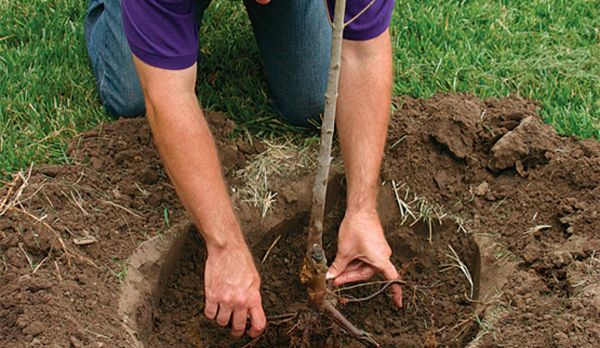
The tree's lateral roots are trimmed back by a few centimeters, placed on a mound of earth in the center of the hole north of the stake, and covered with soil, shaking it occasionally to ensure there are no air pockets. Then, the soil is firmly compacted, and the tree is tied to the stake. Proper planting means that the tree cannot be pulled out of the soil by hand—it is so firmly planted, and the root collar protrudes 3 cm above ground level.
After planting, water the tree with two buckets of water. Dig a hole for watering or simply border the area around the tree trunk with a shallow mound of soil to prevent the water from spreading too widely. After watering, the soil will settle; in this case, add more water to raise the root collar to the desired level.
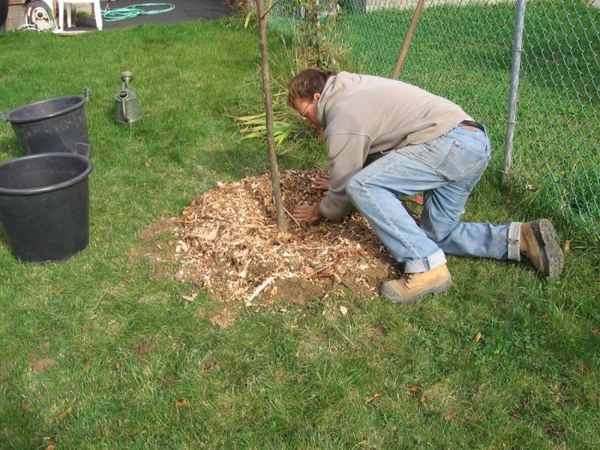
The planting process is completed by mulching the area around the tree trunk with peat, compost, or grass. The mulch should not touch the trunk itself to prevent rot. This is the simplest and most common planting method.
Further care
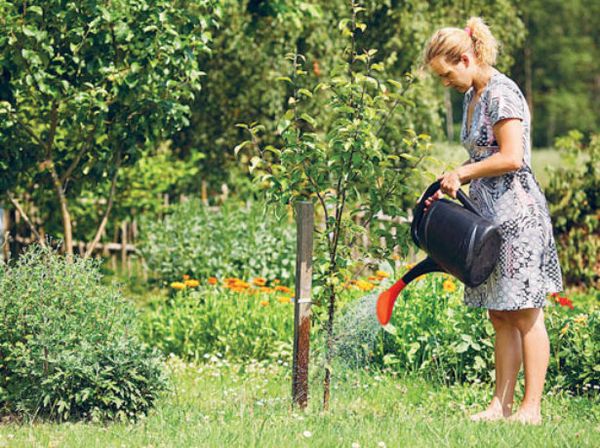
We've discussed how to plant pear trees properly. Now it's important to think about proper care to ensure the trees grow without problems, ensuring they receive adequate nutrition—so you can sample the harvest in the fourth year and avoid any shortcomings later.
A newly planted tree should be watered weekly; in summer, watering can be reduced to once a month if there is no rain. The older the tree, the less watering it requires.
Well-prepared soil should be fertilized every year using only nitrogen-free mineral fertilizers. Organic fertilizers are added every 3-4 years.
The crown is shaped in stages, with pruning during the first 3-4 years, followed by regular sanitary pruning. The area around the trunk must be kept clean and the tree must undergo preventative treatment.
Video: "Pear Tree Planting Guidelines"
This video will give you recommendations for planting pear trees.