
How and when to shape the crown of a pear tree
Content
- 1 Why is it necessary to shape the crown?
- 2 Types and purposes of crowning
- 3 Features of winter pruning
- 4 Features of spring pruning
- 5 Features of summer pruning
- 6 Features of pruning in autumn
- 7 Pruning of seedlings, young and old trees
- 8 Formation of the crown of columnar pears
- 9 Video: "Forming a Pear Tree Crown"
Why is it necessary to shape the crown?
Once your planted pear tree enters fruiting season, it requires regular formative pruning. Not only will it be much easier to harvest from a trained tree, but you'll also notice a significant increase in fruit production. This pruning will also benefit the plant itself:
- the culture is rejuvenated;
- the branches are strengthened;
- If you regularly trim the crown of the pear tree, you will be able to form a high-quality skeleton;
- shaping the pear crown has a beneficial effect on the condition of the bark;
- with the help of this procedure it is possible to extend the period of active fruiting;
- more sunlight reaches the ovaries;
- the taste of the fruits improves and they increase in size;
- Pruning also has medicinal properties – the procedure is a preventative measure against diseases carried by pests living in the cracks in the bark.
If you neglect pruning and don't regularly shape the crown, your pear tree will only need a few years to become completely wild.
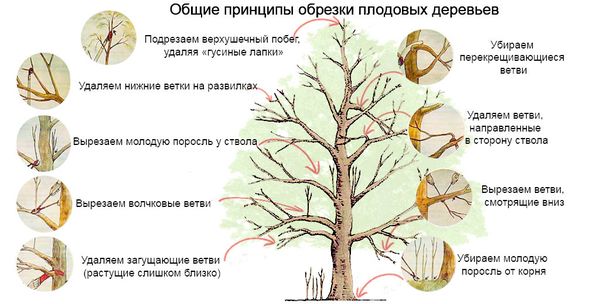
Another problem faced by almost all gardeners is suckers. These are powerful lateral shoots (forming on skeletal branches) that must be removed. Before shaping the pear tree's crown, be sure to check for suckers—they are the first thing to remove. Suckers never produce fruit, but only thicken the crown, sapping the tree's vitality. The most vigorous foliage, which also feeds on the plant's sap, always develops on suckers.
It's easy to recognize water sprouts - they almost always grow strictly vertically.
Types and purposes of crowning
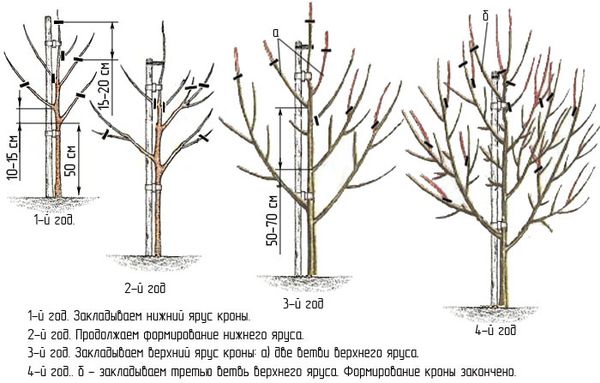
Regardless of how old your tree is, its crown is shaped in two main ways: thinning (when branches are removed directly at the base) and shortening (when only part of the fruiting stalk is cut off so that the branches become thicker and rejuvenated).
As for the main goals of the procedure, there are 3 of them:
- Shaping. Creating a clear crown shape for a young pear tree.
- Support. We maintain yields and care for tree health.
- Rejuvenation. Extending the crop's fruiting period.
Features of winter pruning
It's best to avoid any pruning in winter. However, if you're serious about gardening, it's best to do so in February, choosing a relatively warm day when the temperature doesn't drop below -15°C. It's best to start with trees that are several years old—these plants bud much earlier.
Features of spring pruning
Most experienced gardeners agree that spring pruning is optimal for fruit trees. During this period, the pear tree's leaves have not yet awakened, and sap flow is practically nonexistent, making it easier for the tree to overcome the aftereffects of the procedure. The timing of pruning should be chosen to protect your garden from sudden frosts and extreme temperature fluctuations.
The correct method and timing for pruning a pear tree in spring will depend on the region it grows in. In southern gardens, this procedure is carried out in the first two weeks of March, while in central Russia and further east, it should be done no later than early April.
Pear seedlings aged 1–2 years tolerate spring pruning best. For all other trees, the following scheme is used:
- remove all branches and shoots that show obvious signs of freezing;
- we remove all shoots that are growing incorrectly or crookedly;
- we shorten the trunk by approximately 25%.
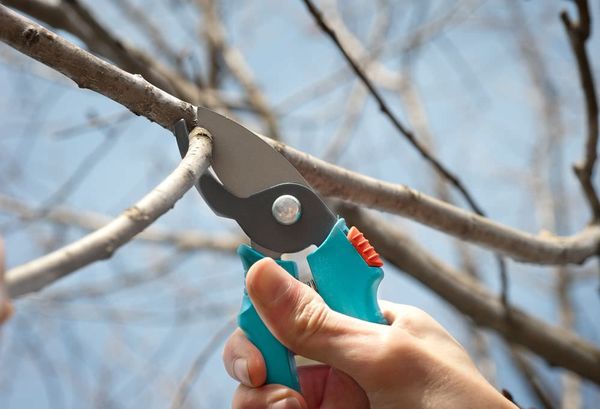
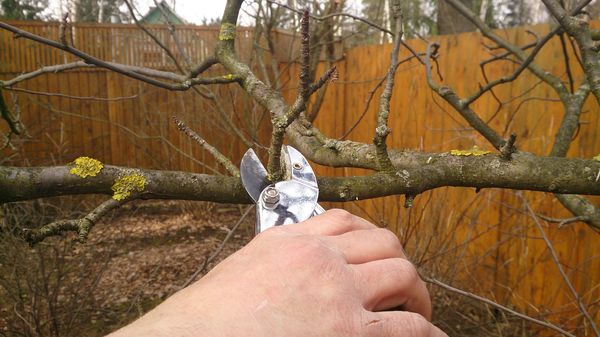
There is one trick that will help to minimize damage to the bark in the area of the pruned branches: when you cut a shoot "to the ring", first saw it from the bottom, and only then make the final cut.
After such manipulations, the active development of the tree's lateral shoots begins, and the buds located below the cuts awaken.
Features of summer pruning
Pear trees should be pruned in the summer only if necessary. This should be done no later than June, and only damaged branches or overly vigorous young shoots should be removed, without resorting to drastic pruning measures.
Features of pruning in autumn
Autumn crown maintenance is primarily for sanitary purposes. All dried branches are removed from the tree, and year-old shoots are trimmed back by about a third. Timing is crucial: there should be no frost for three weeks after the procedure, so try to complete all maintenance in early September.
Pruning of seedlings, young and old trees
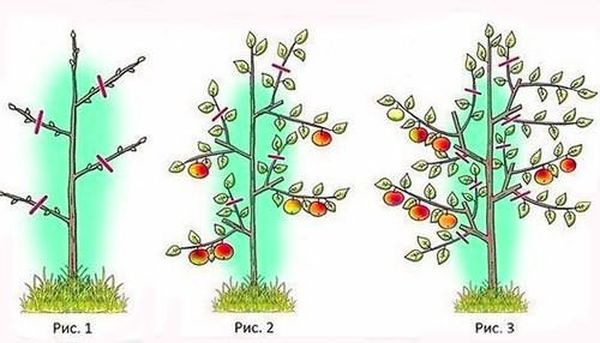
Pear seedlings are pruned for the first time after planting in the fall. Select the first bud on the main shoot, from which we will determine the shoots to be pruned. The three ovaries located above the first bud should also be removed. Now find the fifth bud, located on the opposite side of the trunk – this will become the basis for the second branch of the crown skeleton. Buds 6 through 8 should be removed.
As a rule, any manipulations during planting of a young tree give it the opportunity to more actively form a crown.
In the second year after planting, young pear trees should be pruned by about a quarter of their height. Additionally, all branching shoots should be removed, cutting them back to the first bud.
Over the next few years, all pruning procedures will be identical—you'll shape the crown and perform sanitary pruning. Around the tree's fifth year, lateral shoot growth will gradually cease, so the intensity of pruning will decrease. For the next 5-7 years, you'll only need to perform sanitary pruning for purely curative purposes.
Formation of the crown of columnar pears
Growing columnar fruit trees is rapidly gaining popularity in our country – they are commonly planted in almost every garden plot. Planting and caring for columnar pear trees is not difficult, with one exception: they require regular pruning.
Before starting the procedure, carefully inspect the apex: if the bud is healthy, the tree has a central conductor; if not, select the strongest lateral shoot and remove all others. In young seedlings, it's best to shorten the lateral shoots to avoid encouraging their vigorous growth.
Now you know what to do to ensure that your pear orchard always produces a bountiful harvest.
Video: "Forming a Pear Tree Crown"
This video will show you how to properly shape the crown of a pear tree.