
Description of the summer columnar pear variety Decora
Content
Characteristics of the variety
The most important characteristic of columnar pears is their compact size. This variety grows only 1.9–2.2 m tall, making it suitable for small plots. It's also very easy to harvest. The fruit is large, similar to regular pears. Due to its small size, these trees are also used for landscaping.
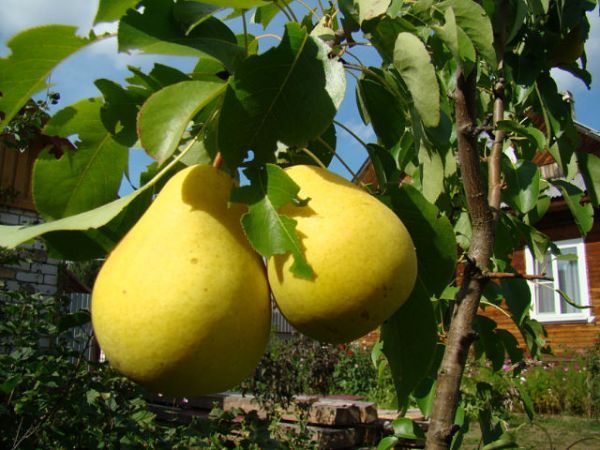
The fruiting period begins 2–3 years after planting and lasts 10–15 years.
The columnar pear "Decor" is distinguished by excellent winter hardiness and high resistance to diseases, including clasterosporium and moniliosis. It can be grown in Siberia and the Urals. A significant advantage of this variety is its self-fertility: it does not require other pollinators to produce fruit.
The fruits ripen in late August, weighing up to 230 g. Ripe fruits are uniformly yellow-green in color, with no blush. The flesh has a pleasant, light rose scent, is meltingly tender, juicy, and sweet.
Planting and care
The Decora pear can be planted in the fall (until mid-October) and spring (in April). This variety is undemanding regarding soil.
It's best to use one-year-old seedlings; they take root more easily. If you're planting multiple plants, space them 40–50 cm apart.
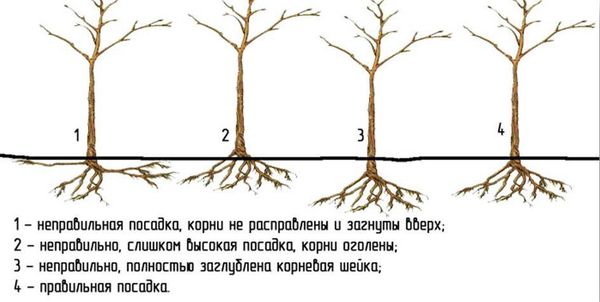
Two weeks before planting, dig holes 80 cm deep and 60 cm in diameter each. Add 3-4 kg of organic fertilizer and mix it with the soil. Moisten the roots of the seedling before planting, then pour a bucket of water into the hole, then add potassium sulfate and superphosphate to the soil. After straightening the tree's roots, place it in the hole so that the grafting point is above soil level. Fill the hole with soil in two stages, gently compacting it each time. Finally, water the seedling thoroughly.
During the initial period, a young tree requires plenty of moisture, so it should be watered 3-4 times a week and mulched if possible. When cultivating the soil, remember that the roots of this variety are located close to the surface.
Some experts recommend pinching all flowers in the first year after planting to conserve the plant's energy. Up to six fruits can be left in the second year. Subsequently, the number can be increased based on the tree's health. If the fruits begin to shrink, the following year's harvest should be reduced by removing some of the ovaries.
Diseases and pests
The Decora columnar pear is generally healthy, but can be susceptible to parasites and fungal infections.
The fruit midge (a mosquito-like insect up to 4 mm long) lays eggs in flower buds. The hatched larvae penetrate the receptacle. After flowering, the newly formed ovary grows abnormally rapidly in size. The larvae eat the ovary from the inside, causing the small fruits to crack, shrivel, and fall off. If left untreated, up to 90% of the harvest can be lost. To control the problem, spray with Metaphos or Chlorophos during bud formation.
Green aphids are also a pest of this variety; they suck the sap from the leaves and young shoots, gradually killing them. To kill them, use chemicals (Karbofos, Akarin, etc.) or folk remedies, such as a solution of liquid soap (2 teaspoons per 2 cups of water). You can also buy a batch of ladybug or lacewing larvae—natural predators of aphids. Aphids are repelled by the scent of lavender, so it's worth planting them nearby.
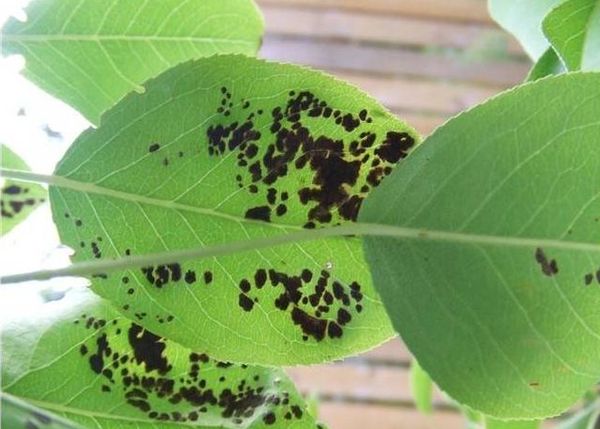
Pear trees can be affected by white scab. Yellowish spots with a velvety coating appear on the leaves. As the fungus spreads, it attacks the fruit, making them unfit for consumption. Prevention and treatment include treatment with Bordeaux mixture or a 1% colloidal sulfur suspension.
Video: "Shaping a Pear by Twisting"
This video will show you how to shape a pear using twisting.