
Description of the new winter pear variety Chudesnitsa
Content
Description and characteristics of the variety
This variety was recently developed, but it has quickly gained popularity among domestic gardeners. To develop this variety, domestic breeders had to work hard: they crossed two other popular and productive varieties—Doch Zari and Talgarskaya Krasavitsa. The result is an excellent, frost-resistant, and productive pear variety.
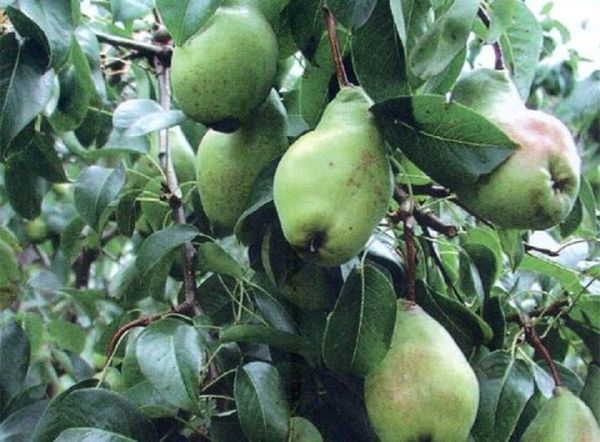
This pear tree is quite short, reaching a maximum height of only about 3 meters. However, growth can be controlled by selecting suitable rootstocks. The shoots are straight, smooth, medium-thick, and brown. The leaves are emerald green and ovoid. They are very short, with finely serrated edges.
Now let's move on to the characteristics of the fruits themselves. The Chudesnitsa pear variety can delight the farmer with fairly large fruits (up to 200 g), which in shape resemble the fruits of the Talgarskaya Krasavitsa variety. They are covered with a smooth skin with a distinctive glossy sheen. When ripe, their skin is greenish, but when they are most ripe for eating, it turns yellow with a noticeable scarlet blush. The flesh is white, very tender, and slightly oily. These fruits are very juicy and sweet, although a tart note can sometimes be detected.
The Chudesnitsa pear produces its harvest quite late, towards mid-autumn, but the first ripe fruits appear as early as the second half of September. A special feature of this variety is that it requires approximately a month, or even longer, to fully ripen in storage.
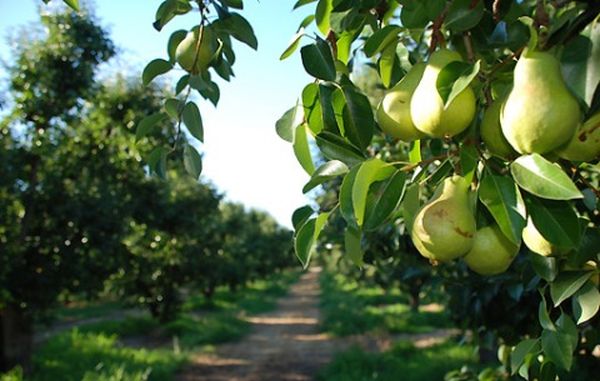
Overall, they have good shelf life, maintaining their marketable appearance and excellent flavor for about five months. The plant begins bearing fruit fairly quickly—by the fifth year, the first harvest can be achieved. With proper care, the pear will continue to produce a consistent harvest.
Care and necessary pollinators
To ensure your pear trees grow healthy and produce a stable harvest, you need to follow basic care rules.
- Pruning. This procedure is necessary because the Miracle Plant is a sun-loving plant. Be sure to thin the crown to ensure the shoots have access to sunlight. Regular pruning also reduces the risk of various diseases and promotes proper crown formation.
- Watering. Water the plant regularly, and then loosen the soil to allow the roots access to oxygen.
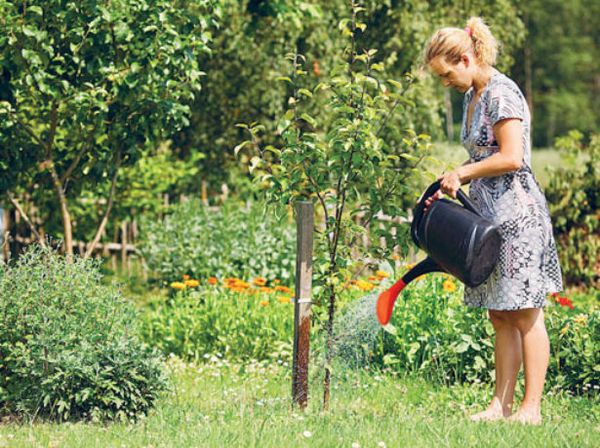
- Fertilizer. You can also fertilize your pear tree to promote growth and a bountiful harvest. In the spring, use nitrogen-rich fertilizers to encourage vigorous growth. In the summer and fall, to allow the plant to gain strength, feed it with fertilizers containing potassium and phosphorus.
- Winter shelter. While a mature tree doesn't generally need shelter, young trees benefit from being covered with spruce branches to help them survive their first winter.
- Disease prevention. Carry out preventative treatments in the spring and fall, and you'll minimize the risk of disease on your pear trees.
- Pollination. This variety is characterized by a relatively low level of self-fertility. To obtain a good harvest from this pear, it is necessary to plant other varieties that will act as pollinators, such as Feeriya or Pamyat Yakovleva.
Advantages and disadvantages
Although this variety was recently bred, it has already become a favorite among many of our compatriots. The advantages of the Chudesnitsa pear include its small size (with the appropriate choice of rootstock), allowing for compact planting of several trees even in a small plot.
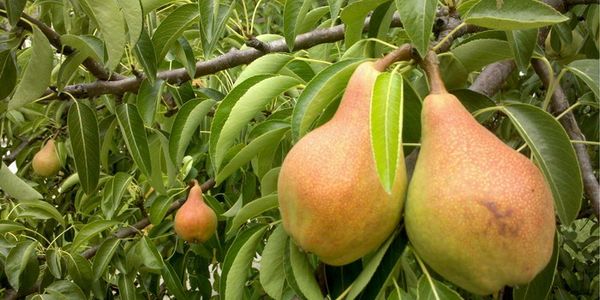
Although the fruits ripen quite late, they retain their marketable appearance and excellent taste for a long time.
They can be eaten and used for preserves. Furthermore, the trees begin bearing fruit quite early and produce a good harvest. Excellent winter hardiness allows Chudesnitsa to survive even the lowest winter frosts (down to -40°C). The variety is also resistant to common diseases, such as scab and rust.
However, this variety does have its drawbacks. First and foremost, the crown requires frequent pruning. New branches grow very quickly, shading the rest, so careful attention to crown formation is necessary. Another drawback is its rather modest tasting score—only 4.3 points.
Video: Fertilizing Fruit Trees
This video will teach you how to properly fertilize fruit trees.