
What is the best way to treat pear trees in spring against pests and diseases?
Content
Spraying rules
Before spraying the pear trees, carefully clean their trunks of dead bark, lichen, and moss. Use a brush or a stiff glove. Avoid rubbing too hard to avoid damaging the bark.
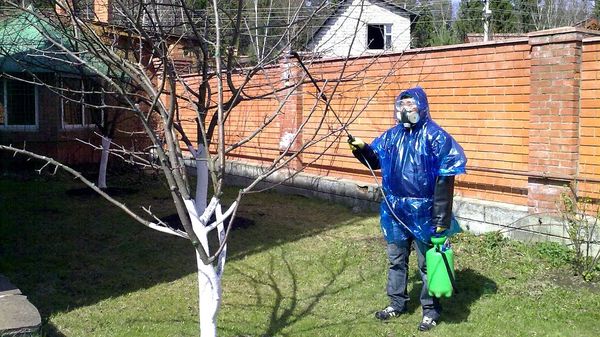
Trees should be treated with a freshly prepared solution. Follow the instructions for each product carefully; otherwise, you could either burn and damage the tree itself or render the product ineffective. Don't forget to take protective measures: a respirator, protective clothing, gloves, and goggles.
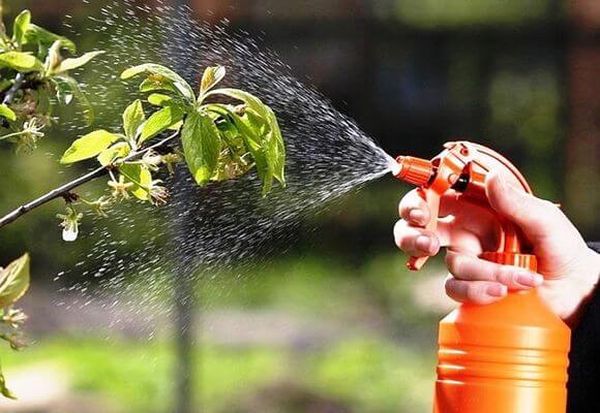
You need to spray the trunk itself, the crown of the tree, and the area around the trunk. When treating pear trees for pests, pay special attention to cracks and crevices in the trunk bark: this is where pests and fungal spores tend to accumulate.
Try to carry out the treatment in the evening or early morning. The weather should be calm and clear – if it rains soon after spraying, the results of your efforts will be nullified.
Processing calendar
The first spraying is done in early spring, as soon as the snow melts. Pear pests often overwinter in the bark, and control should begin before the sap begins to flow and the buds begin to swell.
Pests include aphids, which suck the sap from young shoots; leafhoppers, which feed on leaves, buds, and fruit; and pear gall mites, which infest pear leaves, causing them to swell, darken, and die. Other insects also pose a threat to pears.
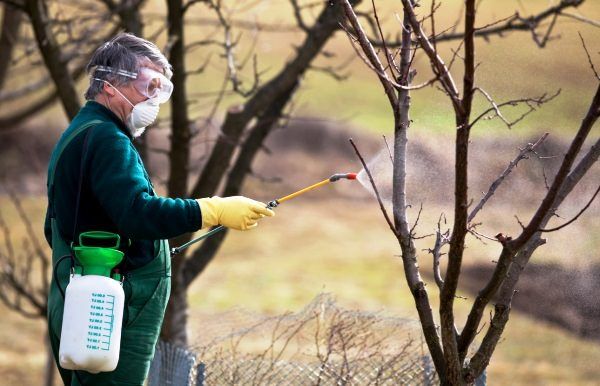
The second treatment takes place in April. It prevents bacterial and fungal diseases, such as powdery mildew.
The third spraying is recommended in May, when flowering begins and the first leaves appear. This protects the tree from diseases and pests such as leaf rollers and blossom beetles. Finally, at the end of May, treat the tree for codling moths.
Chemicals
Now let's find out how exactly to treat a pear tree in the spring against pests and diseases.
The first treatment may include Nitrafen, and the final treatment may include Karbofos—they are effective against many parasites. For insect control, BI-58 and Fufanon have shown good results.
If you notice swellings on the leaves that indicate gall mites, immediately pick and burn them and treat the tree with Inta-Vir. Prepare a solution of 1 tablet per 10 liters of water. To prevent gall mites, spring treatment should include mitak or colloidal sulfur.
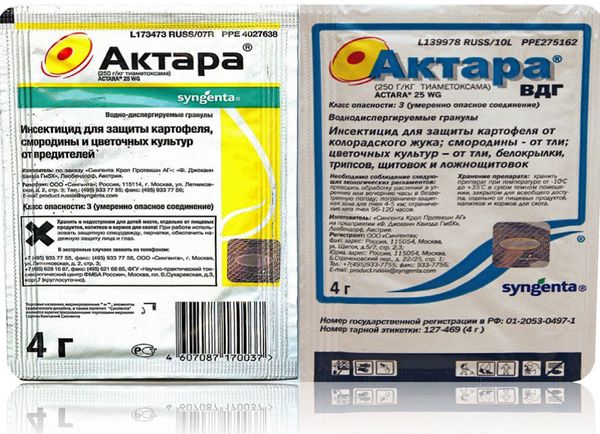
Aktara will help get rid of aphids and a number of other pests. The optimal concentration for pears is 4 g of powder per 10 liters of water.
Ferrous sulfate (3–4%) is a virtually universal remedy. It is effective against fungal diseases (gray mold, powdery mildew, etc.), pests, lichens, and moss. Recommended dosage: 300 g per 10 liters of water.
Spraying with copper sulfate protects the tree from insects and also strengthens its immune system. This is especially important, as pear diseases and pests are more likely to attack weakened trees. This solution is dissolved in a small amount of water, and the resulting concentrate is diluted in the required volume of liquid for spraying. The recommended proportions are 50 g per 5 liters of the prepared solution.
To protect against fungal infections, trees can be sprayed with Bordeaux mixture (1%). To prepare it, slaked lime (100 g) is dissolved in a small amount of water, then diluted to make 5 liters. In a separate (non-metallic) container, repeat the same procedure with copper sulfate (using the same proportions). Finally, pour the copper sulfate solution into the lime milk (not the other way around!), stirring constantly. Spray the tree with the resulting mixture as quickly as possible; after 5 hours, the lime particles will begin to clump and clog the sprayer.
Folk remedies
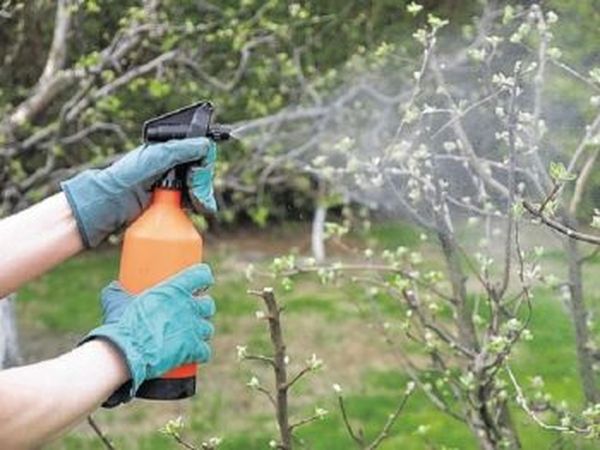
Folk remedies are often used to combat pear pests and infectious diseases. These can be used preventatively or for small-scale infestations. It's best to alternate between treatments to prevent bacteria, fungi, or parasites from developing immunity.
There are many decoctions for aphids. They are prepared using black henbane, onion peel, dandelion, chamomile, celandine, and many other plants.
A good result is achieved by infusing tobacco (you can buy it loose or simply shake it out of cigarettes): pour 1 part tobacco into 10 parts water and let it steep for 24 hours. Before spraying, filter the infusion and dilute it with water 1:3, then add liquid soap (at a rate of 4 g per 1 liter).
Large-flowered delphinium, yarrow, clematis, and wormwood will help fight leafhoppers on pear trees.
Hot red pepper is effective against leafhoppers and aphids: crush 1 kg of raw or 500 g of dried peppercorns and add 10 liters of room-temperature water to the mixture, then let it steep for 2 days. Then boil for 1 hour and let it steep for another 2 hours. After straining, store the decoction in a dark place. Caution: do not use during flowering! For spraying before flowering, dilute 500 ml of the decoction in 10 liters of water, and after flowering, dilute 100 ml of the decoction in 10 liters of water. In both cases, add 40 ml of liquid soap.
Some gardeners recommend introducing ladybugs into the garden, which eat aphids and leafhoppers.
To combat ticks, use a dandelion infusion. Collect 1 kg of leaves, add 3 liters of water, and let steep for 3 days. After straining, add a small amount of liquid soap.
You can use marigold: boil 100 g of flowers in 1 liter of water and let steep for 5 days. Before spraying, dilute the infusion 1:1 with clean water.
Video: "Garden Pest Control"
This video will teach you how to properly treat your garden for pests.