
How to treat a pear tree when leaf rollers appear on it
Content
Causes and signs of occurrence
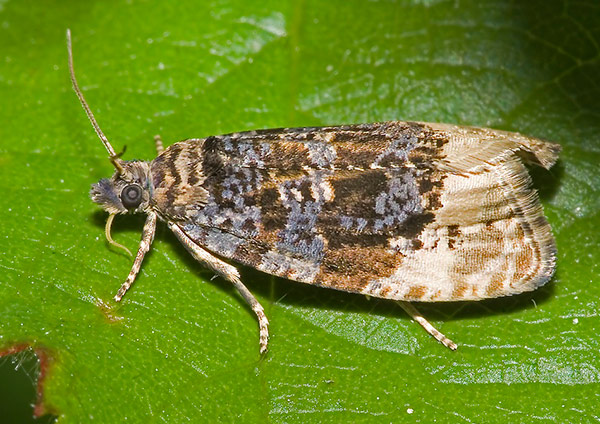
The leaf roller is a small butterfly with gray-brown wings. Some species can overwinter as caterpillars, while others lay eggs in the fall, which hatch early the following season. In either case, in the spring, the caterpillars feed on unopened buds, flower buds, and new growth on pear trees. After a while, they wrap themselves in the leaves, twisting them across the central vein. There, they pupate and, after two weeks, emerge as moths, which soon lay eggs again. Leaf rollers can produce several generations in a season. As autumn approaches, they begin to feed not only on the leaves but also on the pear fruit.
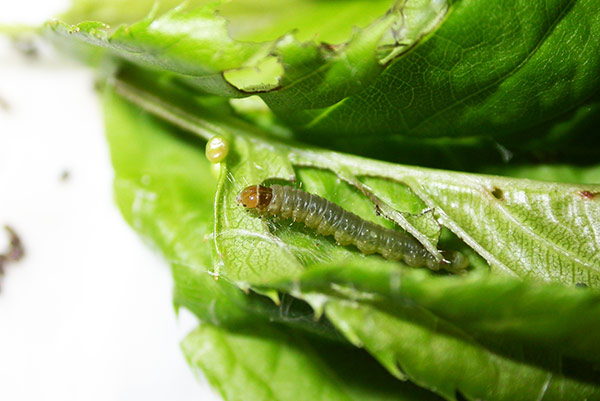
To determine whether a leaf roller has appeared on a pear tree, inspect the tree. In addition to the caterpillars and butterflies themselves, the presence of the pest is indicated by a viscous substance flowing down the trunk and areas of web-covered branches. The infected pear tree's leaves curl.
In addition to the direct damage, the leaf roller makes the pear tree less frost-resistant.
Young seedlings are particularly susceptible to attacks from this insect. Some varieties of leaf rollers attack several tree species at once, so if left untreated, they can soon overrun the entire garden.
If you notice that the leaves of your pear tree are starting to curl, check them from the inside: if it is indeed a leaf roller, the larvae themselves and the remains of their cocoons will be inside.
How to save a pear tree
Now let's find out how to deal with leaf rollers on pear trees.
If the infestation threshold is exceeded (five or more larvae on a branch), it is recommended to use chemical methods of pest control.
The temperature on the day of spraying should not be below +10 °C, otherwise most of the caterpillars will hide from the cold under the bark and avoid contact with the poison.
The biological products Fitoverm, Lepidocid, and Bitoxibacillin have proven effective in controlling leaf rollers. Pyrethroid products include Tsi-Alfa, Fastak, Ayvenko, Alfacin, Fatrin, Sensei, and Kungfu. Pyrethroid products are not recommended for use at temperatures above 25°C, as their effectiveness is reduced. Furthermore, the ingredients they contain can stimulate mite reproduction.
When butterflies appear, use Insegar – this insect growth regulator is effective when pests lay eggs on a surface that has already been treated with it.
To control the caterpillar, trees are treated several times at 7-10 day intervals. Treatments should be alternated, as the leaf roller quickly develops immunity to them.
Don't forget to treat the entire garden, as butterflies can easily move from tree to tree. Follow the instructions and safety rules strictly. Once the fruit begins to grow, stop spraying.
What other treatments are available for leaf rollers on pear trees? Besides chemicals, folk remedies have proven effective.
An effective tobacco infusion is: pour 50 g of tobacco into 1 liter of boiling water and let steep for 24 hours; after straining, dilute with water 1:1. Liquid soap (5 g per 1 liter) can be added before use.
A wormwood infusion is effective: add 800 g of dried herb to a bucket of water and let steep for two days; then boil for 30 minutes. Before use, dilute the infusion with water 1:1.
If the pear leaf roller hasn't had time to proliferate significantly, mechanical control methods are used: pluck and destroy infected leaves, and tie trapping belts made of corrugated paper or burlap around the trunk. Traps—jars of kvass or fermented compote hung from the tree—help collect adult moths. These traps are hung only at night and removed in the morning to prevent beneficial insects from getting inside.
Effective prevention
Control of leaf rollers, like other pests and diseases, begins with following proper agricultural practices. Timely pruning is essential, as the caterpillars find it easier to hide in dense canopies. Eliminate weeds, as leaf rollers feed on their pollen. Periodically collect fallen fruit and leaves, and loosen the soil around the tree trunk.
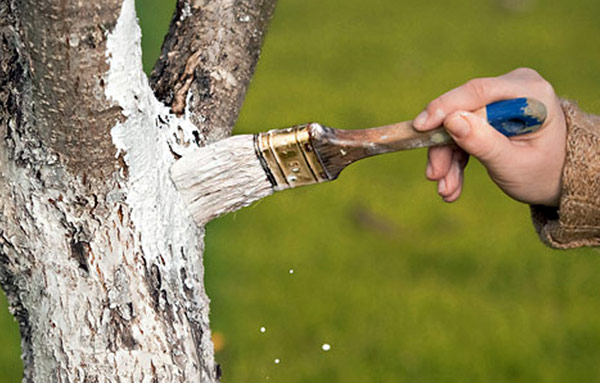
In the spring, use a stiff glove or brush to remove dead and cracked bark from the table—it may contain pest eggs. The trunks should be whitewashed with a lime solution several times during the season. Copper sulfate can be added to the lime solution during the first treatment. Karbofos (2%) with a chalk solution can also be used.
Frost cracks remaining after winter must be cleaned, treated with copper sulfate (1%) and covered with garden varnish.
For preventative spraying (at temperatures above 10°C), products such as Decis and Kinmix are suitable. They are applied to the tree three times: once before the sap begins to flow, then shortly before flowering, and again after flowering.
In the fall, you need to collect all the fallen leaves, loosen the soil and treat it with copper sulfate or Bordeaux mixture.
Video: How to Control Leaf Rollers
In this video, an agronomist explains how to combat leaf rollers using folk and traditional methods.