
Description of the autumn pear variety Bryansk Beauty
Content
History of appearance
The Bryanskaya Krasavitsa pear variety, as its name suggests, was developed in Bryansk under the guidance of renowned breeder N. I. Rozhnov. It remains unclear exactly which varieties were crossed to create the Bryanskaya Krasavitsa. According to the most common theory, these were the Novogodnyaya and Vilyam Krasny varieties.
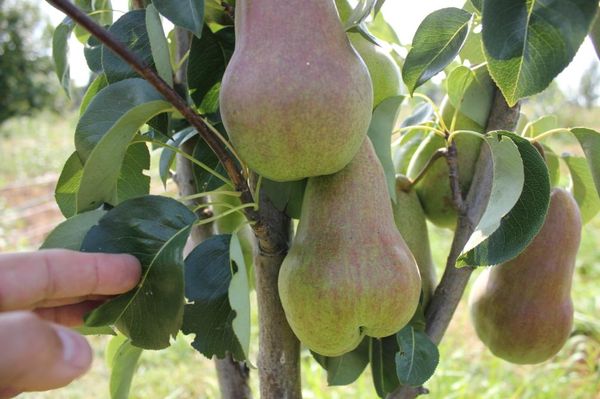
This variety was developed specifically for the Central Black Earth Region, but its high popularity has led to it now being fully adapted for cultivation in central Russia. It was also thanks to the incredibly high ratings from farmers that Bryanskaya Krasavitsa was recognized as an elite variety in 1993.
Characteristics of the variety
The tree of this pear does not grow very tall, with a rather narrow, pyramidal-shaped crown. Thanks to one of the "parent" varieties, 'Vilma Krasny', the tree's shoots have a slight burgundy tint. The shoots are spaced closely together and always grow upward. When the leaves first begin to emerge, their blades are tinged red. Over time, the leaves acquire a beautiful dark green color.
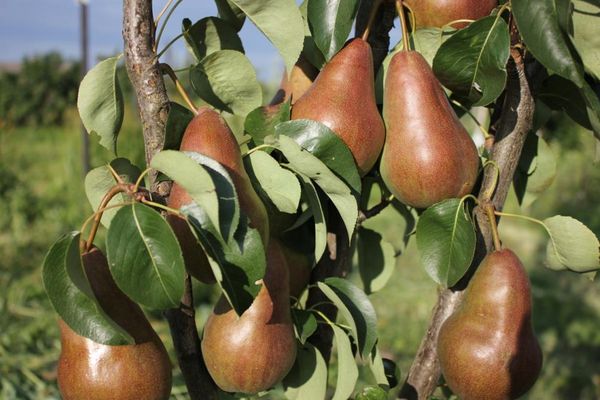
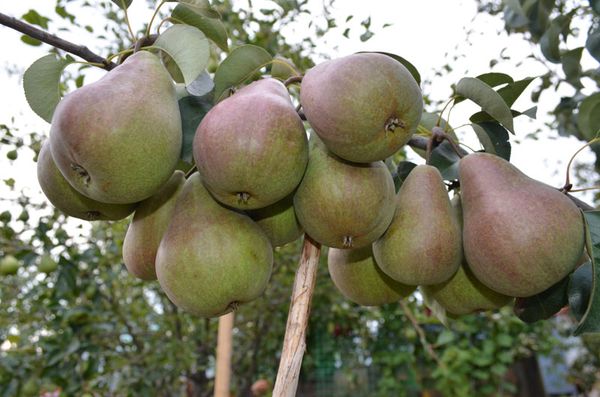
The fruits of this pear can reach quite large sizes (up to 250 g) and are a beautiful scarlet color. They are typically elongated rather than round (as with most varieties). The red skin is not glossy and is very smooth to the touch. The soft and juicy flesh has a creamy hue and a rather sweet taste (although there is a slight tartness). One of the distinctive features of this variety is its almost complete lack of odor, leaving only a faint floral aroma. The fruits receive a high tasting score of 4.8 points.
The tree begins fruiting relatively early—the first harvest can be obtained as early as the third year after planting. Subsequently, it bears fruit abundantly and consistently, reaching its peak yield in the sixth or seventh year. The fruit can be harvested in autumn—it will be ripe by mid-September.
The fruits can be stored for two months after harvesting.
A distinctive feature of the Bryansk Beauty is its late flowering. This makes it completely immune to late frosts, as it typically begins blooming only in May. Furthermore, the pear is highly winter-hardy and has excellent immunity to the most common diseases.
Landing features
It's best to plant a pear tree in the spring—this will minimize stress on the tree. When choosing planting material, carefully inspect the seedling. It should be completely healthy, with no rotted roots or signs of disease. Its roots should be flexible so they don't break during planting.
The location should also be chosen carefully. First, it should be well-lit. Second, it should be located away from groundwater, as its proximity promotes rapid root rot. Third, the soil itself should be light and permeable—loamy soils are best.
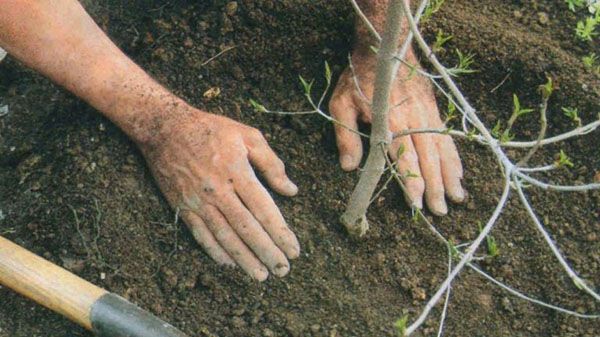
A few weeks before planting, it's important to create all the necessary conditions. First, dig a hole about a meter deep and fill it with soil mixed with fertilizer (usually manure). Then, carefully place the seedling in the hole, straighten the roots, and cover with soil. Make sure the root collar is a few centimeters above ground level. During the first few years, tie the tree to a stake to prevent deformation.
Immediately after planting, water the soil around the seedling thoroughly and mulch.
Caring for a pear tree
In order to obtain abundant harvests, it is necessary to follow the basic rules of plant care:
- Watering. The tree does not tolerate drought very well, so make sure the soil around the plant does not dry out;
- Pruning. A mandatory annual procedure. Remove dead and broken branches to reduce the risk of disease and allow new branches to grow unimpeded. Also remove any branches that contribute to a dense crown.
- Pollination. You won't have to worry about pollination, as Bryanskaya Krasavitsa is self-fertile. So, you won't need to plant other pear varieties in your plot to get a harvest. However, if you want to increase your yield, choose a suitable variety and plant it next to this pear.
- Disease and pest prevention. This pear has a fairly high immunity, so the risk of disease is minimal. However, to ensure the safety of your pear orchard, you should carry out preventative treatment with Bordeaux mixture every spring;
- Fertilizers. Only in the second or third year after planting should you begin applying fertilizers. In the spring, apply nitrogen-containing fertilizers, and in the summer and fall, apply potassium-phosphorus fertilizers.
Video: "Pear Tree Planting Guidelines"
This video will show you how to plant a pear tree correctly.