
Characteristics of the summer pear variety Allegro
Content
History of appearance
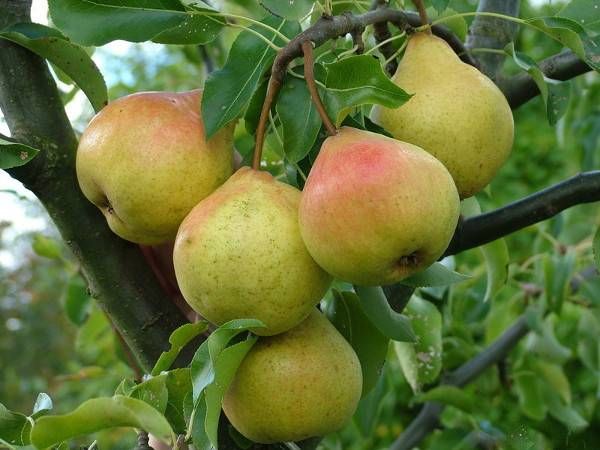
Thanks to the work of breeders S. S. Yakovlev, S. P. Yakovlev, and Yu. K. Ilyin at the I. V. Michurin All-Russian Research Institute of Genetics and Breeding of Fruit Plants, a new variety was developed. It emerged after successful artificial pollination of the Osennyaya Yakovleva pear variety. In 2002, this new fruit variety was approved for cultivation in the Central Black Earth Economic Region and entered into the state register. Today, it is a fruit tree with excellent characteristics and delicious, attractive fruits suitable for all purposes.
Description and characteristics
The variety's characteristics include a description of the yield, immunity, winter hardiness, and shelf life of the fruit. The tree begins to bear fruit 5–6 years after planting. The yield is high: from 1999 to 2002, it averaged 162 centners per hectare. The fruits ripen in the first ten days of August and can be stored without losing their quality for two weeks.
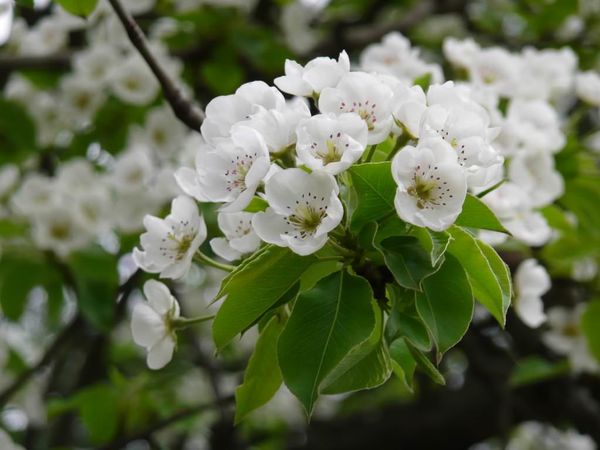
The Allegro summer pear variety is also frost-resistant. After artificial freezing at -38°C, the tree showed only 1.5 frost damage on its first-year branches. The flowers are resistant to late spring frosts. The variety is immune to fungal diseases. Self-sterile, it's recommended to plant pollinators for the Avgustovskaya Rosa, Chizhevskaya, and other varieties.
The variety description includes both the tree's external characteristics and its fruit. The pear is a fast-growing tree. The crown is medium-sized and slightly drooping. Fruit appears on fruiting canes, spears, and peduncles. Fruit also forms on one-year-old shoots. The light-brown shoots have few lenticels. The leaves are ovate, medium-sized, with serrated edges and a pointed tip. The color is dark green, with a glossy surface.
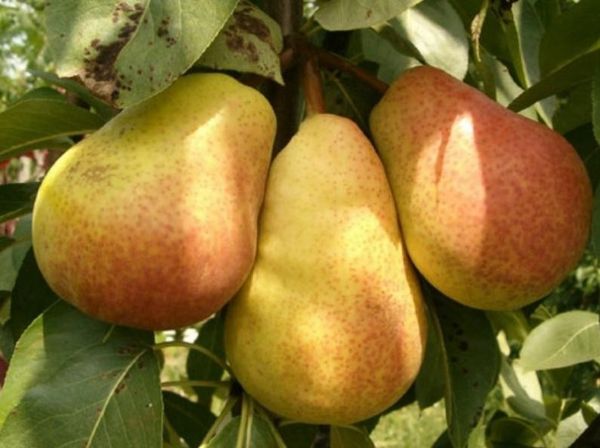
The average weight of the elongated pear-shaped fruit does not exceed 145 g.
The greenish skin with a pink tan is tender and smooth. The skin of a fully ripe pear turns yellow-green. The peduncle is long and oblique. The seed chamber is closed. The long seeds are brown. The flesh is white and fine-grained, tender, with a sweet and sour taste. The fruit contains 8.5% sugars, 0.59% titratable acids, 15.1% soluble solids, 48 mg/100 g P-active substances, and 8 mg/100 g ascorbic acid. The uneven ripening of the pears allows for repeated consumption and processing.
Features of cultivation
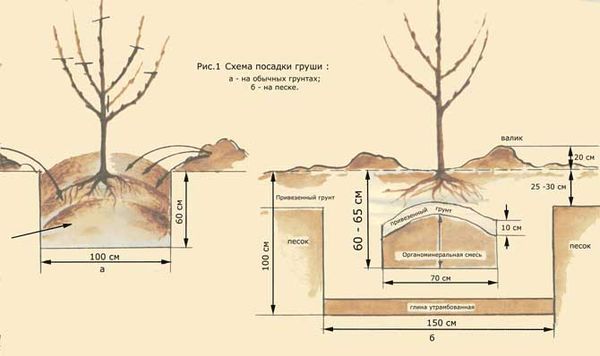
To plant a seedling in spring, prepare the site and hole in the fall. For fall planting, preparatory work is carried out in the spring. A well-lit area protected from drafts is ideal for the tree. It's best to plant the tree on a raised site where groundwater doesn't approach the surface too close. The optimal planting hole size is up to 100 cm in diameter and up to 50 cm deep. Fill it with two buckets of fertile soil mixed with 10 kg of manure. Ash and superphosphate should be added. The top of the seedling is trimmed back to a height of 100 cm. Strong roots are also trimmed back by 10 cm. After planting, mulch with sawdust, compost, and humus. Staking the seedling is recommended.
Care consists of moderate watering. Drip irrigation is preferred, simulating natural rainfall.
It's important to fertilize and loosen the soil regularly. Experienced gardeners whitewash tree trunks with a mixture of water-based paint and Bordeaux mixture during the summer-fall and winter-spring periods. This helps protect the garden from temperature fluctuations and possible sunburn. There are also tricks for increasing the yield and taste of the fruit.
Timely pruning of annual shoots increases yield by 20-30%. Fruit buds can be thinned manually or by chemical thinning. Spraying the crown with "Tur" can be done. It accelerates fruit ripening and increases yield by 10%. It is also recommended to apply zinc sulfate to the soil before flowering. This increases yield by 10-15%.
Video: "How to Properly Water a Pear Tree"
This video will show you how to properly water a pear tree.