
Growing oyster mushrooms at home for beginners
Content
How to choose a place for growing
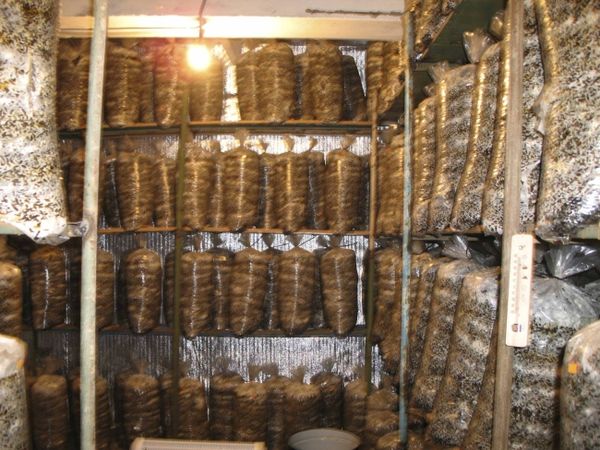
The first thing you need to decide on is a growing space for oyster mushrooms. For the effective cultivation of any mushroom, including oyster mushrooms and button mushrooms, good air circulation is essential. Another key factor is humidity, which should be at least 50%. Most often, specialists grow oyster mushrooms in basements, sheds, or regular greenhouses. Here, the mushroom blocks are out of the way, and the harvest can grow peacefully. However, for easy-to-grow mushrooms like oyster mushrooms, any space that meets the following conditions is perfectly suitable:
- high air humidity – about 70%;
- lack of sunlight – the mycelium must be kept in the dark for the first 20 days;
- the presence of artificial lighting - as soon as the oyster mushrooms in bags form the first rudiments, they require additional lighting for at least 8 hours a day;
- maintaining the temperature regime – the range of indicators should be within +20–30 degrees;
- high-quality ventilation.
One of the most common mistakes when growing oyster mushrooms on your own is the careless choice of location. If even one of the conditions is violated, there will be no harvest.
Basis for growing
Before growing oyster mushrooms at home, carefully study the substrate requirements, as the growing medium is the key to successful oyster mushroom cultivation. Avoiding any unfortunate mistakes is crucial to ensure successful oyster mushroom cultivation.
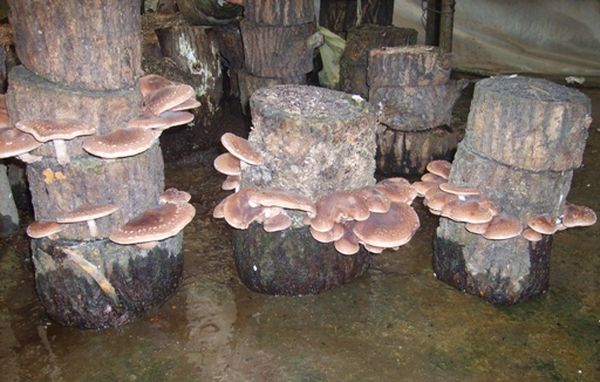
It's worth mentioning that there's also an extensive method for growing oyster mushrooms. This method doesn't require a special substrate, and the mushrooms are grown outdoors on stumps or trees. But that's a topic for another article.
Which mycelium to choose?
Growing oyster mushrooms at home is already fraught with difficulties for beginners, so avoid the common mistake of buying mycelium from someone else. It's better to turn to specialized farms or stores, where you'll be offered the best option. Furthermore, beginners will often be offered mycelium that has been used commercially for about 12 months. Here's a little secret: industrial oyster mushroom cultivation doesn't require using the mycelium for more than a year. However, during this period, the mixture doesn't completely exhaust its potential and continues to produce fruit well, and it's considerably cheaper.
Calculate the required volume in advance – oyster mushrooms grow well in the garden: on average, you can get about 3 kg of mushrooms from each kilogram of mycelium.
How to make your own substrate
Alternatively, you can prepare the mixture yourself, from scratch. Of course, this will produce mycelium that's best suited to your region's climate, but preparing it will require some skill.
The mixture should contain a high-quality base and a mineral component. It's important to ensure that the base material (straw, sawdust, or husks) is clean and disinfected. However, special chemical disinfectants should not be used, as the mushrooms grown will be eaten.
How to grow oyster mushrooms at home? Here's a step-by-step guide to preparing the substrate:
- disinfection of the base;
- grinding the substrate (so that the fraction corresponds to 5 cm) and repeated heat treatment;
- wringing.
How to form mushroom blocks
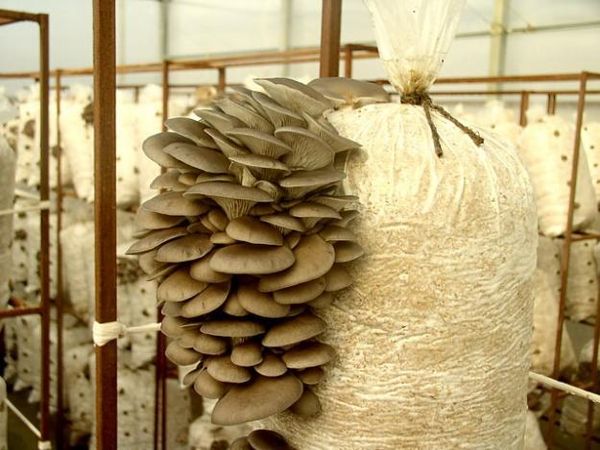
Mushroom blocks are a kind of raised bed where our mushrooms actually grow. Most often, simple plastic bags with a capacity of at least 5 liters are used, filled with substrate.
Once the bags are disinfected, they need to be filled properly. This is done layer by layer, alternating a 5 cm layer of substrate with a 0.5 cm layer of mycelium. Make sure that the first and last layers consist exclusively of substrate.
When the bag is completely full, it is tied tightly and small holes are made in the walls, approximately 10 cm apart.
That's it, you're ready to grow oyster mushrooms in plastic bags!
Care Features
As mentioned, oyster mushrooms are not particularly fussy, so growing them at home is straightforward. The key is to strictly follow the care instructions: planting techniques, maintaining temperature and humidity levels.
Despite their apparent complexity, king oyster mushrooms grow well even for novice mushroom growers, provided they know how to care for them. Ensure adequate lighting and avoid over-ventilating the area, as the carbon dioxide released by the mushrooms helps create the right microclimate. Mushrooms need to be watered daily, using only warm water.
To speed up the maturation process, the mushroom blocks can be fertilized. Oyster mushrooms should be fed at the inoculation stage, with fertilizer applied sparingly.
Microclimate support
One of the most important conditions for effectively growing oyster mushrooms at home is temperature: it must be constant and not fluctuate by more than 2 degrees. Both higher and lower temperatures are equally detrimental to the future harvest. The same applies to humidity.
When and how to harvest properly
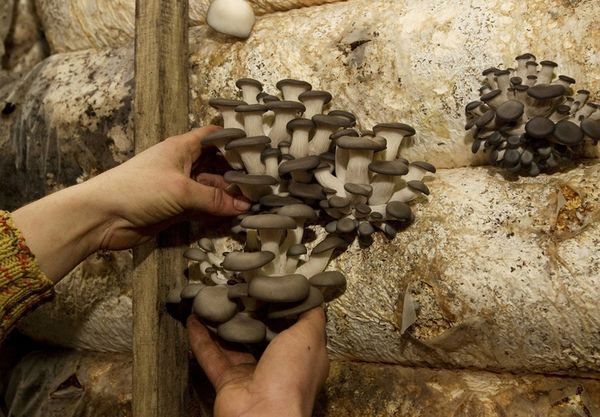
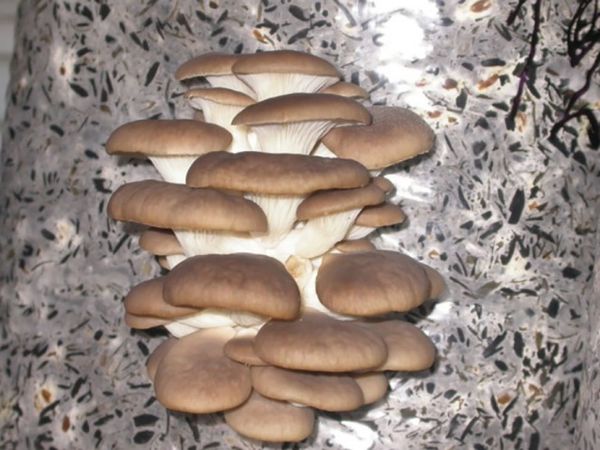
You'll get your first harvest six weeks after planting the mycelium. When harvesting, cut the mushrooms in groups—this will help them last longer and preserve their flavor. The second harvest will be ready in just three weeks.
We hope we've answered the question, "How to grow oyster mushrooms at home?" It's easy and rewarding, especially since even a beginner can care for them.
Video: Growing Oyster Mushrooms on the Farmstead
This video will give you tips on how to grow oyster mushrooms yourself.