
Secrets of growing truffles at home
Content
Choosing a landing site
Truffles naturally grow in the southern regions of Europe, where the climate is neither too hot nor too humid. Because these mushrooms are extremely demanding of the environment, only residents of the southern regions can afford to cultivate truffles in open ground in Russia or Ukraine.
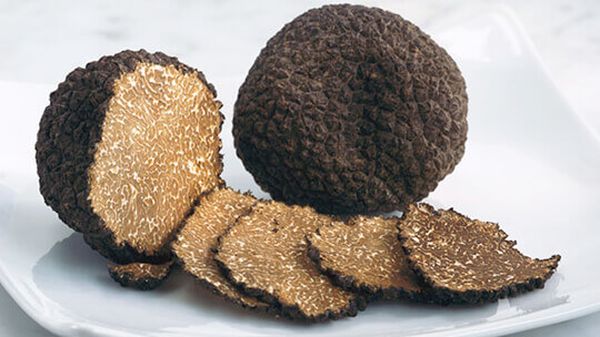
The following are good places for planting truffles:
- Open ground. As mentioned above, this option is only suitable for regions with a consistently warm climate, as cold spells pose a high risk of crop failure. A forest belt with deciduous trees such as oak, walnut, and beech is preferable for growing;
- Greenhouse. A greenhouse for mushrooms can provide ideal micro- and macroflora year-round. However, setting up a greenhouse requires a significant financial investment, which is only justified if you plan to grow truffles as a business. Otherwise, the costs of heating, ventilation, humidification, and expensive soil will not be worth it.
- In a basement. The most frequently suggested option for the search query "how to grow truffles at home." A basement is advantageous because it doesn't require expensive construction and is unaffected by natural disasters like wind, hail, and snow. However, equipping it will also be expensive. Furthermore, a basement will require additional disinfection and treatment with antibacterial agents.
The planting site, regardless of its geographic location, must contain soil whose water balance is on the border between neutral and alkaline. Furthermore, the soil must be rich in air, humus, and calcium. It should be free of stones and large uneven surfaces. It should be treated for pests and diseases.
Like simpler members of the species—oyster mushrooms and button mushrooms—truffles dislike strong winds, intense sun, and cold. The optimal temperature for cultivation is 20–22 degrees Celsius. Animals should be kept away from the area, and other flowers, trees, and shrubs should be kept away.
Landing features
Modern mushroom pickers cultivate three main varieties of delicacy mushrooms: white, black, and Chinese. Each of these can be found in the wild, and you can try growing your own planting material from the mycelium.
Truffles grow on oak and beech trees. They can be grown on tree sawdust or on their root system. The former method is easier to cultivate at home.
The shredded trees are inoculated with mycelium and placed in a sterile, warm place until mycorrhiza—a fusion of fungal spores with the tree—forms. Once the mycorrhiza takes root, it can be used for planting. However, this will not happen for at least a year.
A simpler option is to purchase ready-made planting material from a reputable supplier. This material is often sold already in a substrate, which is planted in small handfuls. To do this, dig holes 25–75 cm deep, spaced 2 square meters apart. Before planting, add water to the hole, add a layer of compost, and top the mycelium with a layer of hay or sawdust (up to 200 mm thick).
It's best to plant future mushrooms outdoors in late spring or early summer, when frost is guaranteed. Mycelium can be planted in basements and greenhouses at any time of year.
Care and growing rules
For truffles grown indoors, fertilizers containing copper, boron, zinc, calcium, and iron are beneficial. Nitrogen, phosphate, and potassium fertilizers are also helpful. In forested areas, it's best to apply fertilizer not directly to the mushroom's planting site, but to the soil near the tree where the truffle grows.
This crop does not tolerate weeds, fallen and dry leaves, or other plants other than those beneficial to it. Poplar, spruce, and chestnut trees are particularly harmful. It also does not tolerate interaction with animals, particularly pigs, which are known to be truffle hunters.
In winter, plants in open ground are mulched to protect the planting site from freezing as much as possible. In spring, the soil should be treated for pests and insects.
Harvesting
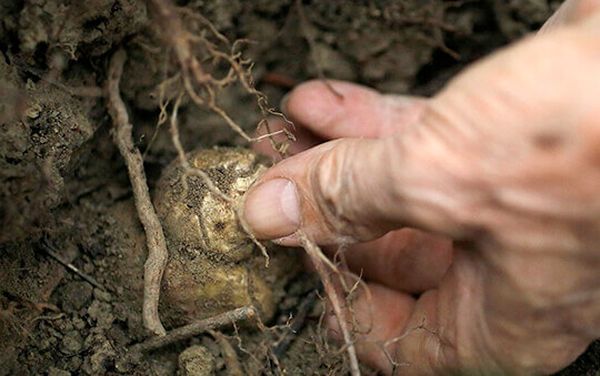
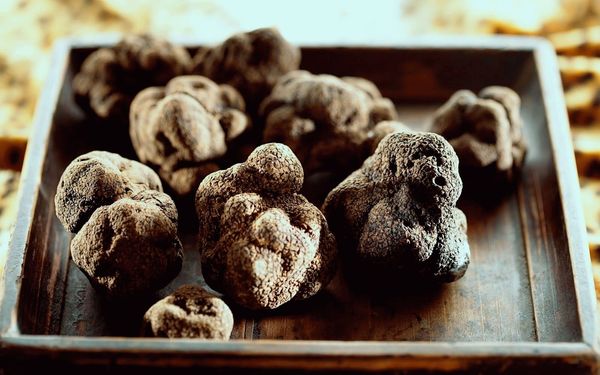
It takes about five years for the harvest to develop, during which time the fruit, with a dense, round, textured shell, develops underground at a depth of 20–45 cm. It is the fruit portion that is consumed.
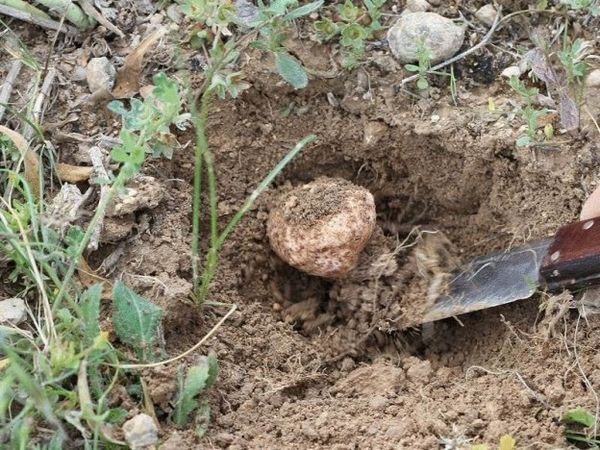
During harvest, the mushrooms are carefully dug up. Any damage to the fruit negatively affects not only the mushroom's appearance (it can rot) but also its taste. To avoid harvest losses, dig up the truffles carefully and store them on a flat surface lined with a layer of soft straw.
The average weight of a mature mushroom is 500–1200 g, and the total weight of the harvest can exceed 9 kg.
Is it possible to make a business out of truffles?
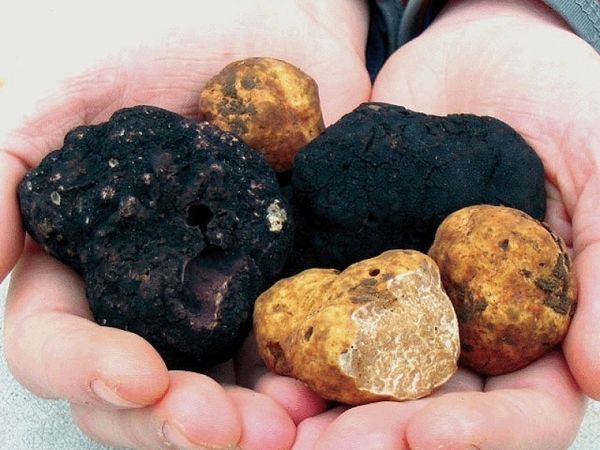
Since growing truffles at home is an energy-intensive process, farmers want to recoup their costs as quickly as possible. However, the crop's long maturation period and certain difficulties associated with cultivation make it difficult to realize a quick profit.
Nevertheless, the return can reach almost 300% of the investment. Truffles have enjoyed steady demand in the Russian market for the past 20 years. Currently, the average price for 1 kg of the mushroom is 56,000 rubles. The average price for a truffle dish in a Moscow restaurant ranges from 500 to 1,000 rubles.
In addition to restaurants, you can offer your products to seasoning producers. The strong aroma of this mushroom is also present in truffle oil, for which producers purchase the fruits in bulk.
Given the development trends of modern restaurant cuisine, truffle cultivation has the potential to become not only a profitable but also a trendy business.
Video: How to Grow Truffles
This video will show you how to grow your own truffle.