
Secrets to growing porcini mushrooms at home
Content
How to prepare seed material yourself
To grow mushrooms at home, you need to stock up on seed material. To prepare it yourself, you need to find overripe boletus mushrooms in the forest (dried and wormy ones will do).
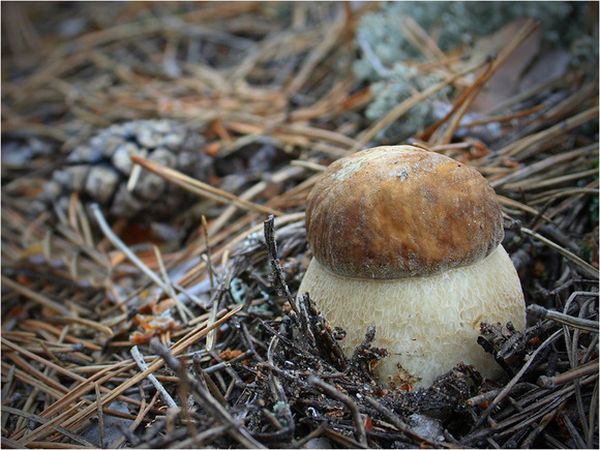
To obtain seed, you'll need about 10 mushroom caps. At home, separate them from the stalks and prepare a container of water. You can add alcohol (3 tablespoons per 10 liters), potassium permanganate (1 g per bucket), and granulated sugar (50 g) to the water. Crush the caps in your hands and add them to the water until a homogeneous mass is formed. Let the mixture sit for about 10 hours. Then strain it. The mushroom spores are contained in the water; there's no need for pulp. Use caps collected in the forest within a few hours, otherwise they will spoil. Do not freeze them.
To grow boletus mushrooms at home, you can use mycelium brought from the forest: after finding an adult mushroom in the forest, cut off a layer of soil around it approximately 25x25 cm. At home, you can place the whole mycelium into prepared soil or divide it into 8–20 pieces.
Purchasing ready-made mycelium
Growing porcini mushrooms at home is possible using store-bought mycelium. Porcini mushroom mycelium can be either dried or already sprouted and placed in a substrate. If you plan to purchase it online, choose trusted and reliable suppliers. When purchasing directly, please note: sprouted porcini mushroom mycelium should be reddish in color with small yellow flecks. The presence of black or green areas, as well as a strong ammonia smell, indicate spoilage.
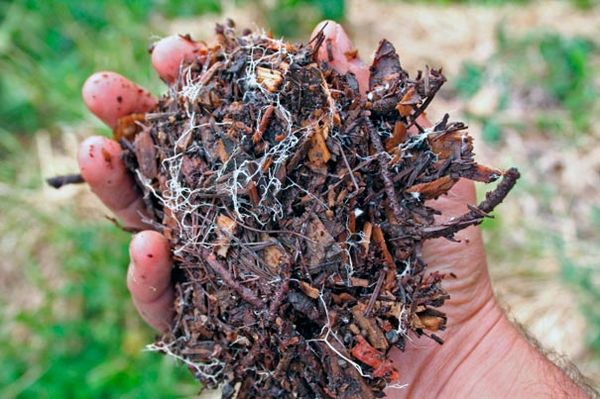
In open areas, porcini mushroom mycelium should be planted under a forest tree. The first harvest can be expected the following year. Fruiting from the mycelium lasts on average 3-4 years, but by adding beneficial microorganisms to the water (for example, "Baikal EM-1"), this period can be extended to seven years, thereby increasing the yield.
Selection and preparation of substrate
To grow mushrooms in your garden, you can use a store-bought substrate or make your own. To do this, mix straw, deciduous tree sawdust, and sunflower husks. Other sources recommend alternating layers: one of a mixture of fallen leaves and sawdust, and the second of the same mixture with soil added. It's important that neither component contains rot or mold. Before planting the mushrooms, the substrate should be thoroughly moistened, preferably with boiling water or steam—this will also kill harmful bacteria.
Features of cultivation
First, decide where you'll grow your crops: in a basement, a greenhouse, or in your garden. Each method has its advantages and disadvantages.
First, let's look at how to grow porcini mushrooms in your garden.
Growing porcini mushrooms in a garden requires the presence of coniferous or deciduous forest trees. Fruit trees are not suitable – porcini mushrooms should be grown in a garden away from any cultivated plants, be they trees, shrubs, or vegetables.
Remove the top layer of soil (about 15 cm) around the selected tree. It's best to expose the roots, but be careful not to damage them. If you're using a spore infusion, pour it onto the soil (approximately 350 ml per 25 cm²). Then cover the soil again and water thoroughly—either directly onto the trunk or using a shallow sprinkler. This method can be used to plant porcini mushrooms in your garden in August or September.
To plant the mycelium, dig a hole near the tree, 1.5 square meters in diameter and 30 cm deep. Place the substrate in it, alternating it with soil in 10 cm layers. The height of this bed should be 20 cm above ground level. Plant the mycelium in the substrate in a staggered pattern, spacing the bags 30 cm apart. After carefully watering the bed, cover it with a layer of fallen leaves.
Mycelium planting can be carried out from May to September.
Caring for planted mushrooms primarily involves generous watering. For the winter, it's recommended to cover them with a thick layer of leaves, spruce branches, or straw.
When growing mushrooms indoors, it is necessary to first sterilize it with a one percent chlorine solution, otherwise pests may appear, including various types of mold and parasitic insects.
Growing mushrooms in a greenhouse or basement requires creating a warm and humid microclimate, as it's impossible to grow many porcini mushrooms in dry air. To ensure the greenhouse atmosphere meets these requirements, it's recommended to place several barrels of water or damp sawdust there.
The substrate used indoors is the same as for outdoor areas. In the basement, it is filled into bags with small slits. It is recommended to sow the mycelium. The bags should be spaced at least 5 cm apart.
During the incubation period (until the caps appear), the temperature should be maintained at +23–25 °C; a temperature of +30 °C will destroy most of the mycelium of the cultivated crop.
Lighting is not required during this time. It's best to dim it as much as possible in the greenhouse, and simply leave it off in the basement. Ventilation isn't necessary, but humidity shouldn't exceed 90% to prevent mold. Periodic disinfection with a chlorine solution is also recommended to prevent mold.
Growing mushrooms require different care: when the caps appear, the temperature is lowered to 10°C. Now the greenhouse or cellar should be well ventilated—oxygen is essential for the normal development of boletus mushrooms. Lighting is required for 5-6 hours per day. For growing porcini mushrooms in a greenhouse, the lighting should be subdued, away from direct sunlight. It is advisable to mist the mushrooms twice a day with a spray bottle: this will make their structure more dense. The first harvest is usually ready after 20-25 days.
Moldy bags should be removed from the room immediately. Mushrooms won't grow on them anymore, but they can make a good fertilizer.
Please note: porcini mushrooms have difficulty growing without trees nearby, and initial attempts at growing them in a basement may be unsuccessful. However, if you intend to cultivate porcini mushrooms this way, choose Dutch mycelium: a variety of porcini mushroom has been developed in the Netherlands that grows most easily in captivity.
But once you've mastered all the intricacies, you can harvest mushrooms indoors year-round, or even grow porcini mushrooms on an industrial scale: since boletus mushrooms are more difficult to grow than champignons or oyster mushrooms, they are much more valuable.
Mushroom picker's tips
Finally, some small secrets of mushroom growing.
When collecting seed yourself, boletus mushrooms grown near the same tree species as those in your garden will thrive best. When physically transferring the mycelium, the species must match.
It is recommended to disinfect the substrate or soil with a tannin solution 2-3 hours before planting. This can be made from inexpensive black tea: 50-100 grams are poured into 1 liter of boiling water and steeped until completely cool. Another option is oak bark. You will need 30 grams per 1 liter of water. Boil the bark for an hour, adding water as it evaporates to bring the bark back to its original volume. For each "mushroom" tree, you need 2-3 liters of one of these solutions.
Video: Growing Porcini Mushrooms Yourself
This video will show you how to grow porcini mushrooms in your garden.