
Technology for growing mushrooms on tree stumps at home
Content
Selection and preparation of stumps
How to grow oyster mushrooms in your garden? Growing oyster mushrooms on stumps requires careful preparation. First, you need to select the stump itself, which will serve as the foundation for the future mycelium.
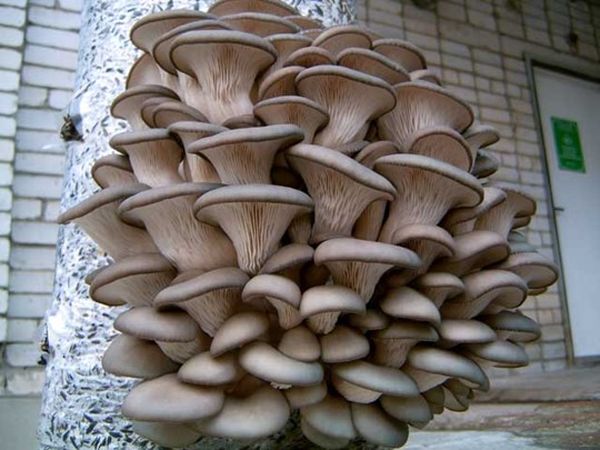
It is recommended to select wood slices from deciduous trees (up to half a meter in length) or use stumps left over from recently felled trees. If you want to successfully grow oyster mushrooms on stumps, choose hardwood from deciduous trees. Maple, ash, birch, aspen, or poplar wood are good materials. Conifers have a detrimental effect on the mycelium, as they contain large amounts of caustic resins that destroy the mycelium. To ensure the moisture level necessary for oyster mushroom cultivation, soak the stumps in a container of water for a couple of days, although this is not necessary if you are using fresh wood.
After preparing the log, add the mycelium. This can be done in several different ways. You can make staggered holes in the stump, up to 6 cm deep and up to 1 cm in diameter. Simply pour the mycelium (you'll need the grain variety) into these holes, then seal the holes with moss or duct tape. If the mycelium is in the form of rods, place it in the previously made holes and seal them with plasticine.
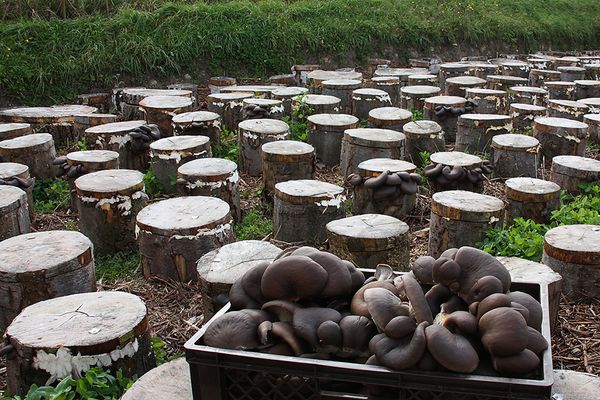
You can cut a small disk (about 2-3 cm) and cover the end of the log with mycelium, then completely cover the top with the disk, securely fastening it with nails. You can also cover the end of the log with mycelium (a 1 cm layer), then place another mycelium-covered log on top, then a third, and so on. The result is a kind of mycelium-covered column.
Once the work is done, the logs with the mycelium need to be stored in a basement. This is considered the best option, although a shed can also be used as a storage location. In a pinch, a garage will do, although experts are extremely wary of this option. The logs themselves are stacked in a pyramid and covered with burlap. If you used the third method, simply arrange the logs vertically, creating a column-like structure. They are placed in several rows, with straw and sawdust filling the spaces between them. They are also sprinkled with sawdust on top, and then wrapped with burlap on the sides.
Planting stumps in the ground
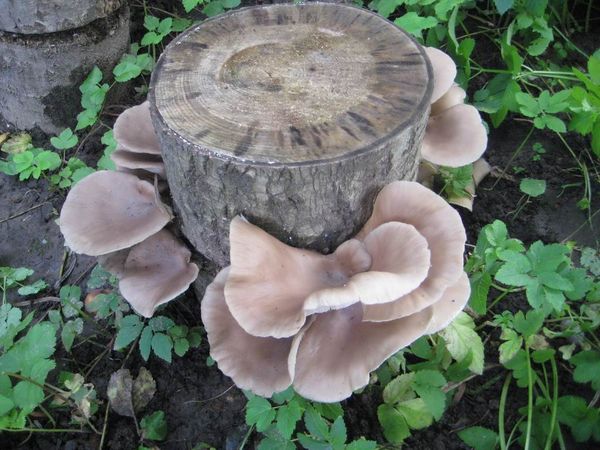
The next step in growing mushrooms is planting the stumps in the ground. This is best done in May, when the weather has finally warmed up. Choose a shaded location for planting to ensure the growing mycelium is as comfortable as possible. Dig a shallow hole (up to 10–15 cm) and line the bottom with sawdust or damp leaves. Carefully place the stump into the hole. Ensure there is at least 35 cm between the stumps. After the stumps are planted, water them as needed.
Growing technology
There are several ways to grow mushrooms on stumps. How to grow oyster mushrooms on stumps in a trench? Dig a shallow trench (about 15 cm) and fill the bottom with pearl barley to provide the mushrooms with good nutrition. Then, spread the disinfected grain spawn on top, thoroughly kneading it with your hands.
The amount should be approximately 300 g per stump. Place the damp stumps on the mycelium and lightly cover with soil. How to grow oyster mushrooms by sowing mycelium on stump cuttings?
Treat the ends of the stumps with grain mycelium, applying it with a trowel or using a spatula.
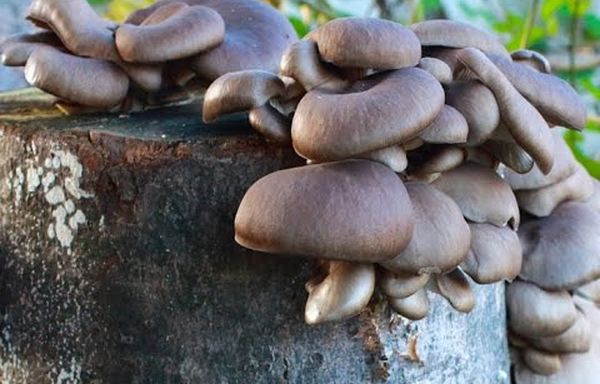
These stumps are stacked one on top of the other, then tied with wire for strength. How to grow mushrooms by placing mycelium deep into a piece of wood? Make shallow holes in the stump, arranged in a staggered pattern. Fill the holes with grain mycelium and seal them with a wooden plug, sawdust, or moss.
Further care
Growing mushrooms on stumps at home is quite simple; you just need to follow a few important care rules. First, watering. Water the soil around the stumps very carefully; excess moisture is harmful to the mushrooms. You can use a spray bottle instead of a watering can.
It's best to water the stumps only during dry periods, as oyster mushrooms don't require additional moisture at optimal humidity levels. Secondly, consider covering your "mushroom plantation" for the winter. Spruce branches, leaves, or straw are ideal (you just need to cover the stumps to protect them from frost damage).
Harvesting
So, when can you harvest your first crop? If all the necessary conditions are met, you can get your first harvest as early as a month after planting. By this time, the mycelium should be fully established.
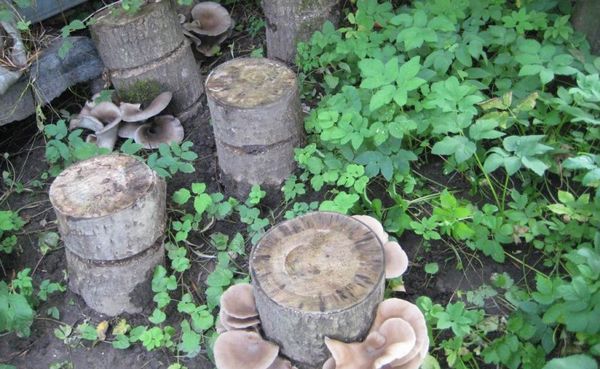
You can harvest mushrooms several times per season. Generally, such plantations can bear fruit for three to five years, with the most abundant harvests occurring in the second and third years. If you don't plant the mycelium in a substrate with fine particles, but instead opt for solid wood, you'll have to wait longer for a harvest, but you'll be able to harvest for five to seven years.
Of course, the harvest will depend directly on the weather conditions in your region, as your "plantation" is growing practically in its natural environment. Furthermore, you'll only be able to harvest mushrooms twice a year—in spring and fall. This is quite a profitable endeavor, as this growing method doesn't take much time and produces good results. While it's unlikely to yield a significant profit, mushroom growing is an extremely exciting process that can interest anyone.
Video: Growing Mushrooms on Tree Stumps
This video will show you how to properly grow mushrooms on stumps.