
How to make oyster mushroom mycelium yourself
Content
What is mycelium?
Mycelium is the mycelium from which the oyster mushrooms themselves will eventually grow. It is the vegetative body of the mushroom, appearing as a multitude of thin, branched threads covering a significant area. Under natural conditions, mycelium can grow for many meters, while the mushrooms themselves occupy only a small area.
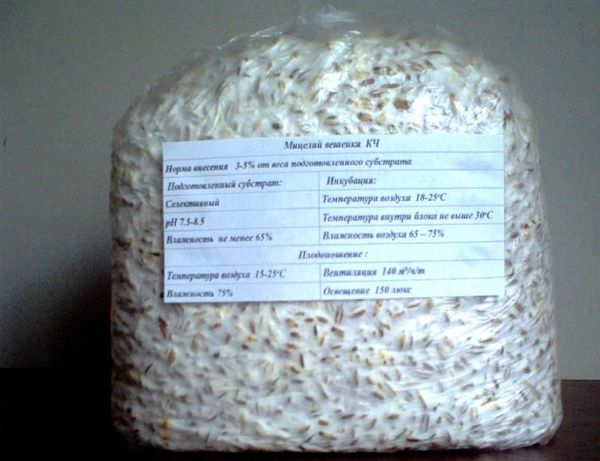
Features of cultivation
It may seem like mycelium cultivation requires specialized equipment for growing mycelium in a laboratory. However, if you can provide the necessary conditions for the mycelium, you can easily grow oyster mushroom mycelium at home.
First, let's prepare the necessary equipment: we'll need several test tubes, tweezers, several pipettes, a thermometer, and agar. To obtain mycelium that is absolutely healthy and high-quality, ensure that your equipment and the room itself are sterile. It's best to wipe the surface where the procedure will be performed with alcohol. The temperature (around 20 degrees Celsius) and humidity should be stable, without sudden fluctuations. There should be no drafts, and the test tubes containing the future mycelium should not be exposed to sunlight. Treat all instruments with steam or boiling water to ensure maximum sterility.
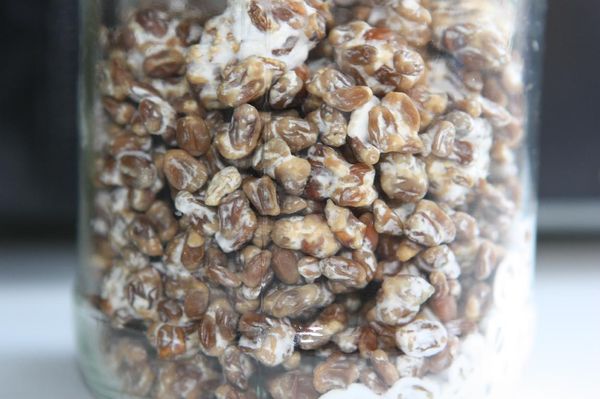
To produce high-quality oyster mushroom mycelium at home, you need to choose the right planting material. Avoid using wild-grown mushrooms, as this can't guarantee the quality of the harvest. Choose varieties suited to your region and climate to avoid any unpleasant surprises.
Now that the preparatory stage has been completed, we can talk about how to prepare the mycelium itself.
Step-by-step instructions
How to grow oyster mushroom mycelium yourself? This process involves several steps, and the end result is a substrate from which oyster mushrooms will grow.
Stage 1
The first step is to grow the mother mycelium. To do this, we'll need the oyster mushroom fruiting body itself, from which we'll extract the planting material. It should be cut in half and a small piece removed with tweezers (it's best to select an area close to the cap). Once the planting material has been obtained, it should be treated with hydrogen peroxide. This will eliminate any parasites or larvae that may have been present within the mushroom.
Place the processed oyster mushroom piece in a test tube filled with crushed grains and seal tightly. Agar (carrot, potato, or oatmeal) also works well as a substrate. The test tube should be left in a pre-prepared area. If everything has been done correctly, a fluffy white coating should appear after two weeks. So, the end result of the first stage is the production of the mother mycelium, and if everything is successful, we can proceed to stage two.
Stage 2
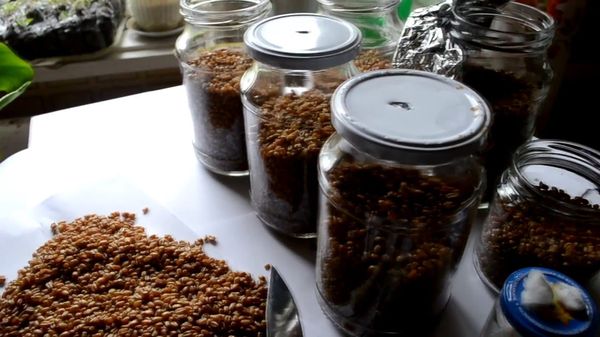
In this step, we'll explain how to obtain intermediate mycelium. It's grown using grains of various cereals. Before use, they are thoroughly boiled for 15 minutes, dried, and mixed with calcium carbonate and gypsum. The grains should fill two-thirds of a glass container (for example, a half-liter jar), and then the planting material obtained in the previous step is placed in this substrate. Results should be expected in about 2-3 weeks, and the intermediate mycelium can be stored for up to 3 months. This mycelium can be used to obtain the mycelium needed to grow the mushrooms themselves.
Stage 3
The seed mycelium is obtained in the same way as the intermediate mycelium. A new jar of substrate is prepared (a 1-liter jar is best), into which the intermediate mycelium is placed. Once the mycelium has grown, it can be placed in the substrate where the mushrooms themselves will grow.
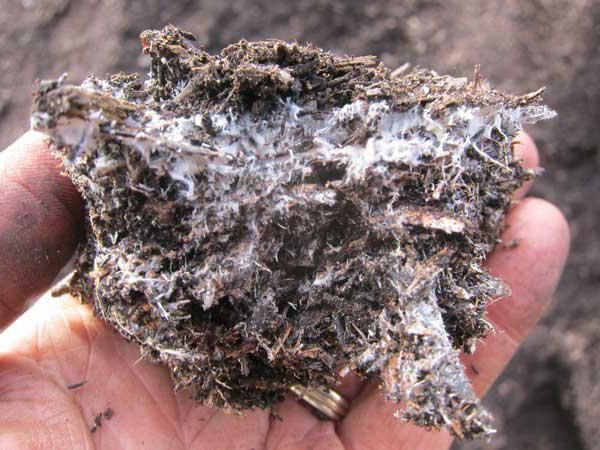
The seed mycelium looks like a white coating with a characteristic mushroom aroma.
Next steps
Once the mycelium has been prepared, you need to choose a suitable storage location. In industrial settings, liquid nitrogen is used for this purpose, but if you're growing your own mycelium, you need to find a suitable alternative. It's acceptable to store the mycelium in a freezer that can maintain a temperature of -20°C (-4°F). This will prevent the material from spoiling, allowing you to plant the mushrooms later.
Once thawed, the mycelium quickly regains all its properties and becomes usable again. However, don't overdo it: repeated freezing of the mycelium will degrade the quality of the material, and you won't get a good harvest.
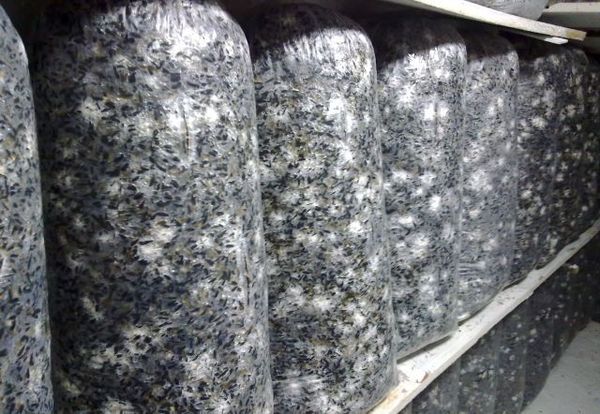
Alternatively, you can plant the mushrooms directly without freezing the mycelium. To do this, pour 1 kg of substrate into a large plastic bag and place the mycelium on top. Repeat this process several times, filling the bag to the top (the ratio should be 1:0.05). After this, place the block in a dark place with a temperature of about 20 degrees Celsius. After a couple of weeks, the block will become uniform and turn white. Then, all that's left to do is wait for the primordia to appear, followed by the mature mushrooms, which can soon be harvested.
Video: "DIY Oyster Mushroom Mycelium"
This video will show you how to make your own oyster mushroom soil.