
How to avoid the mushroom trap: 6 types of false honey mushrooms with descriptions and photos
Content
General description of false honey fungi
There are several varieties of false honey mushrooms that grow at the same time as edible mushrooms. They prefer the same habitats—old stumps, root zones, and dead wood. Both species—poisonous and edible—can grow both on tree trunks and under the roots. False honey mushrooms grow in colonies and have gills and cavities in their stems. True and false honey mushrooms can grow together on the same stump. The main rule when hunting "silently" is: "If you're not sure, don't touch it."
If in doubt, don't be greedy; it's better to leave the mushroom in the forest. Even if you pick one poisonous mushroom among the edible ones you've collected, you'll have to throw them all away. False honey mushrooms can be either conditionally edible or poisonous. If the former, they can be eaten after careful preparation. Soaking and boiling are common, but this doesn't guarantee complete safety. The risk of poisoning remains, and this can be fatal.
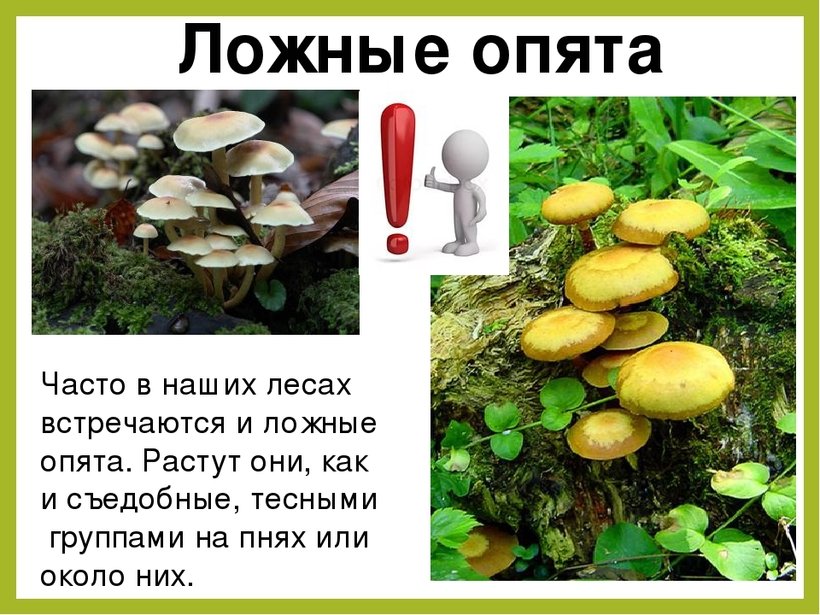
The main types of false honey mushrooms
Galerina marginata
This is the most dangerous type of false honey mushroom. The poison of the Galerina mushroom is identical to that of the death cap. Eating this mushroom poses a threat not only to health but also to life. To distinguish edible mushrooms from poisonous ones, you need to carefully examine their appearance and smell.
Galerina has a small cap, up to 4 cm. Initially bell-shaped, it flattens over time. The fruiting body is brownish-ocher, with yellowish gills underneath. As the mushroom ages, these gills turn brown.
The fruiting body itself is thin and dirty yellow. It has a faint odor and a mealy taste. The stem is hollow and fibrous, with a thickened base and a yellowish ring. It appears in clusters of two or three mushrooms from June to October on rotten pine and spruce trunks.
Brick-red honey fungus
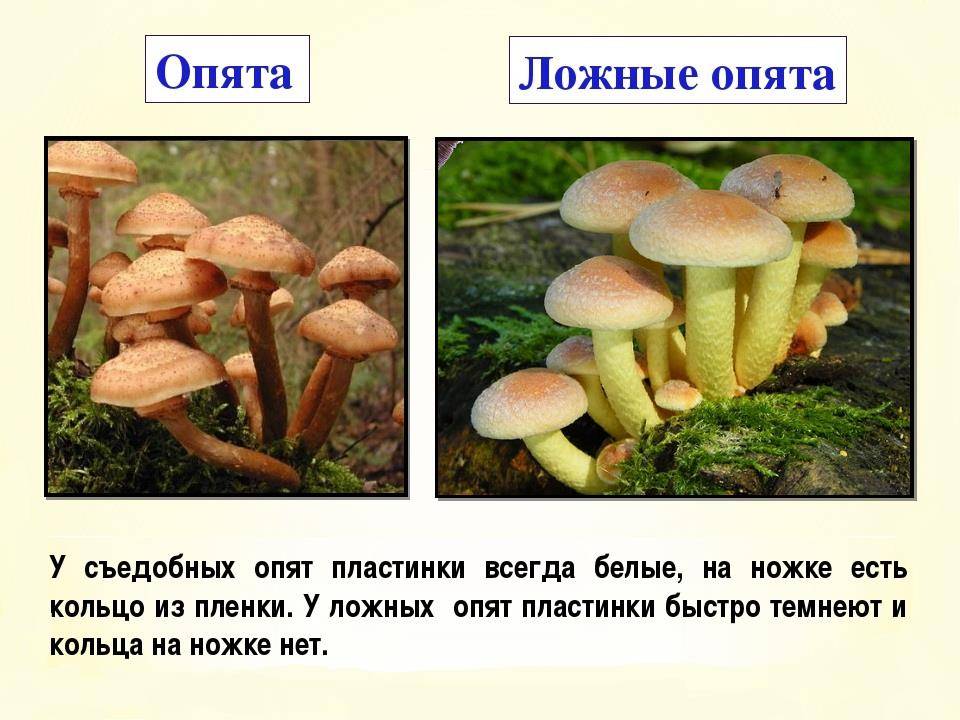
False honey mushrooms have one common feature: they do not have a film ring on the stem, and the fruiting body gives off an unpleasant damp or musty smell.
The mushroom cap is convex and rounded, gradually becoming semi-open. The color can be reddish-brown, reddish-brown, or brick-red, with a deeper color in the center. The edges retain portions of the overhanging film. The gills are dirty yellow when the mushroom emerges, later darkening to olive-brown.
The dense, elastic stems taper at the base. The flesh is yellowish and bitter when tasted. It grows in August and September, forming colonies near deciduous trees.
Poppy honey fungus
This species is also known as the gray-plate mushroom. It is found on stumps and dead pine trees, and less commonly on rotting roots, in August and October. The initially hemispherical cap becomes convex and spreading, reaching a diameter of up to 7 cm. Film particles remain on the edges of the cap. In very humid areas, the mushroom's color is light brown; in dry areas, it turns light yellow, more intense in the center.
This mushroom is also classified as a lamellar. Its color gradually changes from pale yellow to poppy seeds, which gives this species its name. The stem is straight or curved, up to 10 cm long. The film ring quickly disappears. The base of the stem is reddish-brown, and the tip is yellow. The mushroom has a distinctive damp odor.
-
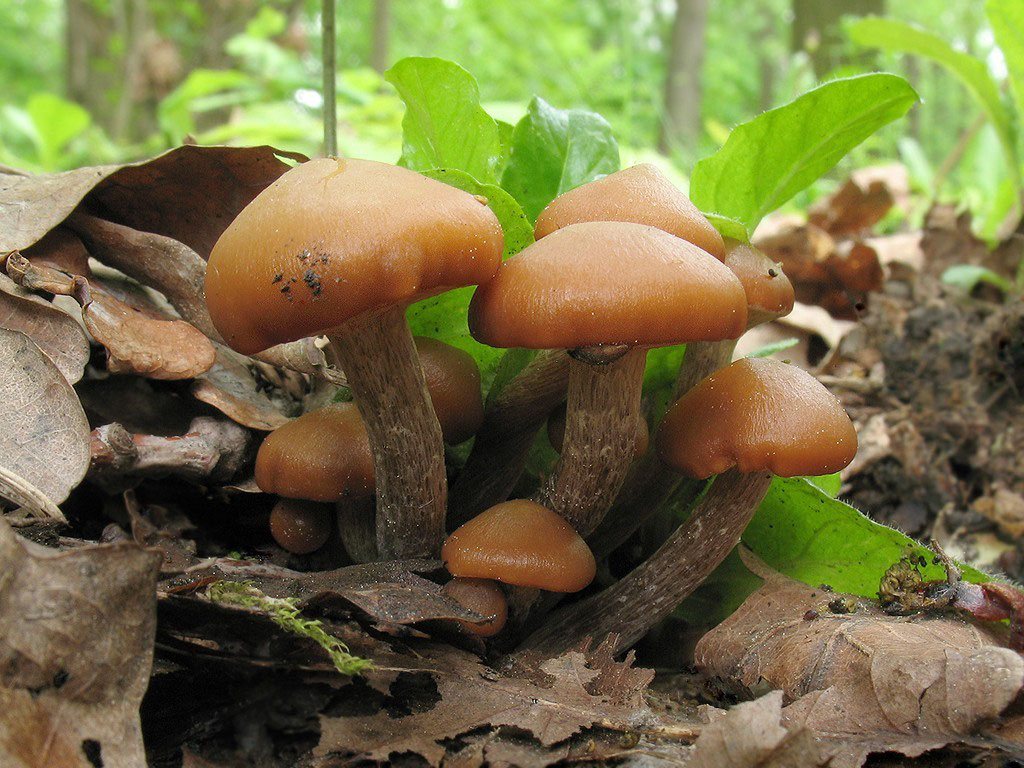
- Galerina marginata
-
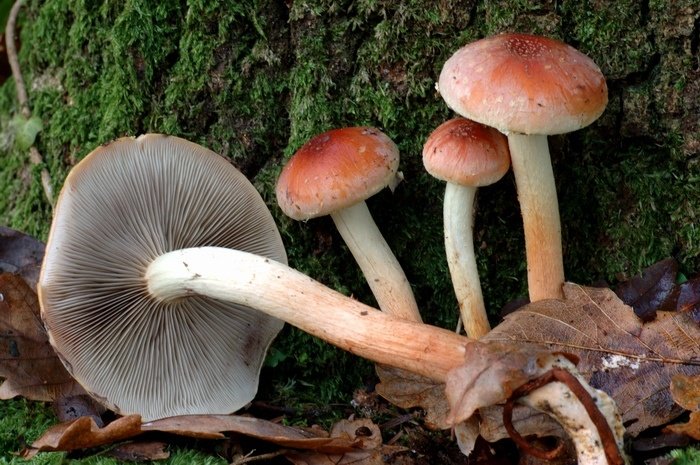
- Brick-red honey fungus
-
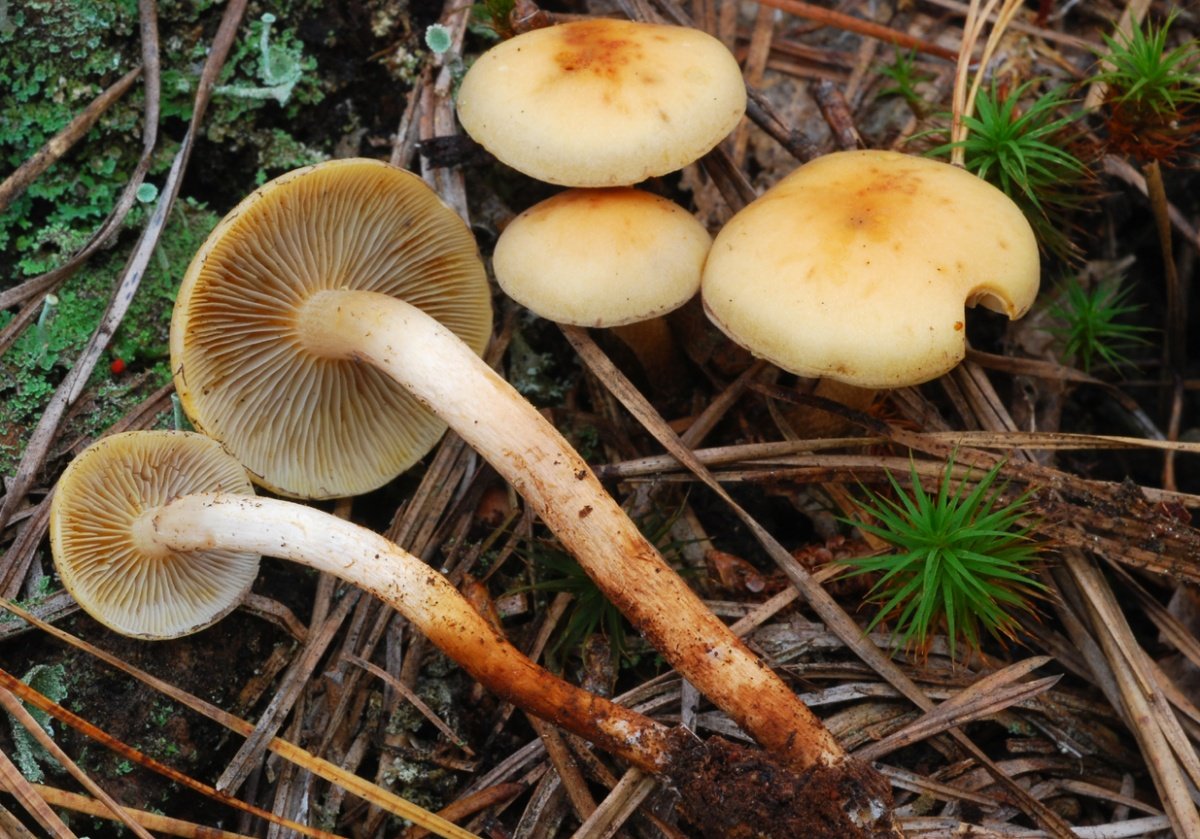
- Poppy honey fungus
Candolle's Honey Fungus
These false honey fungi appear as early as spring and grow until early fall, choosing areas near deciduous trees or on their stumps. This mushroom species is distinguished by its bell-shaped cap, 3-7 cm in diameter. It gradually opens like an umbrella, leaving a mound in the center. A fringe of film remains along the edges. The false honey fungus is yellow-brown in color, sometimes whitish.
Psathyrella hygrophila
A common species of false honey fungus, it grows in large colonies from June to October on decaying tree remains and stumps. The cap, initially convex but gradually straightening, reaches 6 cm in diameter. Its color is cream or chocolate.
The gills of young fruits are light-colored, but they darken with age. The fruiting body is white-cream in color and has no distinctive odor or taste. The stem is hollow, dense, and covered with a flour-like coating. It has a ring, which suggests the mushroom is a true mushroom.
The main distinguishing feature of the moisture-loving Psathyrella is the purple color of its spores.
Sulphur-yellow honey fungus
The bell-shaped caps reach up to 7 cm in diameter. They are brownish or grayish-yellow in color, with a dark center. The stem is thin (0.5 cm) but long (up to 10 cm). These mushrooms grow in colonies near any trees or stumps, gathering in clusters of up to 50 mushrooms and merging at the base of the stems. These are dangerous autumnal false honey mushrooms, which can be mistaken for edible mushrooms.
-
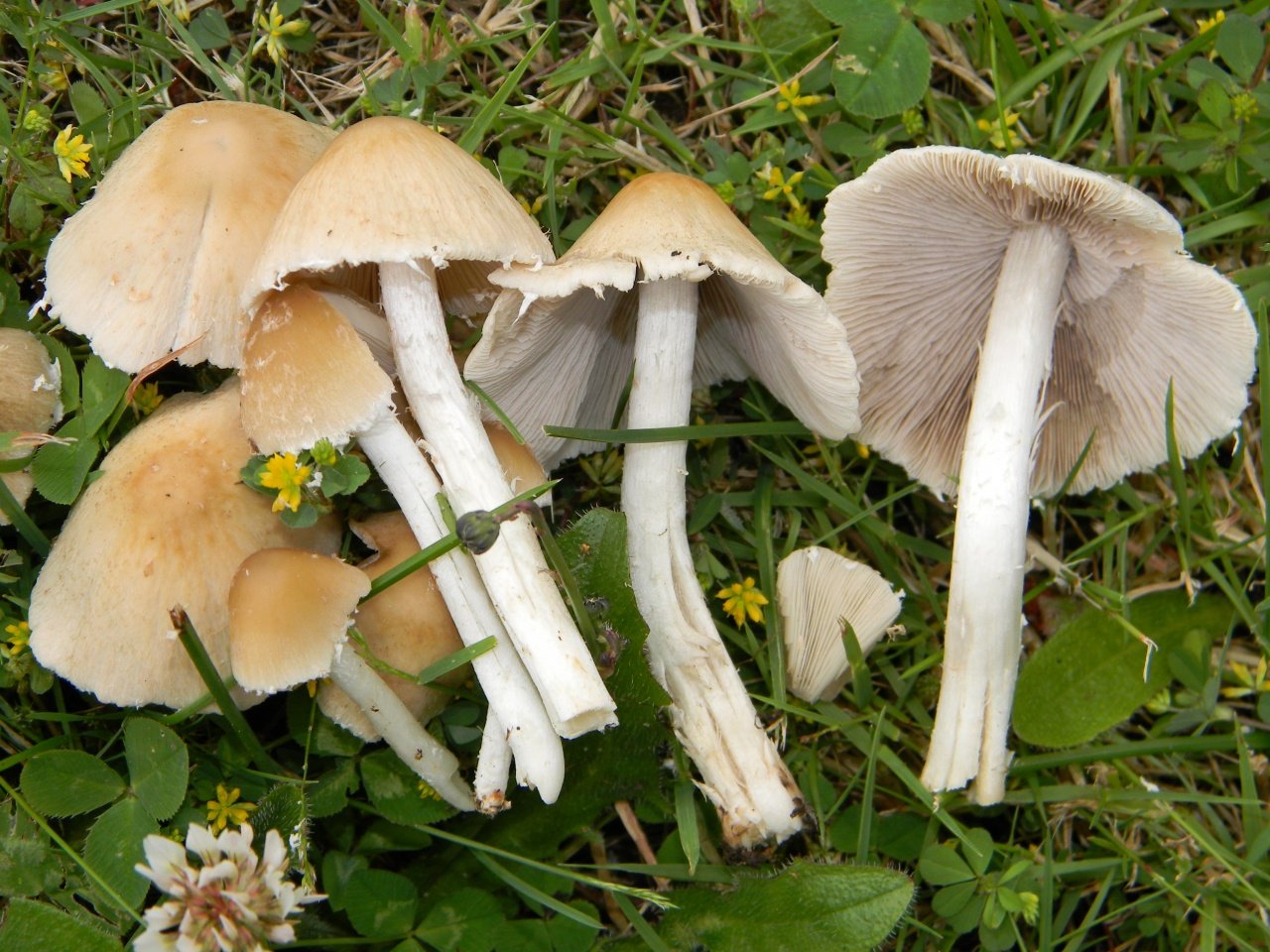
- Candolle
-
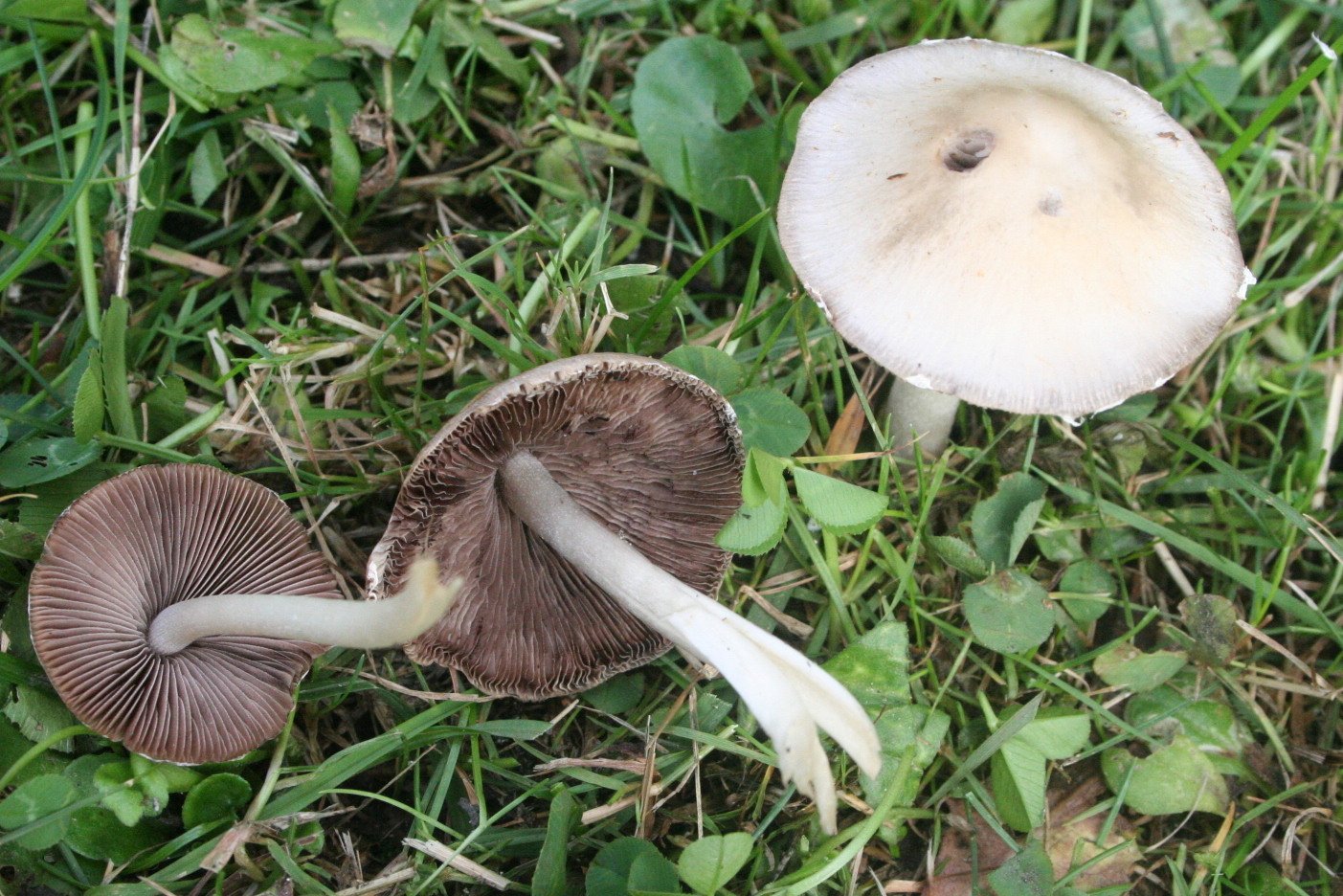
- Psathyrella hygrophila
-
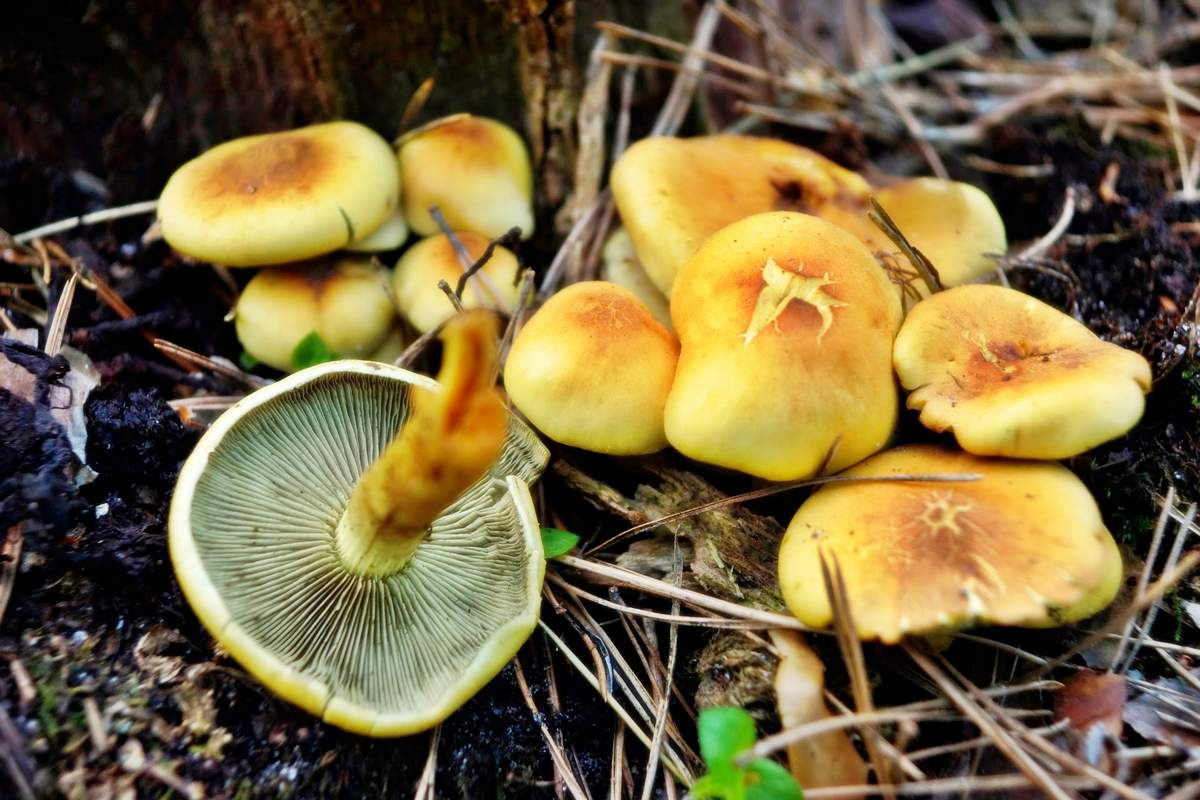
- Sulphur-yellow honey fungus
Video: "The Differences Between Edible and Poisonous Mushrooms"
This video explains the difference between poisonous and edible honey mushrooms.
How to distinguish a false honey fungus from an edible one
Appearance of the mushroom
Even a novice mushroom picker can distinguish true honey fungus from false ones by carefully examining the mushroom and comparing it to the characteristic features of edible honey fungus. The key is to take your time.
- Cap. A soft, muted brown with dark scales. The surface becomes smooth on older fruits that are no longer suitable for harvesting. False mushrooms have a more aggressive, intense color.
- Skirt. Young honey mushrooms are distinguished by a membranous ring around the cap. Poisonous species lack this feature.
- Gills. In true honey mushrooms, they are light, yellow, or beige. In poisonous mushrooms, they are bright or dark, usually greenish or yellow.
Differences in smell
To confirm whether a mushroom has been correctly classified as poisonous or edible, smell it. Cut the mushroom, break the cap, and smell its aroma. True honey mushrooms have a pleasant odor. False honey mushrooms smell like mold, soil, and mildew.
Taste differences
To determine whether mushrooms are edible or poisonous, cut a slice from the fruiting body and taste it. The taste of a raw, true honey fungus is pleasant, characteristic of the mushroom. False varieties, due to the toxins they contain, have an unpleasant, slightly bitter aftertaste.
Signs of poisoning and first aid
If a person accidentally consumes false honey fungus, signs of intoxication appear within the first hour after eating. Sometimes, the effects of poisoning begin after 12 hours. Once in the bloodstream, the toxins quickly reach all organs. The following symptoms are observed:
- stomach discomfort;
- dizziness;
- heartburn;
- bloating;
- nausea.
Within 4-6 hours after the first signs of poisoning appear, the pathology progresses, and the symptoms are supplemented by the following features of poisoning:
- vomit;
- abdominal cramps, pain;
- diarrhea;
- sweating on the palms and feet;
- lowering blood sugar levels.

The patient experiences weakness and apathy. Sweat appears on the palms and soles of the feet. First aid for poisoning by false honey fungi requires the following measures:
- wash out the stomach;
- give the victim an enterosorbent (Atoxyl, activated carbon);
- force the patient to drink a lot;
- call a doctor.
The sooner the victim gets to the hospital, the greater the chance of recovery and elimination of the negative consequences of intoxication.
Honey mushrooms are prized by mushroom pickers for the abundance of fruit in a single colony. They are easy and enjoyable to collect. However, unless you are completely sure that the mushroom in front of you is genuine, you should discard it and not risk your health and life.