
How a beginner can grow mushrooms at home
Content
Which variety of champignons should I choose?
Growing champignons at home requires choosing the right variety. Selectively bred varieties are best for indoor planting, as they tolerate artificial environments well. The White Cultivated champignon variety is a hybrid, producing white, cream, or brown mushrooms. The brown variety produces the smallest mushrooms—their caps are almost half the size of the white variety.
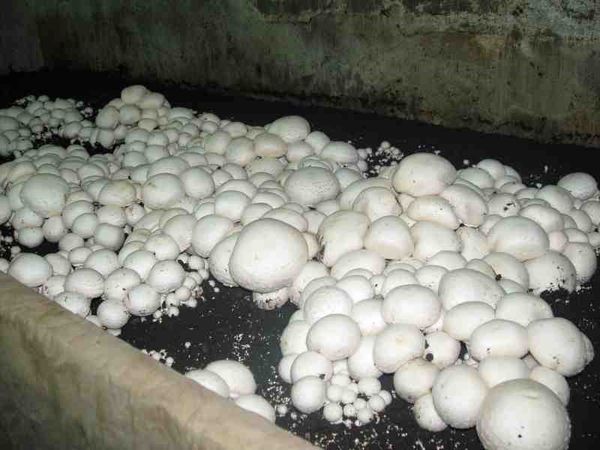
It's entirely possible to grow wild mushrooms. These varieties include:
- Common. Fruits growing on humus have a large cap on a short stem;
- Field mushrooms. These mushrooms have a very large cap (up to 150 mm in diameter) and a hollow stem. They are most often found along roadsides and in meadow clearings;
- Sidewalk mushrooms. These mushrooms are unsuitable for consumption because they grow within city limits (often pushing through the asphalt) and absorb harmful substances from both the air and the soil. They are a dirty beige color;
- Forest mushrooms. This variety grows in forests and is more ecologically suitable for eating. The mushrooms are small, brown, and have a long stem.
Seed preparation and substrate preparation
There's a lot of advice on how to grow mushrooms. In any case, growing mushrooms at home begins with preparing the seeds and growing medium.
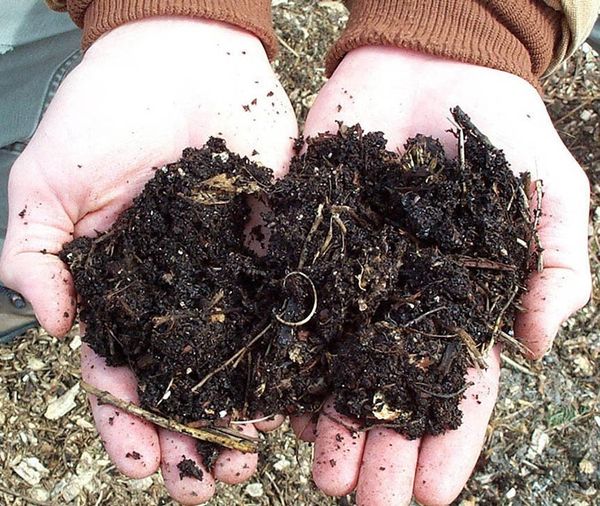
You'll need ¾ parts manure and ¼ part compost. Horse manure is best, as it's the most fertile, but poultry or cow manure are also good options. Compost for growing mushrooms is made from wheat or rye straw. Compost can also be made from fallen leaves or other organic matter.
In addition to the above, the substrate should contain smaller amounts of chalk, gypsum, superphosphate fertilizers, urea, and bran.
Training in growing mushrooms includes studying the technology of substrate production. To do this, the composting elements (straw and leaves) are soaked in warm water for 24 hours. Then, manure and straw are layered into the container, soaking the straw with urea after each layer. Once the main ingredients are in place, add the remaining ingredients and mix well. The resulting compost should be left to sit for 20 days until the ammonia odor evaporates.
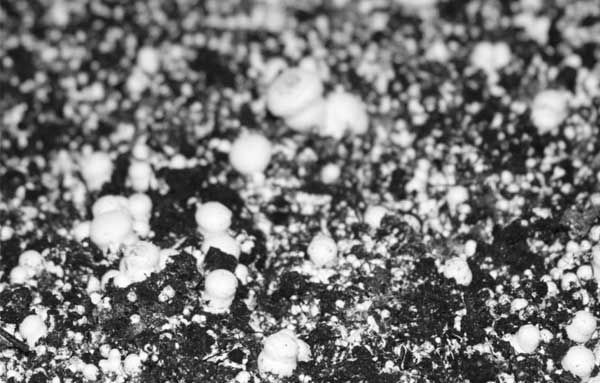
Mushroom cultivation technology includes seed preparation techniques. Mushroom growing courses always recommend using sterile, laboratory-grown planting material. Mycelium for planting can be either compost or grain-based. Composted mushroom mycelium is less productive but more economical. Mycelium in grain form has a longer shelf life and produces higher yields.
Selecting a container and sowing features
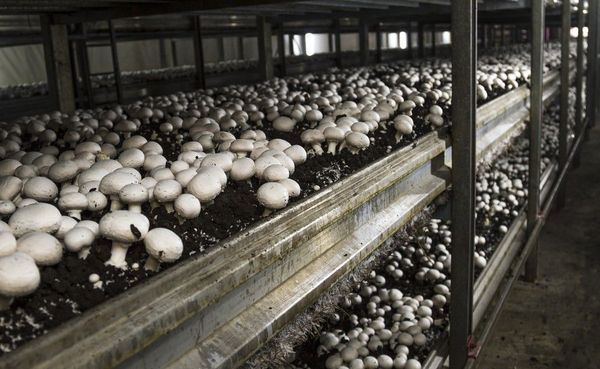
When considering how to grow champignons at home, the challenge of choosing a suitable container arises. The main rule for a container for growing mushrooms is its depth, which should be at least 20 cm. This is because mushrooms require active nutrition, and a thin layer of substrate does not provide the crop with all the beneficial minerals.
Unpretentious champignons can be grown in almost any container: a bowl, a tray, a basket, a box; growing champignons in bags is also practiced.
Before planting, the substrate must be prepared: pasteurize it and cool it to 25 degrees Celsius. The compost mycelium is placed in handfuls in staggered holes up to 5 cm deep. The seed material is planted in the usual way: the soil is sprinkled with seeds, then covered with a thin layer of nutrient solution.
If you are unable to acquire sterile planting material, it is entirely possible to grow champignon mushrooms from natural mycelium collected from the areas where the mycelium grows.
Necessary conditions for growing
When considering the question "How to grow mushrooms indoors?", you need to determine your available space for growing the crop. Outdoor growing is the most convenient from a hygiene standpoint, but creating suitable conditions outdoors is difficult.
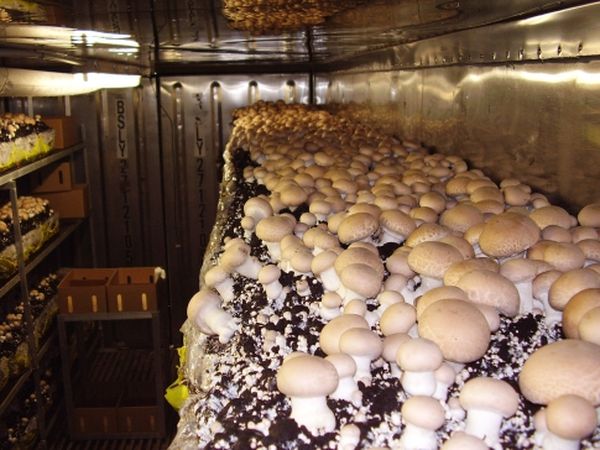
The best way to grow mushrooms is at home. This can be done on a balcony, in a basement, garage, cellar, or pantry. The key is to keep the location dark and damp.
On the balcony, such conditions can be artificially created by tinting the windows with film and installing a humidifier. In other rooms, artificial humidity control may also be necessary, with the level at least 70%.
It's also important to maintain a warm temperature throughout the year—around 20 degrees Celsius. Temperature fluctuations are highly undesirable. Good ventilation and cleanliness are also essential for good crop growth.
Before installing the mycelium containers, the room is thoroughly disinfected to prevent mold growth on the walls due to high humidity. This is done using solutions of copper sulfate, bleach, or formalin.
After the disinfection stage is complete, the room is ventilated and checked for proper ventilation and temperature control. Ventilation is important to ensure fresh air, and drafts are not recommended. Open windows and wide vents can allow insects and uncontrolled air currents to enter, cooling the room. Temperature should be monitored with a thermometer, and fans and heating systems should be installed if necessary.
Caring for champignons
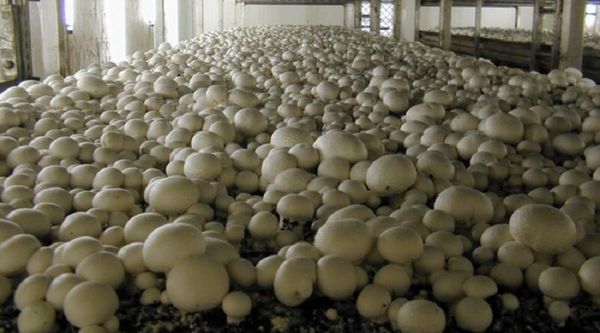
Caring for champignons is simple. Provided all the necessary conditions are met, they require little human intervention during growth.
After planting, maintain the temperature at 20–22°C, and humidity at the usual level of 70–80%. To maintain the desired humidity level, cover the container with plastic wrap and spray with warm water. Continue this for the first 20 days, avoiding moisture from reaching the mycelium.
12-14 days after planting the mycelium, the mycelium begins to actively grow. At this time, it is covered with a specially prepared soil mixture. This mixture consists of 4 parts leaf mold treated for parasites, plus limestone and peat in a ratio of 1:5. Many mushroom pickers recommend stopping watering after 20 days, as excess moisture can cause the mushrooms to rot. At the same time, the temperature is recommended to be reduced to 16-18 degrees Celsius. Sometimes, during the growing season, fertilizing with protein fertilizers is recommended.
Pest and disease control
Mushrooms are a crop susceptible to diseases and pests. The main sources of infection are substrate components, indoor infections, and airborne insects.
To avoid contamination through the soil, use only materials from reputable manufacturers. Remember to heat-treat parts of the substrate before planting to kill potential pests and diseases. Composting material should not contain rotten or contaminated plant material.
As mentioned above, the mushroom growing area is thoroughly cleaned and disinfected. The walls and ceiling can be treated with lime or an antifungal coating, which can be purchased at a hardware store.
Ventilation with fine mesh openings prevents the entry of insects, which also carry harmful bacteria.
Harvesting Rules
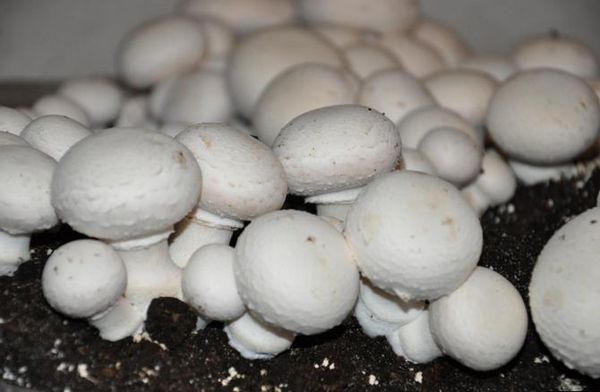
The harvest appears 30–40 days after planting, appearing as mushrooms covered in a thin film that connects the cap and stem. Healthy, unrotted mushrooms are carefully twisted out of the soil, and the growing site is covered with substrate and lightly watered.
A new mushroom will eventually appear in the place of the small mushroom, marking the beginning of the so-called "waves" of fruiting. There can be up to seven of these waves until the mycelium is completely depleted. During active fruiting, the mushrooms are not only eaten by family members but can also be sold.
Mushroom picker's tips
The first piece of advice you'll hear from mushroom pickers is to grow champignons for sale, as they're in demand and expensive. The second most important recommendation is to avoid growing mushrooms in a wooden structure, as moisture can cause mold to develop on wood.
Video: Growing Mushrooms at Home
This video will show you how to grow mushrooms at home.