
How to grow mushrooms at your dacha
Content
How to prepare planting material
The primary task in preparing for mushroom cultivation is preparing the mycelium (spawn). This isn't easy: it requires a certain amount of skill, carefully sterilized containers, and specialized equipment. There are several options for preparing mycelium at home: using grain, potatoes, and agar. Grain spawn is considered the most popular.
For this you will need:
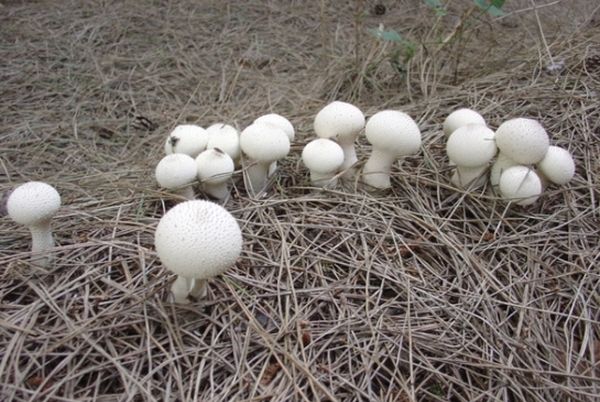
- collect champignons in a field or forest, and it is advisable to take mushrooms that are already overripe;
- cut out a small piece of mushroom (a few centimeters) with a disinfected knife;
- Pour the required amount of grain or oats into a container and add water just enough to cover the grain, no more. To disinfect the grain, add hydrogen peroxide to the water (at a rate of 1 cup per bucket);
- cook for about 40 minutes;
- strain the grain through a fine sieve and dry it;
- pour the prepared mixture into sterilized containers;
- It is recommended to use a quartz or bactericidal lamp for control disinfection;
- make small holes (the size of a needle) in the disinfected lids and roll up the jars;
- Boil the jars for an hour. The water should not spill over the lids while boiling;
- Using a disinfected instrument, transfer a piece of mycelium to the grain. The transfer should be carried out under as sterile conditions as possible: use a lamp or alcohol burner, or purchase a specially equipped sealed box.
- the holes on the sterilized lid must be covered with a sterile bandage or cotton wool and secured with disinfected tape;
- Jars should be stored in a cool, dark place at a temperature of +17–23 degrees.
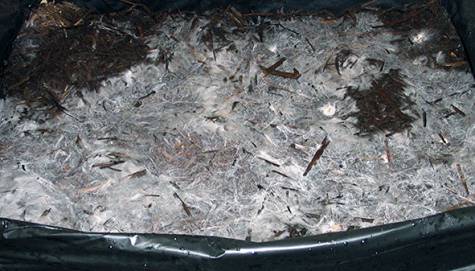
To carry out the entire process, wear sterile medical gloves or disinfect your hands with hand sanitizer. Of course, there is a simpler method, but it requires constant repetition and doesn't guarantee success. You can also harvest wild mycelium. To do this, find a spot where mushrooms are growing abundantly and remove the top layer, where the hyphal threads are clearly visible. This layer can be stored in a cool, low-humidity room until spring.
Selecting a location and preparing a garden bed
After preparing the mycelium, you need to choose a place in your garden where you can grow mushrooms. A north-facing, shaded area is best for the bed. Drafts are avoided. The ideal location is near a house or under a shed: the structure will provide diffused light and protection from precipitation. Dig the required number of trenches in the bed (1 m wide and 30 cm deep). Next, fill the trenches with compost, which can be prepared at home. To do this, combine equal parts horse manure (or chicken manure) and straw and pour a hot urea solution over them.
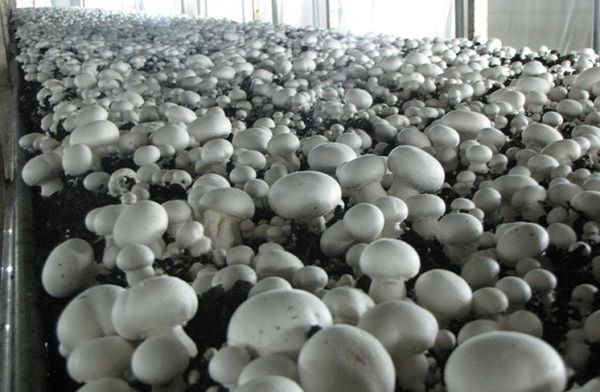
Next, compact the mixture and cover it with a strong, dense material. After about two weeks, enrich the mixture with superphosphate and leave it until it's fully ripe. When the compost turns light brown and becomes crumbly, it's ready to use. Growing mushrooms in a greenhouse or hotbed is also common. If you have either of these at your dacha, you'll appreciate the ease of growing champignons and their rapid growth in greenhouse conditions. Naturally, mushrooms require the right temperature, lighting, and humidity. However, growing champignons in a greenhouse largely depends on choosing the right substrate.
Planting and further care
To plant mushrooms, choose a warm part of the day. The temperature should be around 20 degrees Celsius, and the soil should be well-moistened. Plant the mushrooms in shallow holes. Divide the mycelium into small pieces, about 6 cm long, and place them in the holes. Then, sprinkle the mycelium with compost and water with warm water. You can cover the planted areas with a special covering or film. Watering the mushrooms is not necessary.
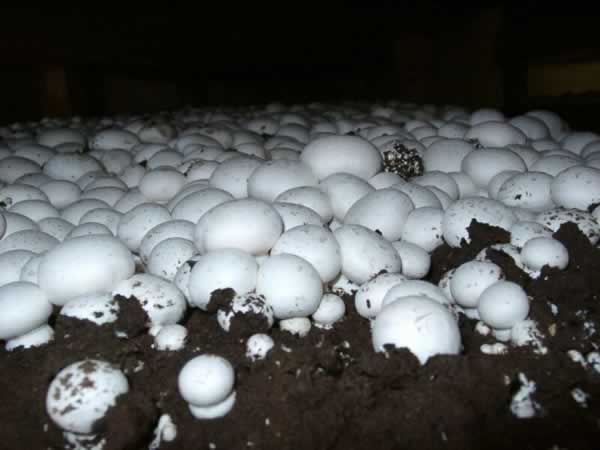
After a few weeks, the cover should be removed, and the seedlings should be covered with peat and turf. Forest or field soil, where mushrooms were previously grown, will serve as the optimal surface layer. It is recommended to place the top layer so that a small gap remains for air and moisture to penetrate.
Mushrooms don't require any special care: it's important to maintain a certain temperature and humidity level. The ideal temperature is 24–26°C (75–80°F); temperatures above 30°C (86°F) kill the mycelium. Once the seedlings have sprouted well, the temperature should be reduced by 9–10°C (30–50°F). This reduction can be achieved by spraying with cold water or providing additional shade. The soil should be kept slightly moist: regularly water the surface layer to prevent moisture from penetrating the mycelium. Excessive moisture can cause the mycelium to rot.
Harvesting Features
Mushrooms grow for 3-4 weeks. Mature mushrooms turn pale pink. As soon as the first signs of ripeness appear, the harvest should begin. Large mushrooms lose some of their flavor. Furthermore, overgrown mushrooms weaken the mycelium.
Harvesting on time and proper watering will prevent the mycelium from becoming depleted.
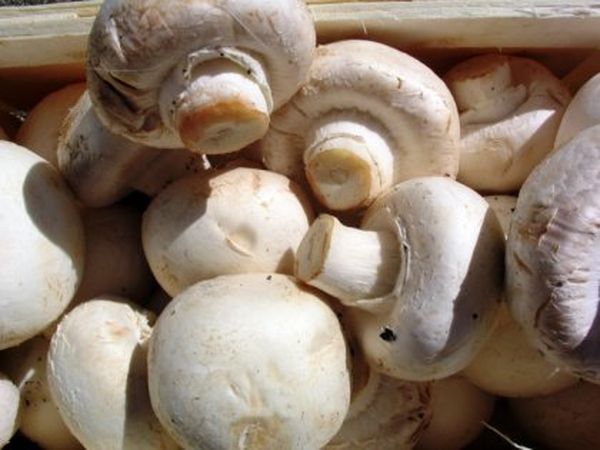
When the fruiting bodies of the grown mushrooms reach 2 cm, they are carefully twisted out, and the resulting void is filled with soil. The mycelium will fruit for about two months. The first year's harvest may not be abundant, but in subsequent years, you can harvest up to 6 kg of mushrooms per square meter. As you can see, growing mushrooms in your garden is not difficult, but it is labor-intensive. However, the results are worth the effort and expense.
Video: Planting Mushrooms at Your Dacha
This video will show you how to properly grow mushrooms in your garden.