
What does a black milk mushroom look like and is it edible?
Content
- 1 Description of the black milk mushroom
- 2 Video "Spread of Black Milk Mushrooms"
- 3 Distribution and breeding season
- 4 The beneficial and medicinal properties of black milk mushrooms
- 5 Types of black milk mushrooms
- 6 Processing and preparation of nigella
- 7 Harmful effects of black cumin and contraindications
Description of the black milk mushroom
According to the botanical description, black scaly-winged ...
hat
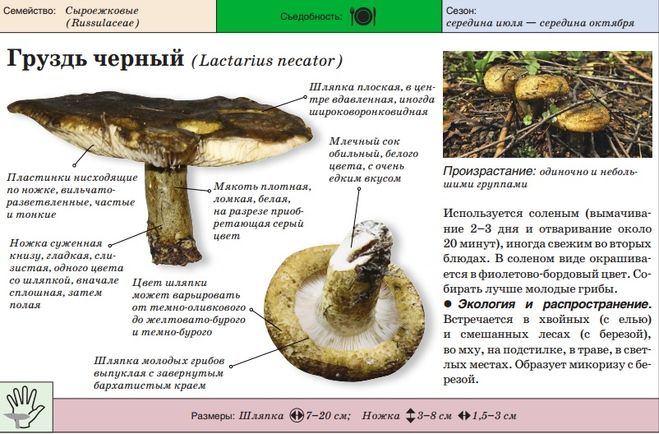
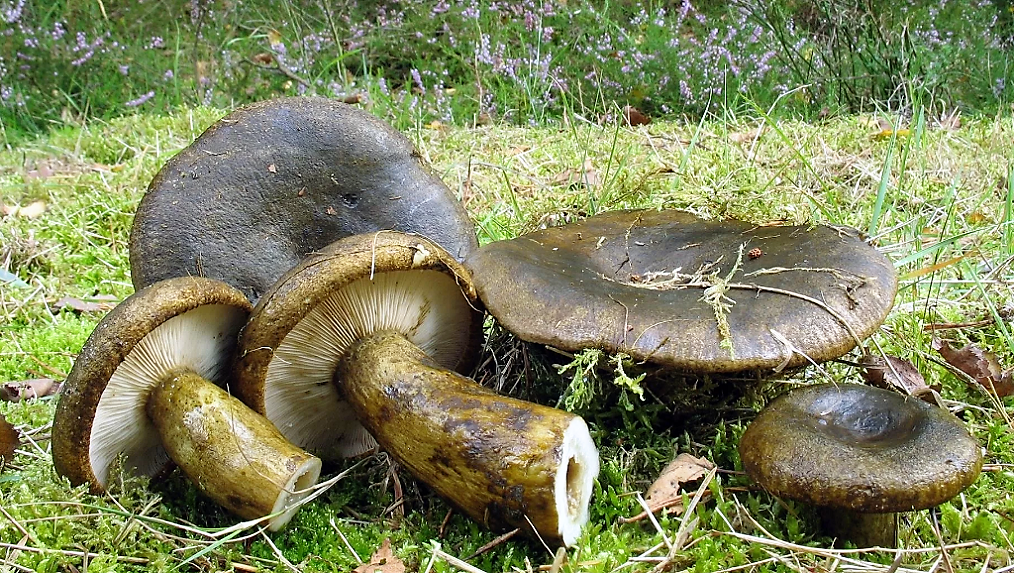
The milk mushroom itself is flat, with a concave center and slightly inward-turned edges. The cap's size is not clearly defined. The smallest mushrooms are 6-7 cm in size, but specimens over 20 cm are occasionally found. The surface is smooth and glossy, and when wet, becomes coated with a characteristic slime.
Leg
The stem of the nigella is quite thick and stable, about 30 mm in diameter. It is short, rarely exceeding 6-8 cm in height. The stem is slightly different in color from the cap, a slightly more delicate shade, several shades lighter. The surface is also smooth, becoming slimy during rainfall, and the structure is hollow.
Records
If you turn the cap upside down, you'll see the characteristic mushroom "sponge" on the underside. It's a delicate creamy hue that contrasts sharply with the rest of the mushroom. The thin gills are tightly packed together and blend smoothly into the mushroom's "trunk." If damaged, they darken almost instantly.
Pulp
The internal structure of black mushrooms is such that they break apart quite easily. Their flesh is quite dense and firm. The mushrooms are light cream-colored inside, and a bitter, milky juice oozes out when broken. To get rid of this bitterness characteristic of hollows, they are soaked in water before cooking.
Video "Spread of Black Milk Mushrooms"
In this video, experts explain where and when to look for black cumin.
Distribution and breeding season
Black milk mushrooms thrive in temperate climates, and therefore grow in temperate regions. They thrive in cool coniferous and mixed forests of Siberia, the Urals, Belarus, and Ukraine. Particularly dense patches grow near birch stands, where there is plenty of sunlight. Mushroom pickers recommend looking for them along paths, in clearings, or in clearings.
The mushroom season for hollow mushrooms begins in mid-summer and continues until the first frost. The best time for a "quiet hunt" is considered to be immediately after the boletus harvest. Peak productivity depends on climate conditions. If the weather is dry, extremely hot, or there is no rain for a long time, the mycelium practically stops developing.
The beneficial and medicinal properties of black milk mushrooms
Despite their relatively high protein content (around 45%), black cumin mushrooms are low in calories—only 22 kcal per 100 grams. Including these mushrooms in your diet can significantly improve your health, as they have a very diverse chemical composition:
- vitamins B, C, D, PP;
- micro- and macroelements (K, P, Ca, Na, Mg);
- niacin;
- psilocin;
- fiber;
- carbohydrates.
Regular consumption of black hollows has a preventative and even therapeutic effect on the body:
- relieves inflammation, disinfects;
- helps fight liver, kidney, and lung pathologies;
- promotes faster recovery after a long illness;
- increases tone, fills with energy;
- relieves depression, insomnia, nervous tension, stress;
- strengthens hair, improves skin;
- helps to get rid of alcohol addiction;
- normalizes the functioning of the cardiovascular system;
- prevents the formation of blood clots;
- normalizes sugar levels;
- speeds up metabolism.
Types of black milk mushrooms
The science of mycology distinguishes several types of black mushrooms:
- True. They form clearings around birch or linden trees. They are yellowish in color, with brown spots. The flesh is dense and creamy.
- Aspen. The rarest variety. Grows near poplars or aspens. Distinguished by its pinkish "sponge."
- Yellow. They can only be found in coniferous forests. The cap is a rich golden hue with fine speckles.
- Oak mushrooms. As the name suggests, these mushrooms grow near oak or hazel trees. They are light in color, with a yellowish tint.
- White. You can find them almost everywhere. They are characterized by a strong aroma and a light cream cap with reddish-brown streaks.
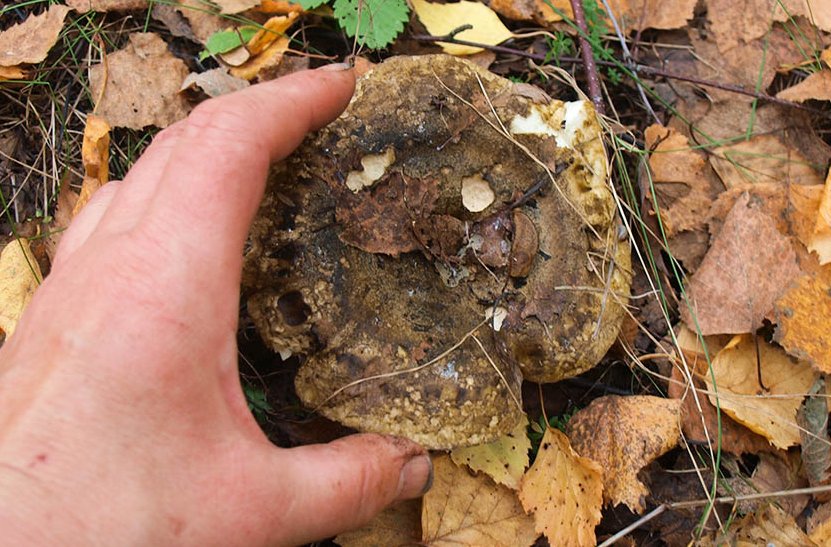
Experienced mushroom pickers know what a hollow mushroom should look like, and therefore rarely make mistakes when picking it. Newcomers to the "silent hunt" often confuse it with the golden milk cap, the fiddlehead, the camphor mushroom, or the pepper mushroom.
Black russula are very similar to their poisonous relatives: the pig mushroom and the false black milk mushroom.
To avoid confusing them, you need to know some differences that are common to all edible species:
- upright position;
- uniform attachment of the spongy plate, including to the leg;
- "sponge" of only light shades.
Processing and preparation of nigella
To make delicious black rhinoceros mushrooms, simply following a recipe isn't enough. The pre-processing process is crucial. If done correctly, the mushrooms' characteristic bitterness, which can negatively impact their flavor, will be eliminated.
How to clean
Black russula mushrooms are very fragile, so they must be handled with extreme care. First, rinse off any excess dirt, then rinse again with cold water to remove any small grains of sand, soil particles, and any stuck grass or leaves. Next, carefully inspect the mushrooms for rot, worms, or damage. Such specimens are not suitable for cooking.
How long to soak
The white, pungent juice that gives mushrooms their bitter taste is removed by soaking. First, the mushrooms are cleaned of any dirt. Then, the nests are filled with cold water and left for 2-3 days. The soaking container is drained and refilled three times a day. Just before cooking, the black mushrooms are thoroughly dried, removing excess moisture.
How long to cook?
Almost all recipes for black milk mushrooms call for boiled milk mushrooms. Even frying requires pre-boiling. Bring the soaked milk mushrooms to a boil and then simmer for another 5 minutes. Then change the water and repeat the process. Drain the cooked milk mushrooms in a colander to remove excess moisture.
What to cook
Black russula mushrooms are quite versatile, making them suitable for any mushroom dish. Besides being served on their own, they are also used as an additional ingredient in other recipes. They are often used in soups, fried, and made into caviar or other vegetable appetizers. However, marinated or salted milk mushrooms, prepared in various ways, remain a favorite among gourmets.
-
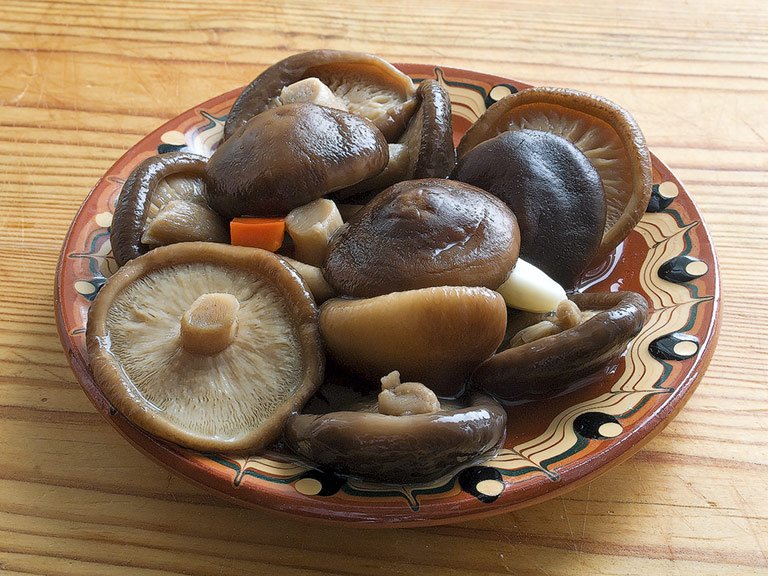
- Salted mushrooms
-
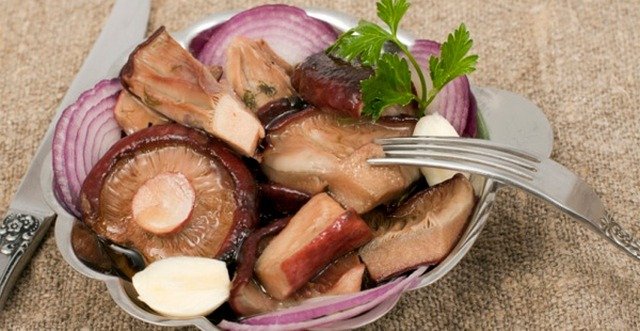
- Pickled milk mushrooms
-
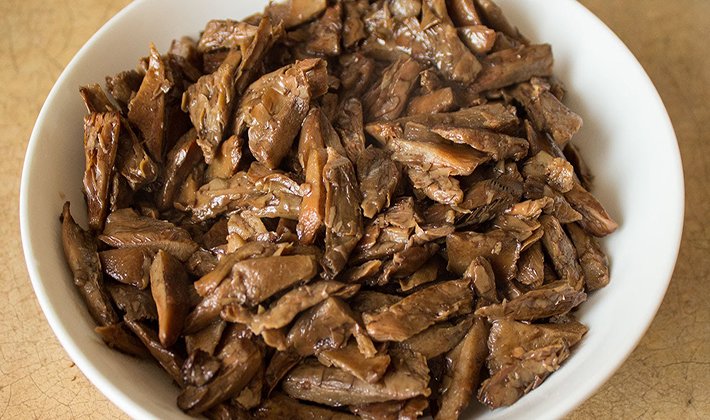
- Fried black cumin
Harmful effects of black cumin and contraindications
The main danger that can lurk in the shadow of mushroom lovers is severe poisoning. This can be caused by mistakes during harvesting or improper preparation techniques. Also, avoid overindulging in black hollow mushrooms—try to eat in moderation.
Because nigella seeds are quite difficult to digest, doctors do not recommend them for people with gastrointestinal conditions. People with allergies, pregnant or breastfeeding women, and children under 3 should be especially careful when consuming them.

The black milk mushroom is a valuable trophy for the "silent hunt" and, despite the opinions of some experts, is actually edible. There's no need to be afraid to eat this mushroom if you've followed all our recommendations when harvesting and preparing it.