
Rules for growing and caring for green beans
Content
Main types
Green beans are usually divided into two types: bush and climbing. They also vary significantly in color: green beans can be green, yellow, purple, and even pink. However, gardeners are more interested in the first classification. So, if you plan to plant beans outdoors, it's best to choose bush varieties, as they are more cold-resistant. Furthermore, these plants don't require support and produce fruit abundantly. Climbing varieties, on the other hand, will yield a larger harvest—due to the constant growth of the stem, the number of pods will also increase.
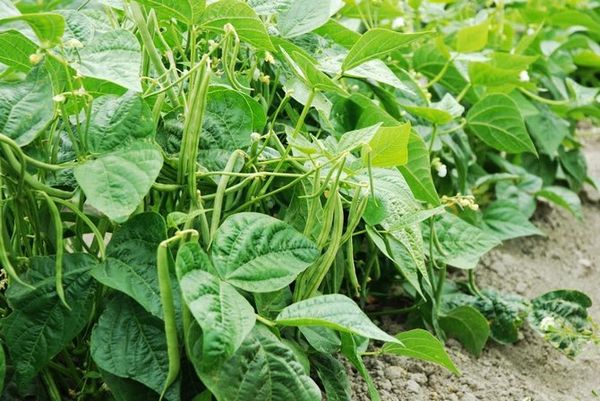
If you haven't grown green beans yet, try growing a few plants of each variety to see how they perform in your climate. The only hint: in the Urals, it is better to plant early-ripening varieties that are ready for harvest as early as July.
Preparing the garden bed
To ensure a bountiful harvest and delicious flavor, the soil in the garden bed should be fertile, well-drained, and loose, with a normal acidity level. Green beans, especially climbing varieties, don't like strong winds, so choose a site with this in mind. Before planting, thoroughly clear the bed and surrounding area of weeds. Try to plant green beans in areas previously occupied by cabbage, potatoes, or tomatoes.
In the fall, the selected area is dug over and fertilized: 6 kg of organic matter, 35 g of superphosphate, and 20 g of potassium chloride per square meter of soil. With the arrival of spring, a complex fertilizer with a high potassium content can be added to the soil.
Sowing seeds
Growing green beans will be more productive if the seeds are pre-warmed. On an industrial scale, this is done in special drying ovens, but for our purposes, a regular south-facing windowsill will do. After this week-long "vacation," soak the beans in water for about a day.
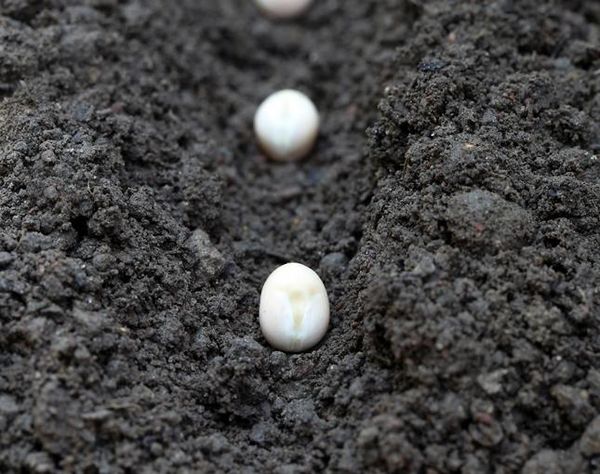
That's it, the beans are ready to plant. If you've chosen a bush variety, sow them in rows or a staggered pattern. Place two beans in each hole—just in case one doesn't germinate.
The distance between holes is maintained at 25 cm, and between rows – about half a meter.
A different planting scheme is recommended for climbing green bean varieties, ensuring the most efficient cultivation and care. In this case, a special support is installed in the bed before planting, along which the stems will climb, and a hole is dug next to it.
Care and fertilization
As soon as the first shoots appear, the soil should be thoroughly loosened, and a layer of mulch can be applied. Loosen the soil carefully to avoid damaging the delicate roots. After a few more weeks, loosen the soil between the rows again, and the plantings themselves should be hilled.
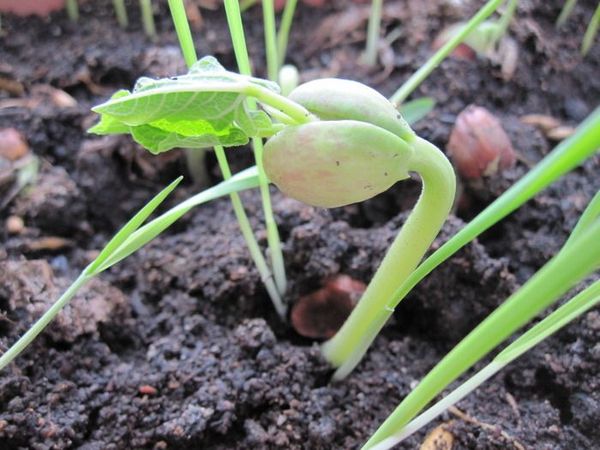
Green beans are a crop that does not require just autumn-spring soil fertilization; they require additional feeding.
First, during the budding stage, and then again at the beginning of fruiting. You can feed the plants with superphosphate (15 g) and wood ash (50 g) per square meter of the beds. If possible, you can add a complex nutrient mixture with boron, manganese, and molybdenum.
Gardener's tips
This crop is very sensitive to strong gusts of wind. If you don't have an ideal spot in your garden, it's best to plant your bean bed in partial shade, but not in an open area exposed to strong winds. When growing beans, remember that they not only provide you with a healthy harvest of vegetables but also greatly enrich the soil with nitrogen. So, whatever you plant after them will grow vigorously.
The harvest will begin to ripen approximately two months after planting. It's best to harvest the pods in the morning, before the dew has cleared – this will ensure they're juicier.
Video: How to Grow Green Beans
This video will show you how to grow green beans yourself.