
A melon variety with excellent taste, Zolotistaya
Content
Description of the variety
This variety was developed at the Krasnodar Research Institute and is considered a medium-ripening variety. The ripening period is not particularly long – the fruits are ready for consumption 80–90 days after the first shoots appear. This plant is suitable for growing both in a greenhouse and in normal conditions (open ground). Among the characteristic features of this variety are its resistance to low temperatures and good tolerance to adverse conditions.
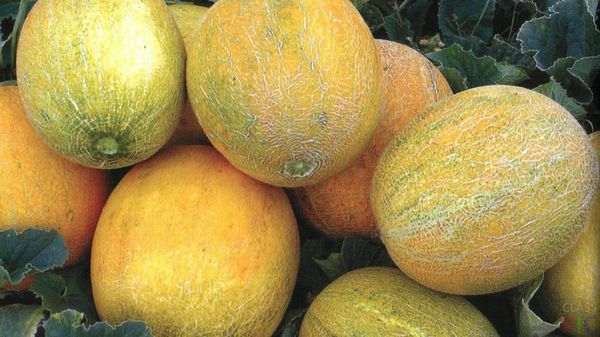
In addition to all this, the Golden melon produces a good and stable harvest (under good conditions, it is possible to harvest more than one hundred centners per hectare), has high resistance to various types of diseases and is quite easy to transport, while maintaining an excellent marketable appearance.
Main characteristics
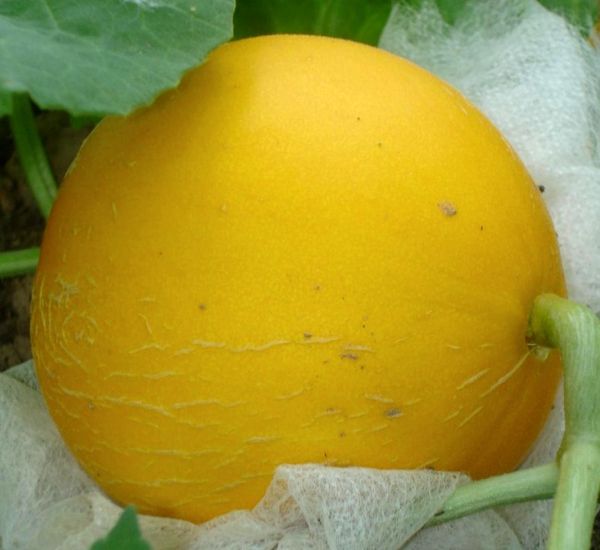
The fruit of this plant is characterized by a round, oblong shape, with a faint mesh pattern. The melon itself has a beautiful golden color, sometimes with a faint orange tint. The fruit is not very heavy, weighing between 1.5 and 2 kg. Beneath the thick rind lies very juicy and tender white flesh. Zolotistaya is very sweet in taste, and it also has a very pleasant aroma. The tasting score, unfortunately, was not very high – 3.9–4.0 points – but consumers speak highly of this variety.
Features of agricultural technology
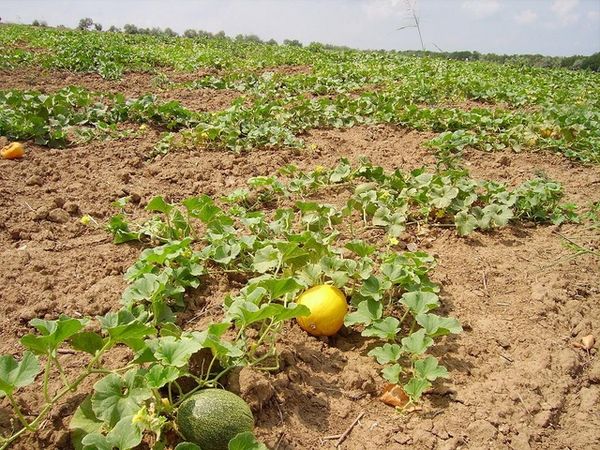
This variety is suitable for both open-ground and greenhouse cultivation. To grow Zolotistaya using the first method, the following conditions must be met.
First of all, you need to prepare the soil in advance where you'll be planting the melons in spring. This is done in autumn: the soil is dug, not too deeply, and then humus is added to fertilize it. With the arrival of spring, the bed should be dug up again, and immediately before planting, another type of fertilizer containing potassium and phosphates should be added.
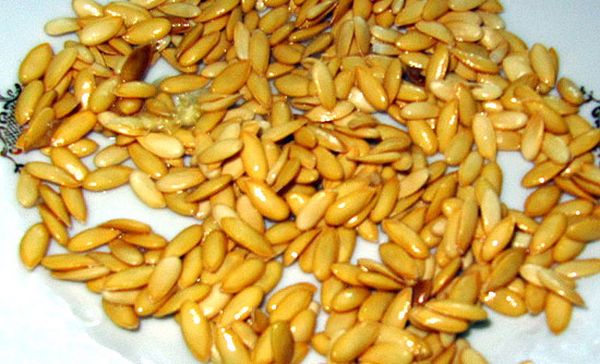
The seeds you plan to plant can be purchased at a store or prepared yourself. Three-year-old seeds are best, as seeds from last year's harvest may not produce fruit. The seeds themselves should be large, and after selection, they should be soaked in a solution purchased from a specialty store. If you don't want to buy seeds, you can treat the seeds with a solution of boric acid and zinc sulfate (soak them in this solution for 12 hours). Any seeds that float to the surface after this treatment should be discarded, as they are empty and therefore unsuitable for planting.
To grow seedlings, prepare small plastic or cardboard pots and fill them with soil suitable for garden crops. Alternatively, you can prepare your own soil mixture using peat and sand (in a 9:1 ratio) and a cup of ash per 10 liters of soil. Now you can plant the prepared seeds. Place several at a time in the pots, not too deep—no more than five centimeters. Until the first sprouts appear, the plants should be kept at a temperature of 18-20 degrees Celsius during the day and no lower than 15 degrees Celsius at night.
The plant does not require frequent watering, as in its natural environment it grows with virtually no moisture.
When the first shoots begin to emerge (which should happen a week after planting), select the strongest one and discard the rest. Once a few (3-4) leaves appear, pinch the seedlings to encourage the development of new shoots. Care for seedlings is the same as for seeds, except that watering should be reduced slightly.
Seeds are typically sown in April, and twenty-five days later, they are planted in the ground. To do this, make holes in the prepared soil approximately 80 cm apart, and plant the seedlings. It is recommended to place them in the soil without separating them from the soil from the pot they were growing in. Before planting, moisten the hole and add humus. The stem should not be buried deeply, so the soil from the pot containing the seedling should slightly protrude above the hole.
After planting, the seedlings should be watered and covered with dry soil. For the first few days, provide the melon with shade, and if there are significant temperature fluctuations, cover it with plastic film (which can also provide reliable protection from rain).
If all these conditions are met, the melon will bring you a rich harvest, and you will be able to fully enjoy its unique sweet taste.
Video: "Tips for Growing Melons"
This video will give you some helpful tips on growing melons.