
Description and benefits of the Central Asian melon Torpedo
Content
Description
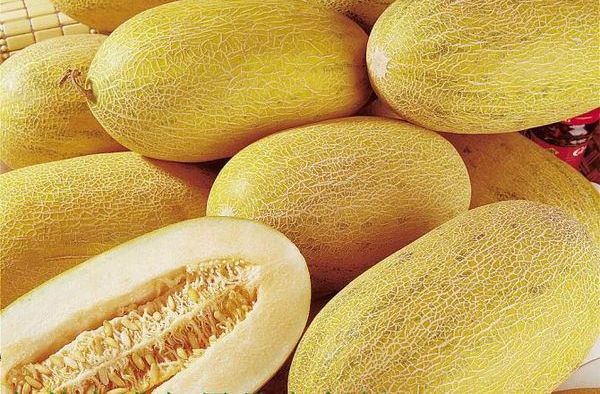
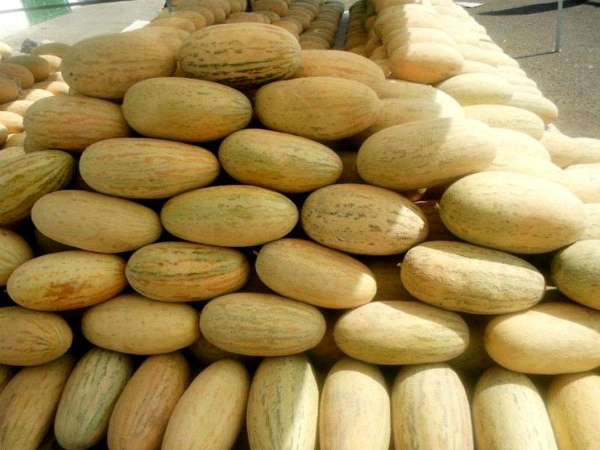
The Uzbek Torpedo melon has an oblong, sometimes even elongated, shape, which likely explains its unusual name. The rind of ripe fruits is yellow, uniformly colored, and completely covered with a grayish mesh pattern. The flesh is white or creamy, slightly oily, very tender, and has a delightful honey-sweet flavor, exuding a light vanilla aroma.
The Torpedo bush is anything but compact. Its vines are vigorous and spreading, reaching lengths of 2 meters or more—which is why this variety is often grown on supports. This method helps the fruit ripen faster and prevents spoilage from contact with the ground. Torpedo melons grow best in their native hot and dry climates. There, they can weigh up to 15 kg, but in temperate continental climates, the fruits rarely reach even 5 kg.
Main characteristics
The Torpedo variety is a late-ripening variety. In European climates, the fruits ripen in 90–100 days. In hot Uzbekistan and other Central Asian countries, they can ripen more quickly—by mid-August. Thanks to their dense, yet thin, rind, these melons store well and are transported over long distances. In cool, dry conditions, they can be hung and stored until spring.
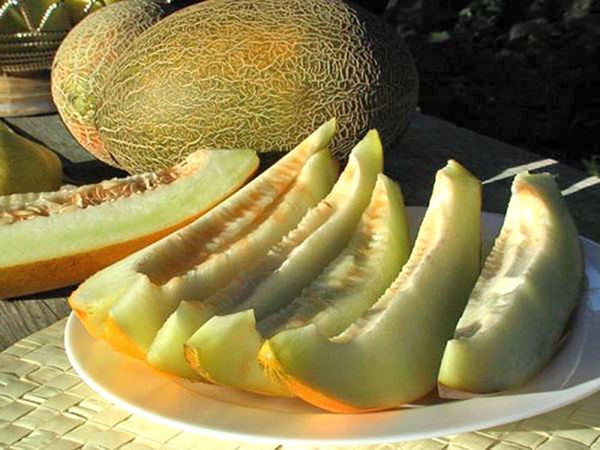
The taste and beneficial properties of the fruits deserve special attention. Ripe Torpedo melon is considered one of the most delicious and nutritious of all Asian varieties. Its pulp contains many beneficial substances: vitamins, minerals, pectin, fiber, carotene, acids, and enzymes. It is 90% water, making it an easy thirst quencher.
The nutritional value of a ripe Torpedo melon is only 35 kcal/100 g. This is a low figure, although it is the highest among other varieties. Due to this caloric content, Torpedo melons are considered a complete food in their native land, suitable for everyone, adults and children alike, as their pulp contains easily digestible carbohydrates that provide strength and energy.
How to choose a melon
In countries where Torpedo melons grow wild, and even a child can pick the ripest and sweetest one from a huge pile. But things are quite different for city dwellers, most of whom only see them in supermarkets or markets. How can you choose a ripe Torpedo melon to avoid disappointment? Perhaps the following tips will help:
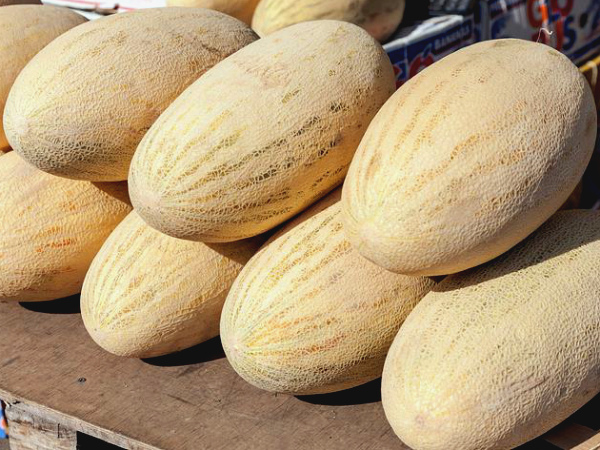
- Firstly, you shouldn’t buy melons before the beginning of September – the fruits that appear on sale in the summer are usually grown using substances that accelerate ripening;
- the color of the peel should be uniformly yellow - orange peel is a sign of excess urea in the soil, greenish spots indicate insufficient ripeness of the fruit, a green vein is a sign of accumulation of nitrates, dark spots on the melon indicate that it has begun to spoil;
- When choosing a ripe Torpedo melon, pay attention to the condition of the peel - it should be springy and bend easily when pressed;
- You can determine the ripeness of the fruit by tapping on the peel - the sound should be dull;
- the flesh of a ripe melon is white or slightly creamy, of a uniform consistency - a green stripe under the skin indicates that the fruit was picked too early;
- the melon contents (seeds) are easily separated from the pulp;
- taste A ripe Torpedo melon is sweet, reminiscent of a combination of honey, pear and vanilla - bland or bitter flesh indicates that the product has begun to spoil.
Even if you weren't able to find a ripe melon, don't worry. It will keep in a dry place for as long as you like, so just leave it there until it's fully ripe.
Features of cultivation
Torpedo is a heat-loving plant, so in our climate, it's best grown in greenhouses, hotbeds, or from seedlings, which should be covered with plastic for a long time after transplanting into the ground. The soil should be light and fertile, containing peat, humus, and preferably black soil or at least loam.
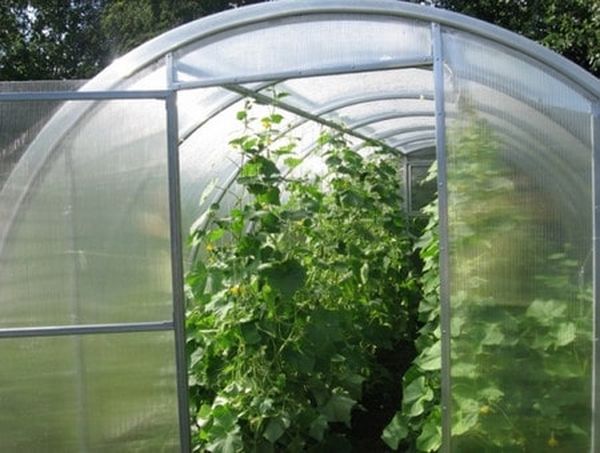
When growing on trellises, plants can be planted according to a 50x80 cm pattern, but if they are going to spread along the ground, they should be planted so that each bush has about 2 m² of space.
Caring for a melon bed consists of the following activities:
- watering – you need to water frequently, since the Torpedo’s root system is shallow;
- top dressing – liquid mullein is added once a month;
- until the plants become untidy, you need to hill them up and then regularly loosen the soil;
- To ensure that the fruits grow large and sweet, pinching of the shoots and removal of excess ovaries is required – a maximum of 3-4 ovaries should remain on the bush.
Advantages and disadvantages of the variety
The main advantages of this variety, of course, are its taste and the beneficial properties of its fruit. Besides being a highly valuable food product, Torpedo melons have medicinal properties and are widely used in folk medicine. They can help strengthen a weakened body, boost immunity, normalize digestion and kidney function, improve metabolism, and address many other health issues.
The variety has one obvious drawback: its heat requirements, which prevents it from growing a good, sweet melon in temperate climates. Unfortunately, in our region, the Torpedo variety fails to fully ripen like the Kolkhoznitsa melon and reveal its true flavor.
Video: How to Choose a Ripe Torpedo Melon
In this video, you will hear recommendations on choosing a ripe melon.