
What melon crossbreeding will delight you with the best taste?
Content
How to choose the best rootstock for melon
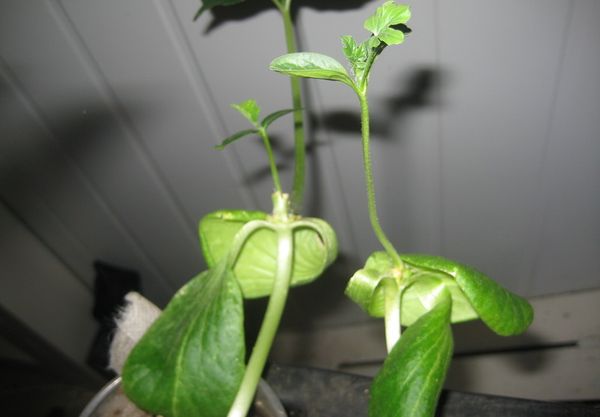
Rootstocks for plants are selected based on certain qualities: resistance to adverse conditions, adaptability, and ease of care. Since melons belong to the Cucurbitaceae family, they are most often grafted onto pumpkin varieties such as Lagenaria, Ficifolia, and Wax Pumpkin. Sometimes zucchini or squash are used as rootstocks. Unlike watermelon and cucumber, melon is picky in its choice of rootstock. Therefore, when experimenting, it's important to be on the safe side: it's better to graft melons onto many different rootstocks than to graft many melon seedlings onto a single rootstock. As long-standing practice shows, hard-shelled pumpkins and squash are the preferred rootstocks.
Grafting a melon onto a pumpkin
Grafting melons and watermelons onto pumpkins is one of the most effective. Because the pumpkin stem contains an air pocket, which creates favorable conditions for root growth, the scions develop their own root system. There are several grafting methods. The most popular are cleft grafting, tube grafting, and the "approximate method." The simplest method, suitable for all varieties, is tongue grafting.
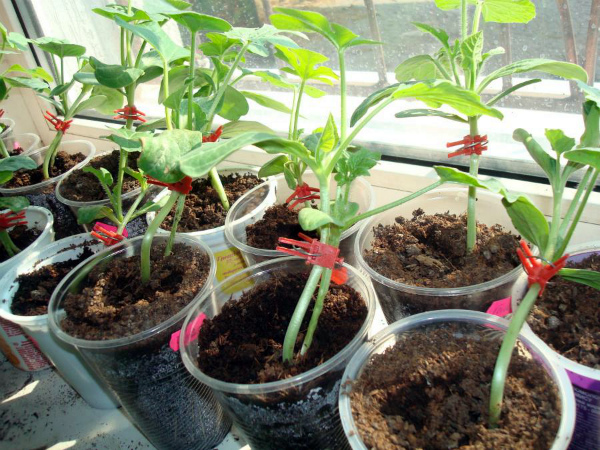
The process is carried out as follows:
- Seedlings of both plants are planted together.
- On the stems of the rootstock and scion, at the place of the future connection, the epidermis is cut off at a distance of about 20 mm.
- Next, the rootstock and scion are joined at the cut points and secured without separating them from the roots. A small clip or clothespin can be used for securing them.
The resulting plant is more cold-resistant, adapted to outdoor cultivation, and less susceptible to diseases and pests. The fruit is quite tasty, but incomparable to the melons grown in Uzbekistan.
Grafting melon onto lagenaria
Melons are also grafted onto lagenaria. Since this variety is also known as "bottle gourd," the most common method is the "tube grafting" method. In this case, the rootstock is cut off, leaving only a 1.5-centimeter stump with a few leaves. A portion of the epidermis equal to the hollow stump is removed from the melon stem. The scion is inserted into this stump. The scion and rootstock fuse together fairly quickly and in all locations. However, it should be noted that while grafting watermelons onto lagenaria is always effective, this is not the case with melons. The plant often dies, or the fruit is sunburned, and the flavor is rather mediocre.
Grafting melon onto zucchini
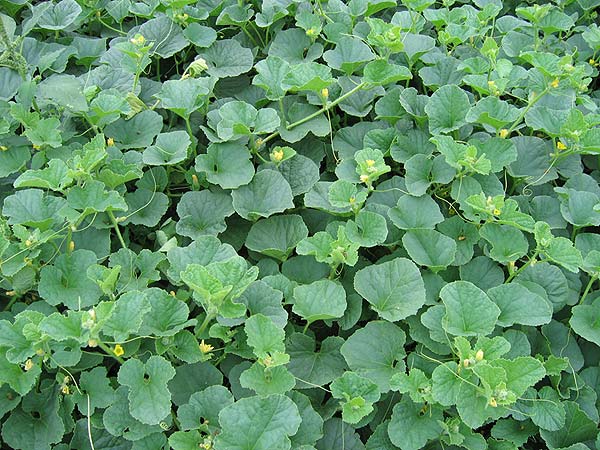
In this case, the melon is better adapted to natural soil, low temperatures, and temperature fluctuations. If cold-hardy varieties are planted in temperate climates, the fruits ripen much faster and have a high yield. Some experimenters practice three-component grafting. For example, combining melon, zucchini, and tomato produces a fruit with excellent flavor, but is susceptible to some tomato diseases.
Other vaccination options
After several unsuccessful attempts, many gardeners began using special rootstocks cultivated exclusively for grafting. Unfortunately, such rootstock seeds can only be ordered from China via AliExpress. Growing these rootstocks yourself is impossible, as they are hybrids. The seedlings are grafted using the "tongue-to-tongue" method and planted in a single pot. The melon stem is then pinched to force the seedling to rely solely on the rootstock for nourishment. Later, the scion stem is cut off completely.
Since only the cotyledons of the rootstock are needed, emerging leaves are pinched off. These seedlings should be watered and fertilized like any other seedling. Growth stimulants are not used. This grafting method results in a more cold-hardy, disease-resistant, and fruitful plant. These melons have a particularly sweet flavor. The twisted berries taste reminiscent of pineapple.
The main rules of vaccination
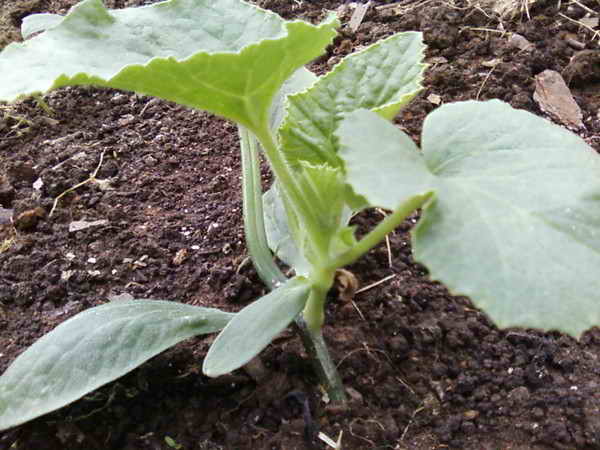
When choosing a grafting method, the following key factors should be considered: plant species, its ability to fuse, age, and stem structure. If the plants fuse easily, then the seedlings can be grafted using a "cut" or "tube" grafting method. Otherwise, it's better to use the "close-together" method. Furthermore, grafting should only be done with sterile instruments. The development and readiness of the rootstock and scion, as well as the creation of suitable conditions for fusion (temperature, humidity, lighting), are also important. It doesn't matter what you cross a melon or watermelon with; the result is what matters.
Video: "Melon Grafting"
This video will show you how to properly graft a melon.