
Growing early-ripening yellow melon Skazka
Content
Description of the variety
The Skazka melon is an early-ripening variety, ripening 58–62 days after germination. Gardeners appreciate it for its consistent, 100% ripening in all weather conditions and its compact growth habit, which allows for a compact melon bed. The plants are not particularly vigorous and tend to climb, easily shaping the desired direction.
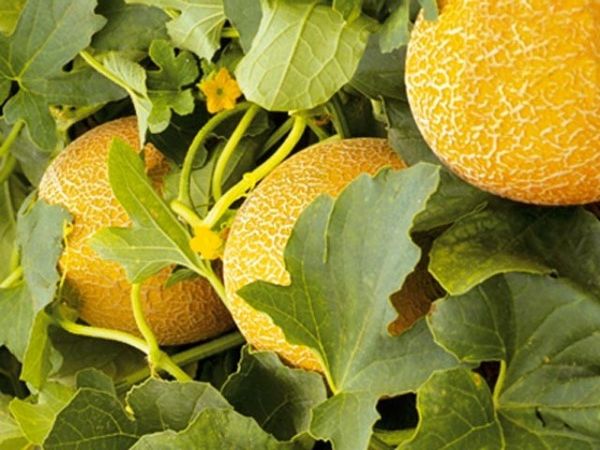
The fruits have a very attractive appearance: a smooth elliptical shape and a uniform bright yellow skin. They weigh only 1.2–1.6 kg, and have no surface pattern, though a fine mesh pattern can sometimes be seen near the stem. The flesh is firm, very juicy, light creamy, almost white, and exceptionally sweet. This melon is naturally delicious fresh, but it also makes excellent desserts and preserves, including jams, jellies, and candied fruit.
Main characteristics
The Skazka variety is ideal for temperate climates, and using the seedling method, these melons can even be grown in northern latitudes. The plants are virtually immune to insect damage, particularly melon aphids, the most insidious enemy of melons. The crop's high resistance to nighttime cold snaps, as well as downy mildew and powdery mildew, which typically appear in the second half of summer, allows the fruits to fully ripen and develop a harmonious flavor.
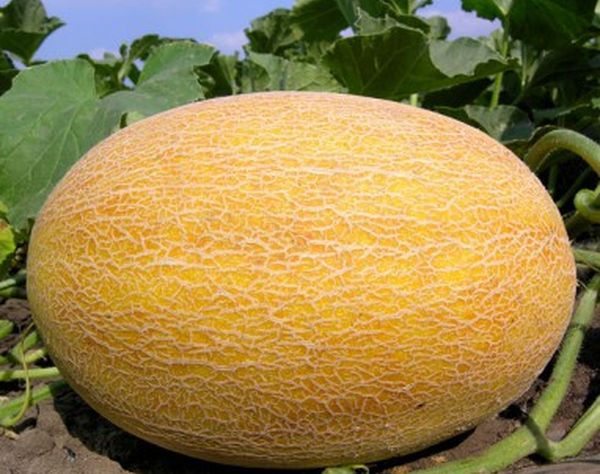
Depending on planting time, the fruits ripen in late July to early August. The average melon yield is approximately 3 kg/m², but with proper care, this figure can be significantly increased. The fruits' transport and storage qualities are average. A distinctive feature of this variety is the simultaneous ripening of the fruits.
Features of agricultural technology
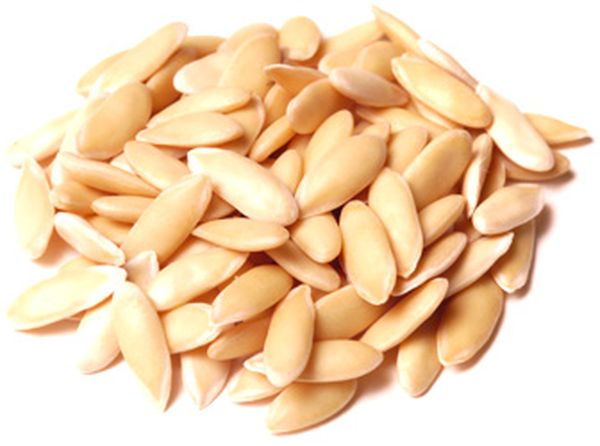
Melons can be grown from seedlings and seeds. In temperate climates, seed propagation is more common, as the variety is cold-hardy enough for this. The best yield is achieved by planting 3-4-year-old seeds. One-year-old seeds are considered to produce quick shoots and strong stems, but they don't produce many ovaries, as they primarily produce unisexual flowers. Before planting, the seeds should be soaked for a couple of days in a stimulating solution. This can include aloe vera juice, boric acid, ash, or any commercially available solution, such as "Heteroauxin." Naturally, only the largest and heaviest seeds are selected for planting; lighter seeds that float to the surface of the solution are simply removed.
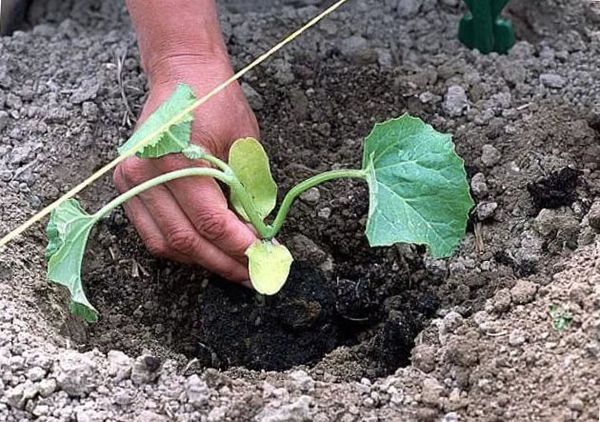
Like any melon, Skazka loves sun and warmth, so it should be planted in a sunny, wind-free area – this will ensure its yellow fruits are sweeter. It is equally demanding regarding soil. Ideally, it thrives in light, loamy, neutral soil with a good organic layer of humus or leaf compost. Seeds are planted in warm soil around mid-May. To prevent fruit spoilage, melon beds should be laid out in a 70x150 cm pattern.
In greenhouses and hotbeds, where plants are trained into a single stem and tied to trellises, planting is done in a dense pattern (70 x 70 cm). In unprotected soil, it is advisable to mulch the bed with straw.
Melon care consists of a number of standard procedures: weeding combined with soil loosening, watering as needed, several hillings, fertilizing, and pinching the stems. Organic fertilizers (liquid compost, manure) can be used as supplementary fertilizer, but no more than twice per season. Complex mineral mixtures and ash solutions can be applied at 10-day intervals. Once the fruit begins to ripen, fertilizing and watering should be discontinued.
Since melons produce fruit only on lateral shoots, the plants require pinching. The first pinching is done above the 4th or 5th leaf, and the second above the 7th leaf. The same procedure should be performed on the lateral shoots. A full-grown bush should consist of 2-3 strong shoots and 4-5 fruits; any remaining ovaries should be removed. If desired, trellises can be used to shape the bushes. Following these recommendations will help you grow a good harvest of high-quality, sweet melons.
Video: Planting a Melon
In this video you will hear useful tips on planting and growing melons.