
What kind of fruit is a horned melon or African cucumber?
Content
Description of the culture
African cucumber, anguria, African melon, or jelly melon—all are different interpretations of the name kiwano. The fruit's homeland is generally considered to be Africa, but some claim it came to us from New Zealand. The most favorable climates for kiwano to thrive are in North America, Colombia, Israel, and African countries. However, with proper agronomic management, this exotic fruit can also yield abundant harvests in European countries. Kiwano melon is a herbaceous, vine-like annual plant, a close relative of the cucumber. Anguria vines, covered with yellow flowers and large leaves, reach a length of about 4 meters under favorable conditions.
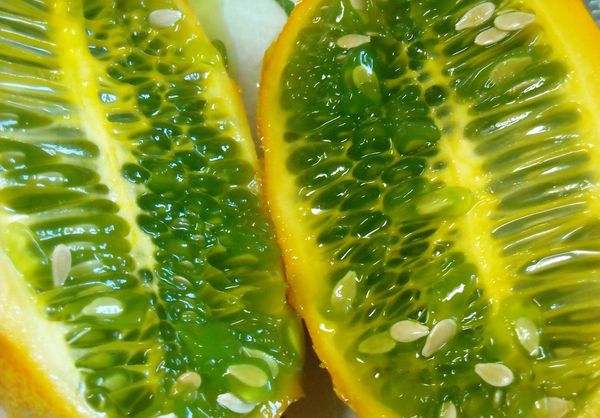
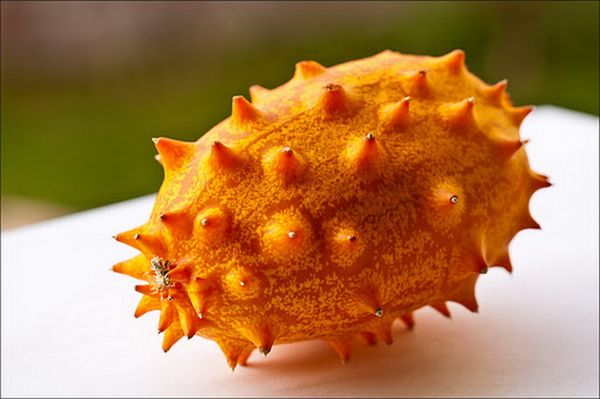
The African fruit is elliptical, pale green, and covered with unusual, large spines. The fruit turns bright orange when ripe. Its length and diameter are similar to those of a short cucumber. Fruit weight ranges from 40 to 350 g. Kiwano is an excellent fruit tree: a single plant produces approximately 50 fruits. Fruiting begins in mid-summer. During storage, the fruits acquire a rich yellow-orange color.
Growing from seeds
Since the African cucumber can delight you with such a bountiful harvest, the question arises: how to grow kiwano at home from seeds? Growing kiwano involves several stages: Seed preparation. It's best to begin preparing the seeds a month before planting them outdoors. Early May is the best time to plant. Soak the seeds in a solution to stimulate growth.
Planting in pots. After the seeds have swollen, place them in prepared pots about 9 cm in diameter filled with nutritious soil mix. Keep the seedlings in a warm place for at least a couple of weeks. Choosing a location. This exotic fruit requires a location protected from strong winds and direct sunlight. Although this fruit is accustomed to the hot African climate, direct sunlight will instantly burn the leaves. It's also convenient to place the plant near a fence or gazebo so the vines don't need to be tied up.
Planting in the ground. After all danger of frost has passed, begin planting the sprouted seeds in the ground. Plant the fruit in a couple of rows, about half a meter apart. Further care: As the plant grows, tie it to vertical stakes with twine.
Don't forget to loosen the soil, remove weeds and water several times a week, especially in dry summers.

This exotic cucumber loves to be fed. So, stock up on some herbal infusion diluted with chicken manure. The plant's growth habit requires pinching, so if it becomes too dense, pinch out the side shoots.
How to eat it
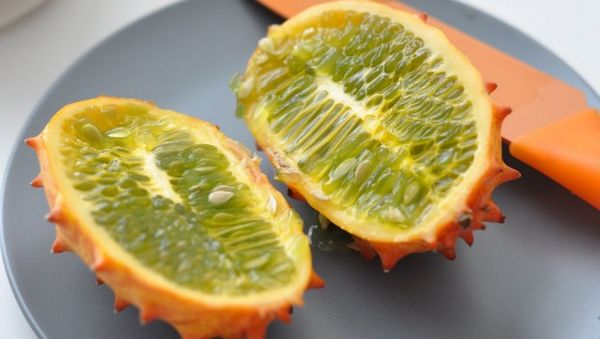
In African countries, this product partially solves the nutritional problem. This exotic cucumber is used as a main dish and sometimes as a snack. The taste of this gelatinous fruit is difficult to describe: it's a mixture of lemon, banana, cucumber, and zucchini. The fruit is quite aromatic, but for those with a sweet tooth, you can sprinkle it with sugar. The raw product can be cut in half and eaten with a spoon, or you can suck out the pulp, discarding the seeds.
African cucumbers can be used in salads, seasoned with salt, pepper, and lemon juice. Kiwano's unique flavor adds a unique flavor to cocktails and jams. The fruit pairs well with meat dishes. Because kiwano has a long shelf life, its peel can be used as decorative plates. Horned melon is often recommended for dietary menus, as the fruit is 90% water. It is rich in minerals, vitamins A, C, and B. Kiwano fruits are also beneficial for those with gastrointestinal and cardiovascular diseases due to their high potassium content.
Video "Kiwano or Horned Melon"
In this video you will hear the characteristics of the Kiwano melon variety.