
Description of the early melon variety Karamelka F1
Content
Description of the variety
The large, oval Karamelnaya F1 melon is covered entirely in a coarse, mesh-like pattern, likely responsible for its muted yellow color. It's aromatic and quite tasty, with its thick skin revealing very light, almost white, caramel-flavored flesh and a small seed pod compared to other varieties.
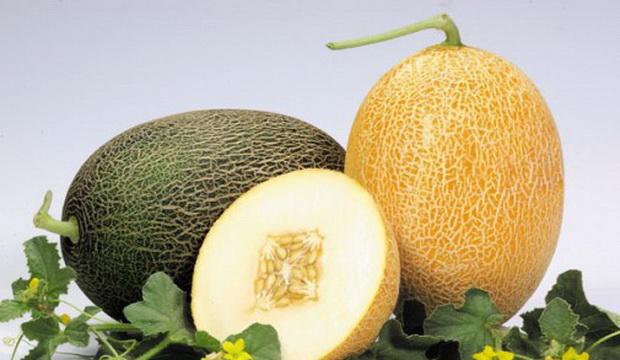
The melon is early, undemanding to growing conditions, tolerates periods of drought well, and does not lose its flowers when the temperature rises above +30 degrees. This hybrid is renowned for its consistent yield, producing fruit no matter the weather. The plant thrives in open space and the ability to climb, so Karamelka is planted to avoid overcrowding. It is often grown on trellises, but keep in mind that the first fruits can weigh around 3 kg.
Main characteristics
This early hybrid ripens, with fruits ripening 5–60 days after sowing. It thrives in open ground in Moldova, Ukraine, and southern Russia, provided the soil at a depth of 10 cm warms up to 15°C. In greenhouses, melons are sometimes grown only as seedlings, but are more often grown as a whole if climate conditions prevent them from being grown in a garden bed.
The plant tolerates temperature fluctuations well and shows high resistance to fusarium.
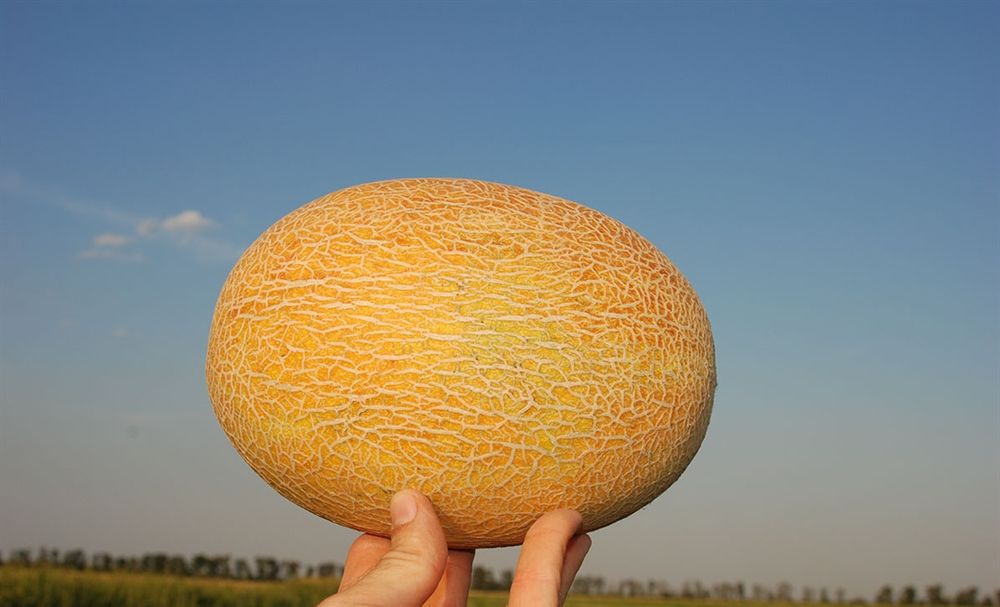
With numerous male flowers that bloom for only 24 hours, 12–14 female flowers produce 2 to 10 ovaries. The first fruits grow to 2.5–3 kg, while subsequent ones weigh 1.2–2 kg. The fruits are distinguished by a strong aroma and a pleasant sweet taste; they are not only eaten fresh, but also used to make candied fruit, jams, and pastry fillings. Ripe fruits transport and store well. The excellent taste and marketability of the fruits contribute to the popularity and, consequently, the widespread distribution of this particular pineapple melon hybrid.
Features of agricultural technology
The Caramel F1 melon grows well in greenhouses and under film shelters, but where the climate allows, it is preferred to be grown outdoors. Seeds from the French manufacturer can be planted directly in the soil without preparation, but it is advisable to disinfect all other seeds by soaking them in a weak solution of potassium permanganate and then soaking them for a while in a growth stimulator.
Melons are planted in the same spot only every eight years, so it's best to prepare the bed after potatoes, legumes, or cabbage. Just be sure not to plant after pumpkins. Choose an open, sunny location, even on a south-facing slope. Caramel requires neutral, loose, fertile soil; it grows well in fertilized loams, sandy loams, and a mixture of black soil and sand. Before planting, you can add sand, compost, or humus to depleted or heavy soil, and fertilize it with a complex mineral fertilizer.
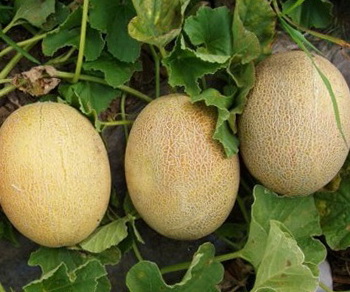
In mid-May, when the soil has warmed sufficiently to reach 15°C (59°F) at a depth of 10–15 cm, the prepared seeds are planted at a depth of 2–4 cm. If sowing under temporary cover, this usually occurs a couple of weeks earlier. Melons don't like dense soil; 50 to 80 cm should be left between seed holes (or between plants when planting seedlings). In gardens, this melon is planted so that it can climb a trellis, exposing the entire fruit to fresh air and maximum sunlight.
To ripen, melons require plenty of sunlight, warmth, and moisture. They benefit from a drip irrigation system, but most gardeners water them generously once a week when coming from the city. Both options are quite suitable for this easy-to-grow hybrid. Like most garden plants, melons require the essential nutrients for growth—nitrogen, phosphorus, and potassium—as well as many micronutrients, which can be obtained from a complex mineral fertilizer. Nitrogen can be added in the spring before flowering, and later, the emphasis is on phosphorus and potassium, which are essential for fruit ripening. Caramel melons respond well to foliar feeding.
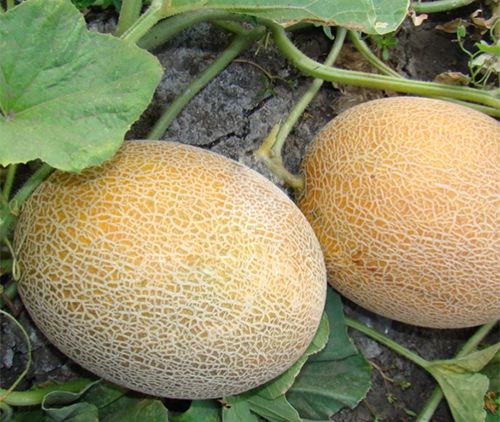
When grown commercially on large fields, growth stimulants and herbicides are used to control weeds. Private gardeners weed by hand, but melon patches should be weed-free.
The harvest is completed after 50–55 days of growth, when the appearance indicates it's ready. It's then stored at a slightly lower temperature for a few days before transporting (if necessary). It can even be cut for fresh consumption straight from the garden.
Video: Melon Formation
This video will show you how to shape a melon.