
How to properly plant and grow melon in a greenhouse
Content
Preparing soil and seeds
Growing melons in a polycarbonate greenhouse isn't particularly difficult and doesn't require any special agricultural skills, but there are a few key aspects to keep in mind. One of these is proper soil preparation and selecting good seeds.
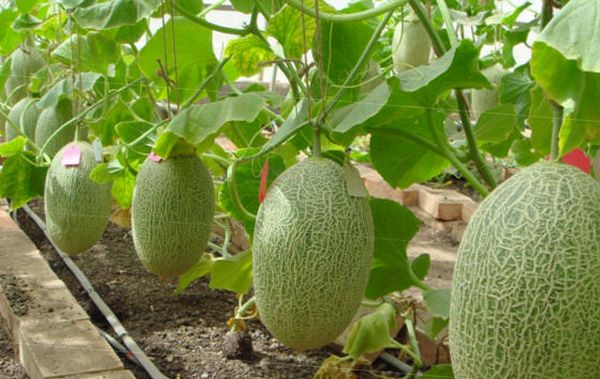
Let's start with the soil in which we will plant the melons. The soil used for planting should be well fertilized in advance using organic matter. Typically, it's recommended to use manure or superphosphate. Alternatively, you can use low-lying peat moss with sand added in a 3:1 ratio.
How do you choose melon seeds? The best option is to purchase them from trusted producers you can trust. You should also choose melon varieties suitable for greenhouse cultivation, which produce small fruits—these are ideal. Another factor to consider when choosing seeds is their freshness; the fresher they are, the better. Furthermore, choosing varieties that thrive in local conditions significantly increases your chances of success. Just before planting, soak the seeds in a potassium permanganate solution for half an hour. If these conditions are met, the melons will plant successfully.
Growing and transplanting seedlings
To ensure your greenhouse melons thrive and stay disease-free, they need proper care. Fertilizers can be applied some time after planting the seeds. Typically, the time to fertilize is when the seedling develops two leaves. Mineral fertilizers are added to promote healthy growth.
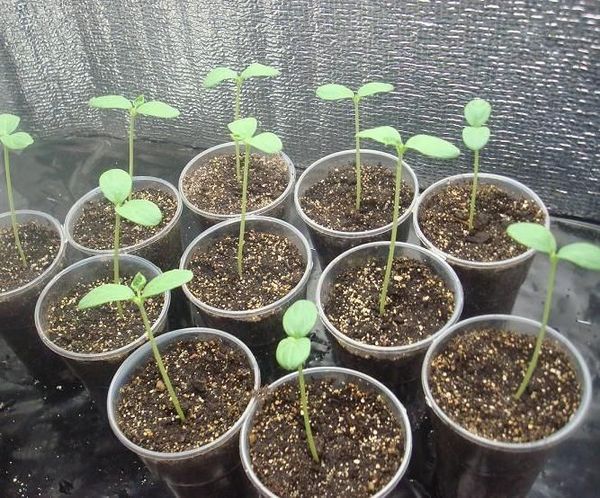
You should also ensure that the pots are spaced sufficiently apart so that the melons grow without touching each other. It is recommended to water the melons only with warm water to ensure the plants grow vigorously.
When five leaves appear, the melon seedlings need to be pinched. Side-sonning is done to ensure a good harvest in the future. First, two side shoots are left; later, when ovaries form on them, all but two or three are removed. Once the ovaries have grown sufficiently (to the size of plums), just one, a perfectly rounded one, is selected and placed in a spacious net. Melons in a greenhouse need to be side-sonned to ensure good fruit, so this procedure should be completed before planting the seedlings in pots.
To properly plant melon seedlings in your polycarbonate greenhouse, you should prepare the holes in advance. They should be small (40x40 cm) and well-fertilized: use compost and humus, cover with soil, and add a small amount of potassium permanganate solution. Before planting, water the seedlings and carefully place them in the holes.
To prevent damage to the roots, the seedling is placed in the hole without separating it from the soil it was previously growing in. Four seedlings are typically placed per hole. Even though the planting is done in a greenhouse, it is recommended to cover the seedlings with plastic film until the seedlings have adapted. You can also refer to the planting diagram for this plant to calculate the number of fruits you can plant.
Necessary conditions in a greenhouse
So, we've covered how to properly plant a melon in a greenhouse. Now it's time to discuss the conditions you need to ensure for the normal growth and development of this crop.
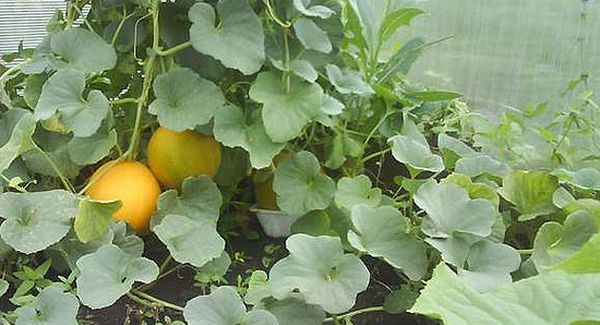
It's immediately clear that growing these plants in a greenhouse is pointless—they require a lot of space, so planting and caring for melons should only be done in a polycarbonate greenhouse. The height of the room is crucial and should be approximately two meters, as melons climb up trellises. Furthermore, the best option is to set aside a separate greenhouse for growing this crop, which will create optimal conditions—high temperatures and minimal humidity.
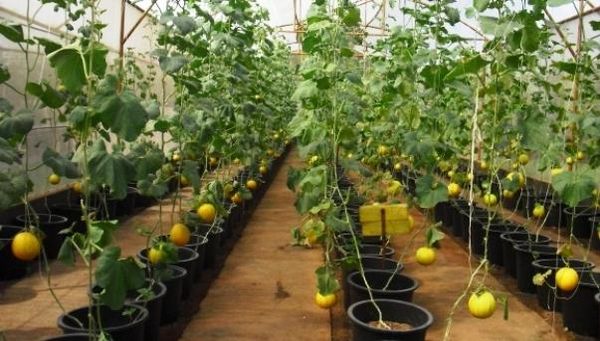
When preparing the room, it's important to ensure that cold air doesn't enter, as this will risk diseases for your fruit. It's also worth having some covering materials ready in case of a sudden drop in temperature, so your small garden doesn't risk destruction.
Caring for a melon
So, we've covered the most important aspects of planting this plant, and now we can move on to care. Caring for a melon in a greenhouse isn't particularly difficult. It doesn't require any special gardening skills; all you need is proper watering and fertilizing, and ensuring the fruit develops properly.
Since melons typically grow in arid climates, they don't require frequent watering. Before the first flowers appear, water only when the soil is sufficiently dry (you can even wait until the leaves have wilted slightly). To ensure the fruits have a sweet taste and aren't too watery, reduce the amount of water to 0.5 liters per plant per day. This care will ensure excellent growth and development.
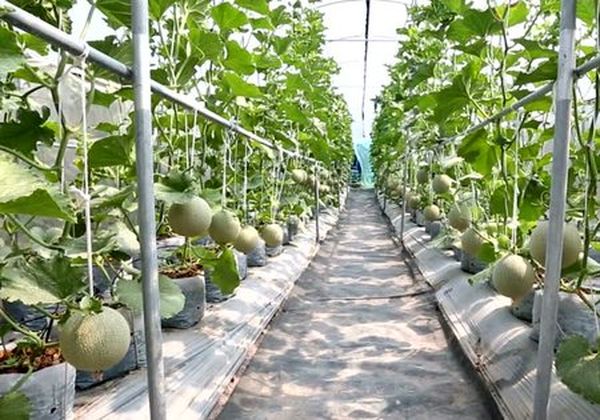
How to feed the plant to ensure a bountiful harvest? Young shoots are fertilized with a mixture containing saltpeter, superphosphates, and potassium chloride. Pre-prepared mixtures, available in stores, are also used for melon care. During flowering, eliminate nitrogen-containing fertilizers from the list and increase the frequency of potassium-phosphorus fertilizers.
After four days from planting, you need to monitor the correct formation of the fruits.
To do this, the plant is tied to the trellis in a checkerboard pattern—the twine is tied around the first leaf and knotted. The plant forms two vines, which are then secured to the trellis, removing all the others. The side vines are pinched off after the fourth leaf appears, and the main vine is pinched off as soon as it reaches the wire.
Prevention of diseases and pests
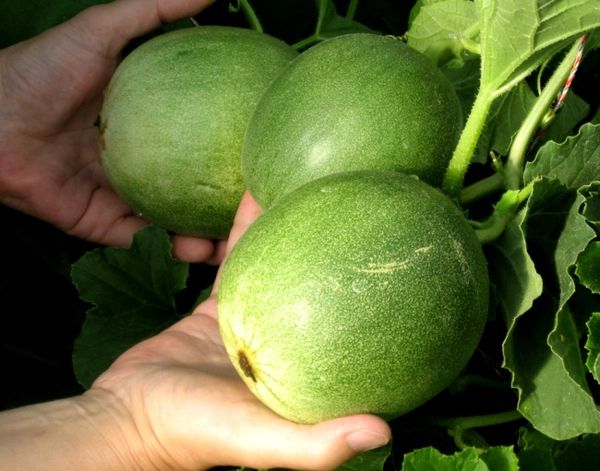
If you've decided to plant melons in a greenhouse, you need to know how to prevent diseases and pests to ensure healthy plants and a bountiful harvest. The most common diseases include:
- olive spot (brown spots that develop into ulcers);
- powdery mildew (white coating on leaves and fruits);
- anthracnose (yellow spots on leaves and ulcers on vines and fruits);
- Spider mites and aphids are very dangerous pests that can destroy entire plant bushes.
To prevent this, it's necessary to provide proper conditions and care: keep the greenhouse clean, place a sawdust mat soaked in a solution of salt, formalin, and bleach near the entrance. You can also treat the upholstery with a solution of potassium permanganate.
Video: Planting Melons in a Greenhouse
This video will show you how to grow melons in a greenhouse and in open ground.