
How to properly and why remove side shoots from melons
Content
Why is this necessary?
Pinching the main growth point is necessary to accelerate the formation of lateral shoots from the axillary cavities under each leaf, where the fruit will actually develop. Furthermore, nutrients from the root system are not distributed along the plant's long shoots, but are delivered directly to the fruit. As a result, the melons ripen approximately a week earlier, becoming sweeter and larger. If the plant is not pinched, it may not produce fruit at all, as it will lack lateral shoots.
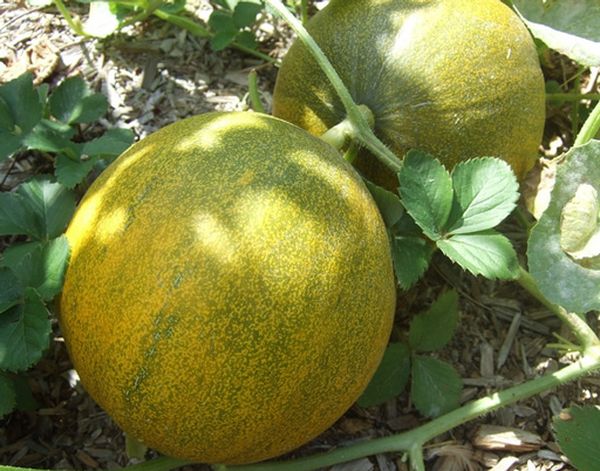
Pinching seedlings
The first pinching of melons should be done when the plants are still in the seedling stage – at the stage of two pairs of true leaves. As a result, the main shoot grows from the axil of the upper leaf, and lateral shoots will form from the axils of the lower leaves. The subsequent pinching pattern will directly depend on whether you plan to grow the plant vertically or horizontally.
Pinching when growing vertically
This method is commonly used for growing melons in a greenhouse. It involves tying the plant's vines to a trellis, preventing them from trailing freely along the ground. This method trains the plant into a single stem, without side shoots. The plant should be pinched again when the main stem reaches a length of about 2 meters. At this time, the side stems are pinched back approximately above the fourth leaf, based on the number and location of the ovaries. Any vines that do not have ovaries should be trimmed.
Pinching when growing horizontally
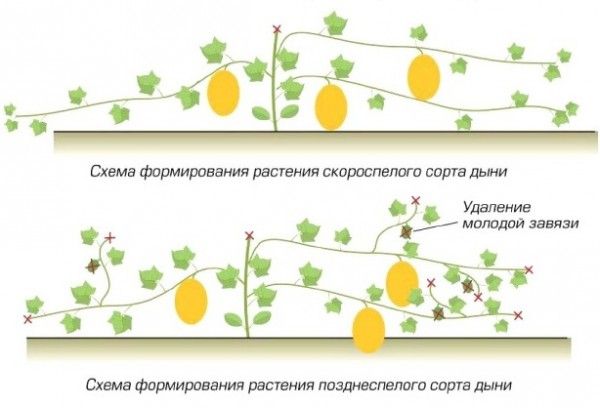
Melons are typically grown horizontally in open ground. In this case, only the two strongest shoots of the three formed after the first pinching should be left. The remaining shoots are pruned again once they have 5-6 leaves. Another pinching is performed at the stage of ovary formation: weak side shoots should be removed, and those that have not yet developed ovaries should be treated with crushed charcoal.
Pinching different varieties
The answer to the question of how to properly pinch melons depends on the ripening period of your variety. Early-ripening varieties only require shaping the main stem and monitoring the number of ovaries. However, if you choose a late-ripening variety, you'll need to train the plant more intensively, leaving fewer ovaries on the vines, thereby accelerating the ripening period and improving the quality of the fruit.
Further care
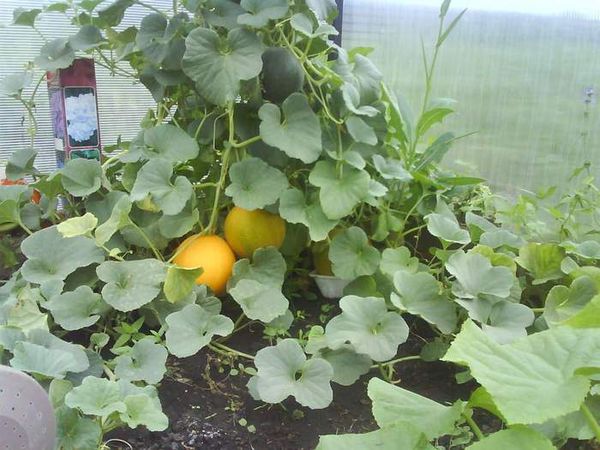
You should monitor the number of ovaries and the correct formation of the shoots until the fruits are fully ripened: to ensure that the melons grow large, you need to constantly remove emerging ovaries and new shoots. Remember: the fewer melons you leave on each shoot, the greater the chance they have of growing large and having excellent taste.
Gardener's Tips
A key feature of growing melons vertically is the need to tie the fruit down, placing them in loose nets. As they grow, untied melons can break off their stems under their own weight. Pollination is also important: melons in a greenhouse are protected from insects, so the gardener will have to "bee" them.
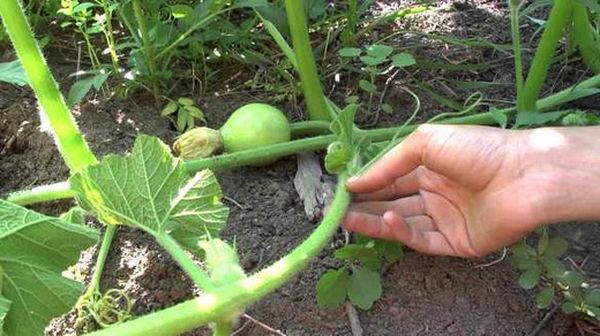
When using the horizontal cultivation method, it is very important to correctly direct the vines, preventing them from occupying the spaces between rows, and also to prevent the beds from becoming too dense. Otherwise, the lack of fruit will not be due to improper pinching of the melon, but to a lack of light and excess moisture.
If you decide to graft a melon onto a pumpkin, this doesn't mean you don't need to pinch the plant: all the stages of shaping the bush are carried out in the same order as with a regular melon.
We hope we've thoroughly covered the topic of how to properly prune your melons so you can enjoy their delicious fruits as early as possible. Once you've tried growing this crop, you'll become completely attached to it, and you won't be able to imagine the gardening season without these fragrant melons.
Video: Melon Formation
This video will show you how to properly shape a melon.