
How to Grow the Delicious Ethiopian Honeydew Melon
Content
Description of the variety
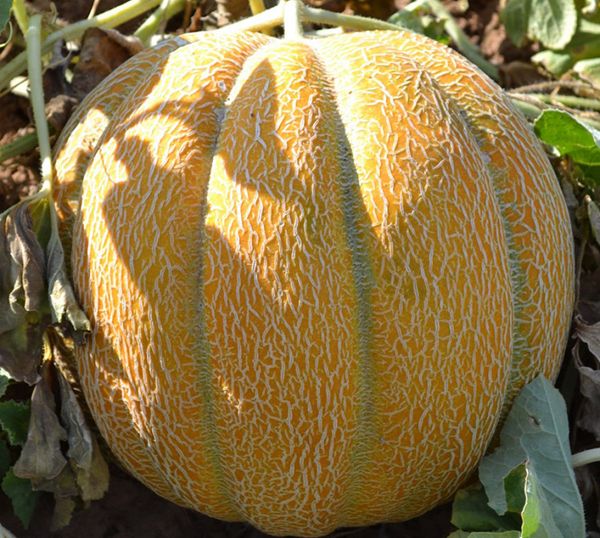
The mid-early Ethiopian melon variety thrives in both gardens and greenhouses, allowing for a significant expansion of its growing geography. The fruits ripen 70-80 days after the first sprouts emerge. The bright yellow melons, covered in a continuous mesh pattern, are divided into segments shaped like large wedges. The rough skin is thick and flexible enough to store well and easily transport over long distances. The melon's appearance is very reminiscent of a pumpkin, especially the one from which the godmother made Cinderella's carriage (the variety description warns of the large size of the fruits). The average fruit weighs 3-4 kg, but you can easily grow it up to 7 kg by limiting the number of ovaries.
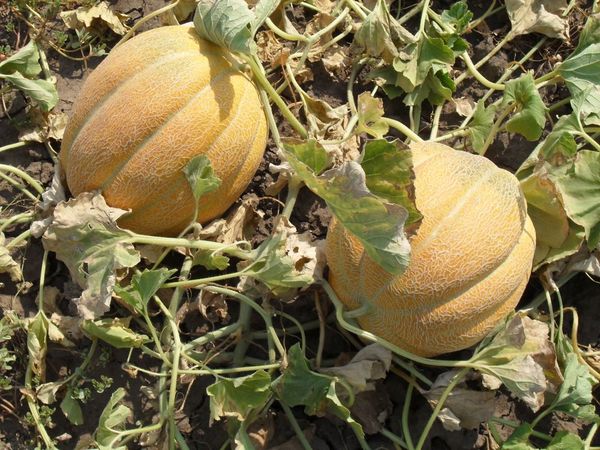
The fruit's flesh is very light, almost white, and has a captivating aroma, abundant juice, and a honeyed sweetness. The seeds are numerous, housed in a medium-sized seed chamber. This melon is most often eaten fresh. The Ethiopian melon forms compact bushes with strong vines. Its leaves have a distinctive heart shape, and the fruit is sunburn-resistant, loving full sunlight and warmth.
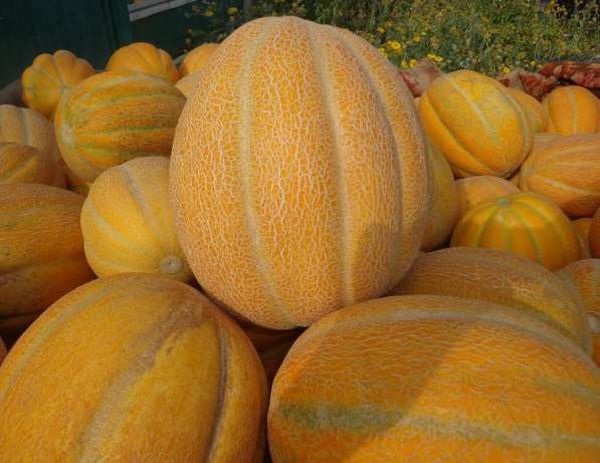
The plant prefers non-acidic, fertile soil that is light enough to prevent water stagnation and allow air to reach the roots. It does not grow in excessively clayey or sandy soils, nor in saline soils. This variety is not resistant to fungal diseases and is sensitive to sudden drops in temperature and cold winds. Ethiopian fern prefers plenty of warmth, light, and adequate moisture.
Features of cultivation
In southern regions, melons can be grown by sowing seeds directly into the garden, but most gardeners prefer the seedling method. Plants are transplanted into a garden bed or greenhouse when they have 5-6 true leaves, usually about six weeks after sowing. Planting should be done when the weather is already warm and there's no threat of cold weather for this heat-loving crop.
Melon seeds undergo a specific preparation stage: they must be disinfected, discarded, and helped to sprout. To do this, soak the seeds in a weak solution of potassium permanganate for 30 minutes, then wash them in clean, warm water, and soak them for 24 hours in clean water no cooler than 25 degrees Celsius. After this, continue working with the seeds that remain at the bottom; discard any that haven't sunk. These seeds can now be placed in the soil, but sometimes they are placed on a damp cloth to encourage germination, kept in a warm place, and sown when tiny sprouts appear or the seeds are just beginning to open.
To grow seedlings, use peat pots or plastic cups with a diameter of 10 cm, and use fertile, loose, non-acidic soil. Place 3-4 seeds in each container at a depth of about 5 cm and water. Cover the cups with plastic wrap or glass to create a greenhouse effect and leave in a warm place. Once sprouts appear, remove the plastic wrap and expose the cups to sunlight.
Fertilizing begins after the first pair of true leaves appears. You can use "Uniflor-bud," herbal mash, or complex mineral fertilizers. The key is to avoid overdoing the concentration; for this, the products are diluted much more than recommended on the packaging.
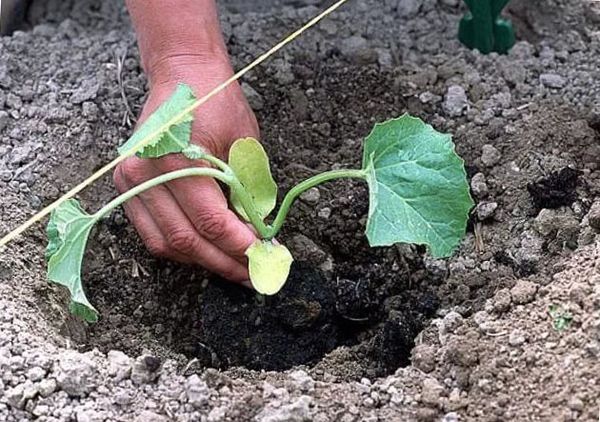
Plantings should be spaced no more than 0.5 meters apart in a single row. In an open, sunny spot, preferably sheltered from the north, you can prepare a warm bed by burying humus mixed with soil to a depth of about 50 cm. Dig holes above the soil, water generously, and once the water has soaked in, you can plant the seedlings. Plants should be planted to the level of the cotyledon leaves, and lightly mound the stems so that water after watering (and water only at the roots) runs off gently, rather than remaining near the stem.

Melons should be watered only with warm water, at least no colder than the air temperature. After the first heavy watering, it's recommended to wait more than a month, but monitor the soil condition—it should dry out (but not dry out completely!) at the root level. In dry, hot weather, more watering is always needed than in cloudy weather. Water carefully to avoid wetting the stems and leaves, and ensure there's no wet soil remaining under the vines. Watering should be stopped completely three weeks before harvest to prevent the fruit from becoming waterlogged and to allow it to absorb the required amount of sugars.
Melons require a lot of nutrients, so fertilizing is usually recommended. They respond well to watering with green grass mash, and after fruit set, potassium needs to be increased, so use superphosphate and potassium sulfate. Sprinkle the soil with wood ash—it simultaneously acts as an excellent fertilizer, slightly alkalizes the soil, and prevents diseases and protects against pests.
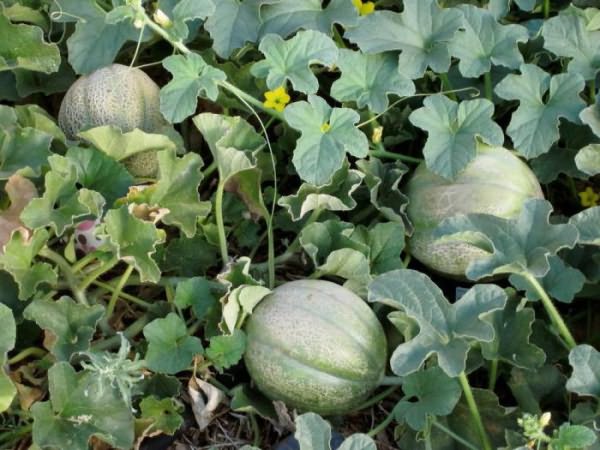
An important aspect of melon care is vine formation. It's generally recommended to pinch back Ethiopian melons after the sixth leaf. On secondary melon vines, growth is restricted three leaves after the last fruit. For small-fruited varieties, four to five ovaries are left on each vine, but for large-fruited Ethiopian melons, it's best to leave no more than two. Excess ovaries are removed when they reach the size of plums. Pinch back the vines after the third leaf, and then monitor them to ensure they don't grow any further, removing fruitless vines, excess shoots, and ovaries. This is necessary to prevent the plant from wasting energy and to ensure it produces large melons.
The fruits are harvested after the stalk has dried out, when the skin has turned sunny yellow and the aroma has spread throughout the area.
Fighting diseases
Powdery mildew, olive spot, and blackleg are all problems that can affect melons. Fungal diseases typically spread in midsummer. They can be controlled with Zircon, Epin, and Cytovid. Experienced growers recommend treating plants with Bordeaux mixture, Fitosporin, and Hom as a preventative measure. It's important to avoid overwatering and freezing temperatures.
Video: Planting a Melon
In this video you will hear useful tips on planting melons.