
Advantages of the Amal melon variety and its cultivation features
Content
Characteristics of the variety
The Amal melon variety is an early-ripening variety, with fruits ripening 60-70 days after the first shoots emerge. It boasts high yields and resistance to fungal infections, specifically downy mildew, fusarium, and dry rot. Amal thrives in warmth and sunlight, tolerates drought well, and easily survives very high temperatures, but growth slows when temperatures drop to 14 degrees Celsius (57 degrees Fahrenheit) and can even die at temperatures below 1 degree Celsius (33 degrees Fahrenheit).
This hybrid grows equally well in both open and protected ground conditions. Its seeds can be sown in the garden or grown from seedlings—it all depends on the region's weather and climate. For example, in the Voronezh and Kursk regions, seeds are typically sown from April 20 to May 10. Further north, seedlings are preferred, and in areas where summers are less sunny and hot, the Amal melon grows well in greenhouses.
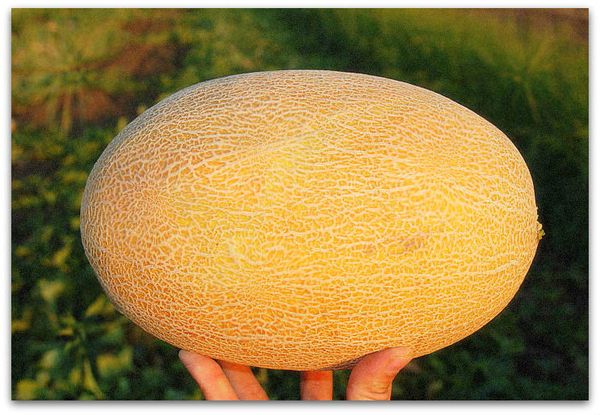
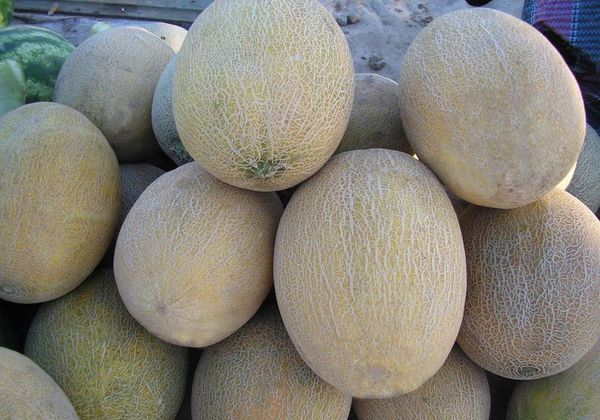
The early Amal melon deserves a separate description; its wonderful fruits are distinguished by their high taste and commercial qualities.They grow up to 2.5-3 kg, if desired, they can be grown up to 4 kg in weight, and have an oval shape. Beneath the dense, yellow-cream skin, covered with a continuous mesh pattern, lies a slightly darker, creamy, very juicy and sweet flesh with a mind-blowing aroma and a small seed pod.
The dense skin makes it easy to store and transport melons. Their nutritional value makes eating melons not only enjoyable but also very healthy. In addition to a wealth of vitamins (A, C, E, B1, B2, B5, B6, B9, PP), they contain potassium, calcium, and sodium, which not only help strengthen the immune system and restore strength to a weakened body, but also improve the cardiovascular and nervous systems, as well as hormonal balance in women.
Where and how to plant
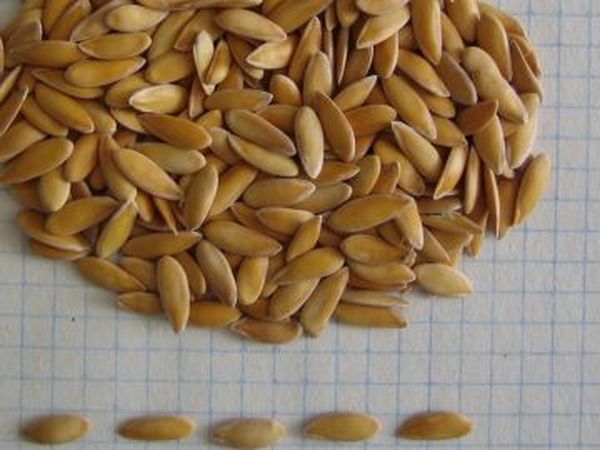
Regardless of the growing method, seeds must be prepared for germination. To reduce the risk of disease, they must be disinfected. To do this, the seeds are soaked in a pale solution of potassium permanganate for half an hour. Then, they are soaked in clean, warm water for 24 hours. This both discards empty seeds (which will float on the surface of the water) and stimulates their growth. After 24 hours, the water-saturated seeds are spread on a damp cloth and left in a warm place to hatch. When at least 5% of the seeds have opened and sprouted tips are visible, they are placed in the soil.
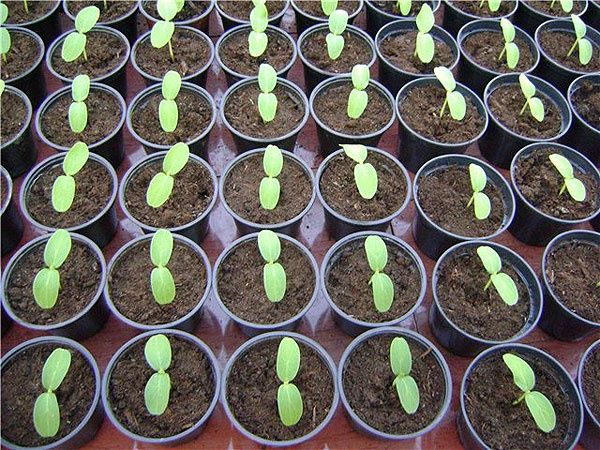
When starting from seedlings, it's best to grow the plants in peat pots to avoid replanting them later, which could damage the delicate roots. Several seeds are placed in each pot, and when they sprout, the strongest plant is selected, pinching the others off at ground level. Once the fifth true leaf appears, the seedlings are ready for transplanting into the garden. By this time, true summer weather should have set in, with an average temperature of at least 16 degrees Celsius, and no sudden nighttime cold snaps.
When planting seeds, immediately mark and dig holes in a carefully selected and prepared location. The site should be sunny and open, but also protected from drafts or strong winds, with neutral, breathable, fertile soil. The soil is tested for pH and fertilized beforehand. It is dug deeply, mineral and organic fertilizers are added, and if the soil is acidic, lime or dolomite flour is added. Heavy soil is mixed with sand and wood ash.
You can test the acidity of your soil using vinegar. Pour a small amount of 9% vinegar onto the soil and observe the reaction. Alkaline soil will produce copious foam, while acidic soil will produce no foam at all. A barely noticeable foam that disappears immediately is ideal. Another method, which provides a more detailed indication of acidity, is to pour a glass of boiling water over four blackcurrant or bird cherry leaves. Add a tablespoon of soil to the cooled mixture and stir thoroughly. After the soil settles to the bottom, the color of the water will reveal all the information: red indicates high acidity, green indicates alkaline soil, and blue indicates neutrality.
The seeds are placed at a depth of no more than 5 cm, 3-4 in each hole, the bottom of which is usually fertilized with humus mixed with soil. The holes are spaced 60–80 cm apart, with 140–160 cm between rows. When planting seedlings, carefully check that the stems aren't trapped in the holes, and they shouldn't get wet when watering. Melons are grown spread out in the garden, and trellises are often used in greenhouses.
Care instructions
Immediately after sowing, the holes are watered generously. Throughout the growing season (and watering is stopped only when the fruits begin to ripen), water the roots with warm water, carefully ensuring that no moisture gets on the stems or foliage. This is usually done in the morning; only when extreme heat sets in is watering moved to the end of the day. Periodically, the plants are watered with a weak solution of potassium permanganate, disinfecting the soil and protecting against pathogens.
The soil around the plant should not become crusty, and the roots should always have access to air and moisture. Therefore, loosen the soil as needed, but do so very carefully to avoid damaging the extensive root system. Removed grass, cut pieces of shoots, or melon leaves should not be left in the bed.
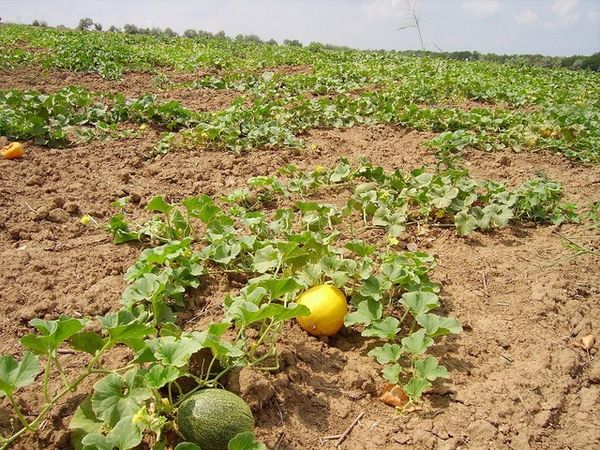
Melons need to be side-sonned, leaving only the first and second-order shoots. Each shoot bears only one fruit, and three leaves after that, the shoot is pinched to prevent further growth. The fruits are selected when they reach the size of plums, leaving only one, the smoothest and strongest one. If you want to grow very large fruits—about 4 kg—then leave very few.
For the first month or month and a half, carefully remove weeds from the plants; once they have grown, the grass will no longer grow so aggressively.
When the first leaves emerge, melons are fed with mineral fertilizer. Dissolve 2 g of superphosphate, 1.5 g of potassium chloride, and 1 g of ammonium nitrate in 1 liter of water. Repeat the same feeding two weeks later. If the soil is very poor, fertilize later, but exclude nitrogen and increase the potassium content. Fertilize with liquid fertilizer, alternating watering with clean water and nutrient solutions.
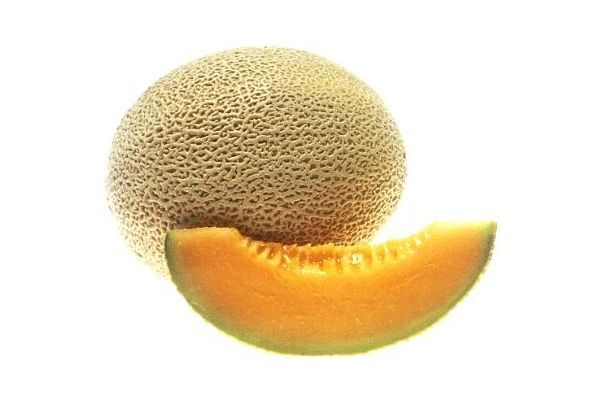
If the melon is left lying on the ground, its base may rot, which is absolutely unacceptable. Therefore, place plywood or a board of appropriate size under the fruit. Watering should be stopped three weeks before full ripening, allowing the melons to accumulate more sweetness; otherwise, they will become too watery. Ripening melons change color: the skin darkens, turning from light yellow to creamy or yellowish-brown. Ripe melons can be identified by the drying stem.
Typically, melons are harvested several times, each fruit being picked as it ripens. Amal, on the other hand, is typically harvested in one go, when the stems of the first fruits have dried. All the fruits are picked at once. Those that haven't fully ripened will be preserved during storage, allowing them to be transported over long distances or stored longer, without compromising their flavor.
The harvest takes place in July-August, with exact timing varying in different regions.
Video: "Amal Melon Review"
This video will tell you about the popular Amal melon variety.