
Secrets of planting and caring for the high-yielding blackberry variety Black Satin
Content
The history of Black Satin blackberry breeding
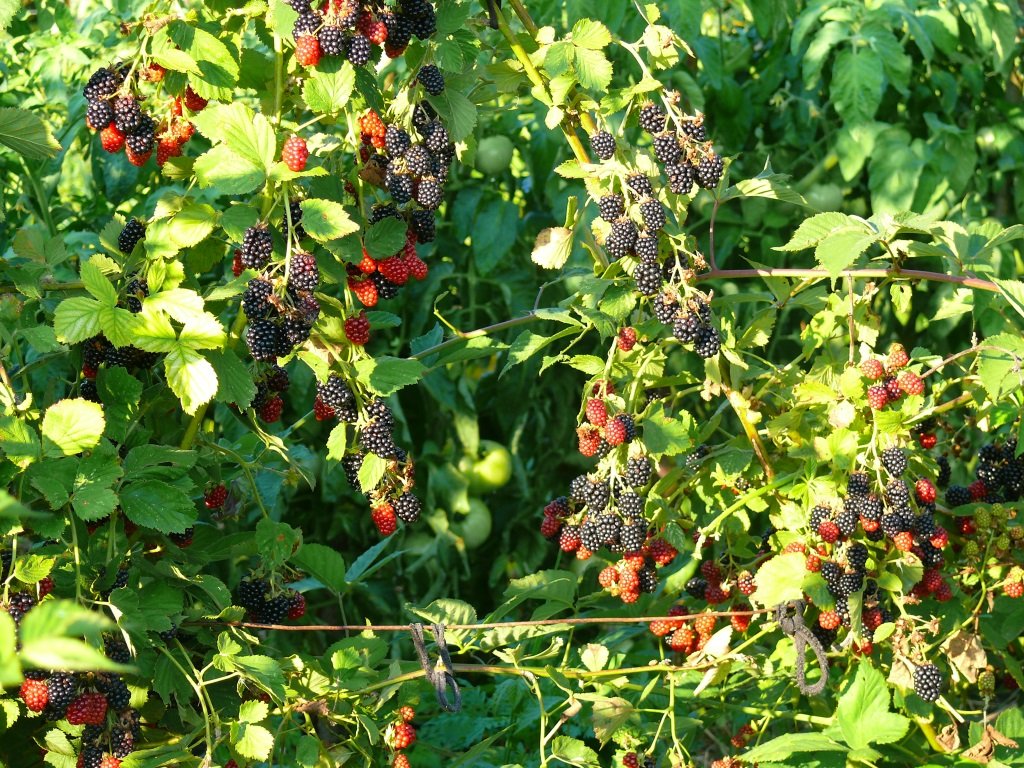
The Black Satin blackberry was developed by American breeder Dr. Scott in 1974. The breeding experiment involved the promising Darrow and Thornfree varieties. This hybridized berry earned the beautiful name Black Satin, which translates as "black silk." As the name suggests, this variety is characterized by its deep black berries and soft, silky flesh.
Description of the variety and characteristics
Having received official recognition, this fruit and berry crop has become widespread throughout the world. What's so special about the Black Satin blackberry?
Description of berry crops
Black Satin is a vigorous fruit and berry tree. With proper care and a favorable microclimate, a mature shrub can reach 5–7 m in height. For the first few years, shoots grow vertically, then branch growth becomes horizontal.
The plant has virtually no root shoots. Another distinctive feature of this variety is the absence of thorns on its branches. Young shoots and leaves are characteristically emerald green. The leaf blade is trifoliate.
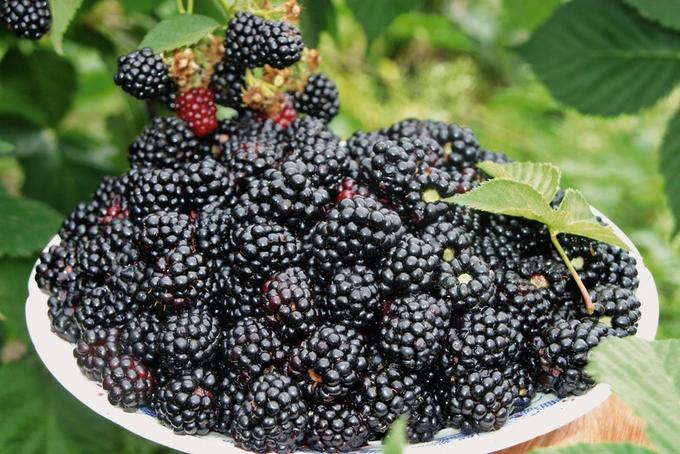
The berries are round-elongated. Ripe fruit weighs between 3 and 8 grams. When ripe, the fruits are a deep black with a characteristic glossy sheen. A minor drawback of this variety is that ripe fruits are difficult to separate from the stalk.
Flowering period and ripening time
The plant blooms from mid-June to August. The flowers are small, pinkish-purple. After a few days, the petals turn a faded pink.
The variety ripens over a long period, from early August to the first ten days of October. According to experienced gardeners, Black Satin ripens 10-15 days earlier than its parent variety, Thornfree.
Fruiting periods and yield indicators
It begins bearing fruit early—in the second year after planting in its permanent location. In subsequent years, it produces fruit consistently and vigorously.
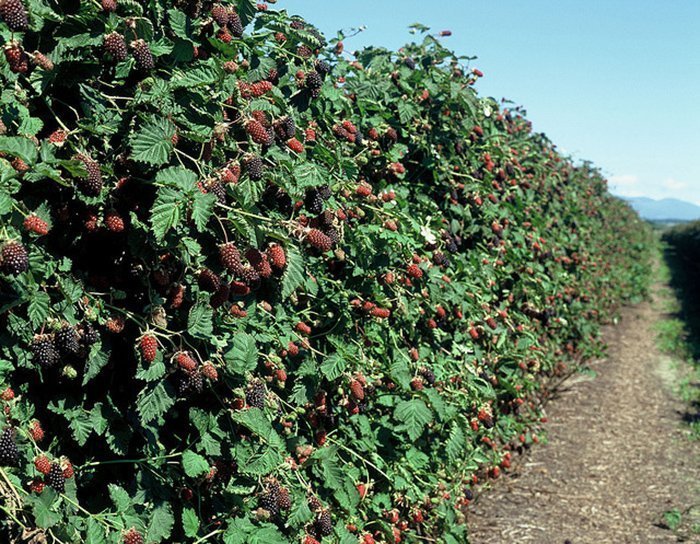
Another advantage of this variety is its high yield. A single mature bush yields approximately 25 kg of juicy and aromatic berries.
We recommend harvesting blackberries when they are technically ripe. Otherwise, the berries become too soft.
Taste and application of berries
The berries have a sweet and tart flavor with a pleasant, refreshing aroma. Black Satin is a versatile variety. The harvested juicy berries can be eaten fresh or used to make various drinks and desserts.
The crop is rich in vitamins, micro- and macroelements, fiber, tannins, and organic acids. It can be used to strengthen the immune system and prevent viral and cold diseases.
Advantages and disadvantages of the variety
To form a subjective opinion about the Black Satin blackberry, we recommend familiarizing yourself with the advantages and disadvantages of the variety.
- rapid adaptation to climate and growing conditions;
- absence of root shoots and thorns;
- high yield;
- amazing commercial and taste qualities of fruits;
- universal use of berries;
- high decorative characteristics of the bush.
- low winter hardiness;
- the need for frequent pruning and installation of supports;
- difficulties separating the pulp from the stalk;
- poor transportability;
- low shelf life of fruits.
Video: "Introducing the Black Satin Blackberry"
This video presents the description and quality characteristics of the variety.
Subtleties of planting and care
Fruit and berry crops react negatively to improper care. A lack of fertilizer and irregular watering regimen affect the taste of the fruit. Improper preparation for winter can lead to frost damage to the bushes.
When and where to plant
It's best to plant blackberries in the spring so the plants have time to establish themselves and grow strong before frost sets in. Fall planting is only possible in southern regions with warm, mild winters.
Choose sunny areas for planting seedlings. Insufficient sunlight will reduce the plant's winter hardiness, as new shoots will freeze over the winter. The growing site should also be sheltered from wind and drafts.
How to choose the right seedlings
One- and two-year-old seedlings take root better and faster. The above-ground portion of the seedling should be at least 40 cm tall. The bark should be smooth, free of cracks and other signs of damage.
Pay attention to the condition of the roots: signs and smells of rot indicate disease in the planting material. Ideally, the plant should have 3-4 skeletal root shoots, each about 15 cm long.
Planting technology
Blackberries thrive in fertile soil with moderate moisture. Nutrient-rich black soil is ideal.
First, the soil is fertilized with organic and mineral fertilizers. Per 1 m² of soil, 10 kg of humus, 15 g of superphosphate, and 20 g of potassium sulfate are required. Planting holes are spaced 1-1.5 m apart. The spacing between rows is 2.5-3 m.
The bottom of the planting hole is lined with gravel, crushed rock, broken brick, or any other drainage material. The seedling is placed deep in the center of the hole, with the root collar remaining above the soil surface. After planting, the plant is thoroughly watered and mulched.
Watering and fertilizing
The shrub needs to be watered frequently and thoroughly. However, remember that stagnant soil moisture negatively impacts the plant's viability. Before each watering, check the soil's dryness. If the soil is damp, delay watering by 1-2 days.
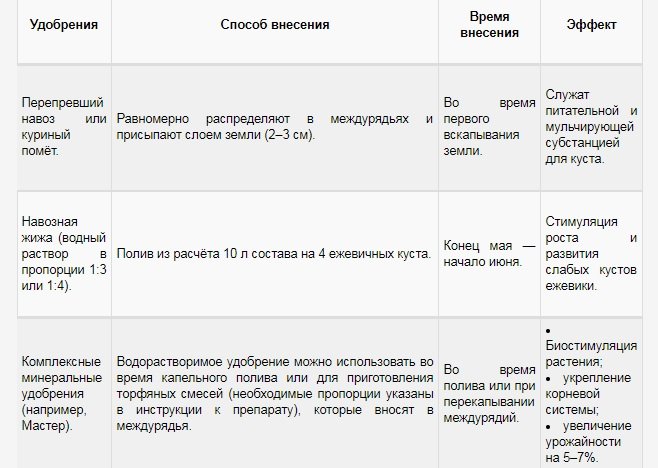
To increase yield, blackberry bushes need to be fertilized. Black Satin can be fertilized according to the following schedule:
Support and timely pruning
Black Satin blackberries, which tend to grow vigorously, require regular pruning. Each spring, remove last year's old shoots and trim back any insect-damaged or frost-damaged branches to a healthy bud. After spring pruning, 6-8 healthy shoots should remain.
After pruning, the plant is tied to a trellis. Without support, branches can fall and break. There are several methods for tying fruit and berry bushes: fan staking, wave staking, rope staking, and others.
-
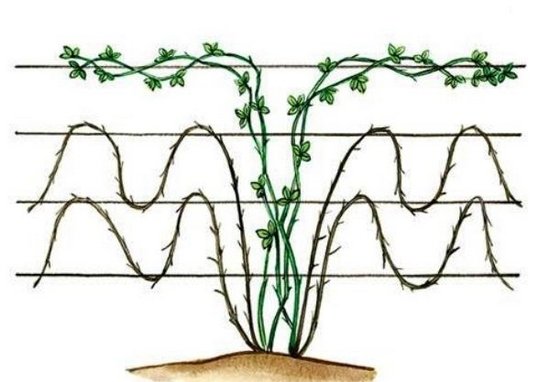
- Wave garter
-
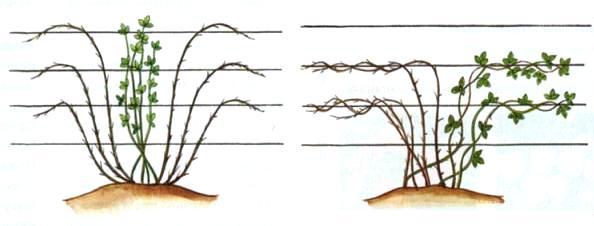
- Fan garter
-
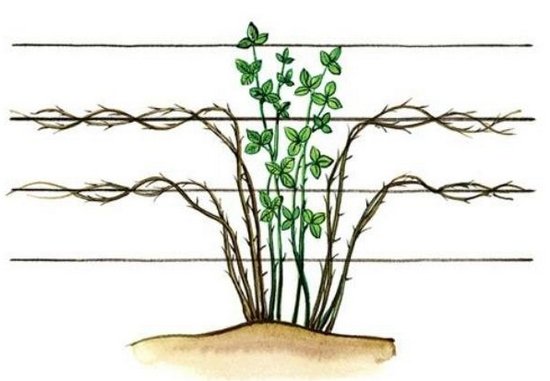
- Rope garter
Shelter for the winter
Fruit-bearing branches are cut back to the ground, the year's growth is removed from the supports, bent to the ground, and secured with soft metal staples. The shrub is then covered with fallen leaves, spruce branches, and peat.
In severe frosts, additional insulation is provided with pine branches, slate sheets or agrofibre.
Effective methods of pest and disease control
The Black Satin variety is resistant to diseases and pests. It is extremely rarely affected by gray mold. Timely harvesting and preventative spraying with Bordeaux mixture will help prevent the disease.
You can combat blackberry mites, which periodically appear on the plant, using the fungicide "Tiovit Jet".
Reviews from gardeners
"A few years ago, I planted a couple of Black Satin blackberry bushes. The seedlings took root quickly. I'm pleased with the abundant and vigorous fruiting. The berries are juicy and flavorful, but they don't last long."
"Black Satin is one of my favorite shrubs. It's a beautiful bush that adds a touch of class to the garden, and its juicy berries have a fascinating flavor. However, the plant requires frequent pruning and careful winter protection."
The Black Satin blackberry will compete worthy with fruit and berry crops developed by Russian breeders. The cultivation guidelines described in this article will help you avoid common mistakes when growing this variety.