
Planting and caring for blueberries in your garden – how to grow delicious berries
Content
- 1 Blueberries: Description and Varieties of the Plant
- 2 Video "Garden Blueberries: Growing Secrets"
- 3 Site selection and requirements
- 4 Site layout
- 5 Preparing seedlings
- 6 Planting features depending on the season
- 7 Methods for planting garden blueberries
- 8 Methods of berry propagation
- 9 Caring for blueberries
- 10 Pests and diseases
Blueberries: Description and Varieties of the Plant
Blueberries are a fruit-bearing shrub common in northern regions. They grow in dense peatlands and wet and swampy coniferous forests.
The plant has a fibrous root system. Young shoots are a rich green, but with age, the bark turns brown or dark gray. The leaves are small, stiff, and smooth. The upper surface of the leaf blade is bluish-green. The surface is glossy and has a waxy coating.
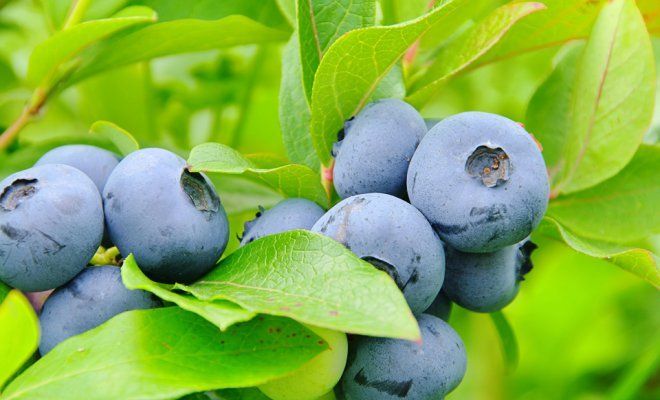
Blueberries are blue in color with a characteristic bluish bloom.
Ripe berries are round-oblong in shape. They are a deep blue with a characteristic bluish bloom. At maturity, the fruit is 12 mm long. The average yield of one mature bush is 10-12 kg.
The most common varieties of garden blueberries are:
- Patriot;
- Nelson;
- Jersey;
- Bluegold;
- Bonus;
- Duke;
- Coville;
- Herbert;
- Bluecrop;
- Northland;
- Rancocas.
Video "Garden Blueberries: Growing Secrets"
In this video, experts share tips and recommendations on planting and caring for fruit bushes.
Site selection and requirements
Growing blueberries begins with choosing a planting site. The optimal environment for the plant is a sunny spot in the garden. Placement near tall shrubs and trees is undesirable. A lack of sunlight will result in reduced yields and loss of flavor.
The soil should be well-drained. The groundwater level should be no more than 0.5 m. However, try to avoid low-lying areas where water accumulates during floods. It's best to shelter the plant from wind and drafts. Blueberry seedlings are often planted near fences and other garden barriers.
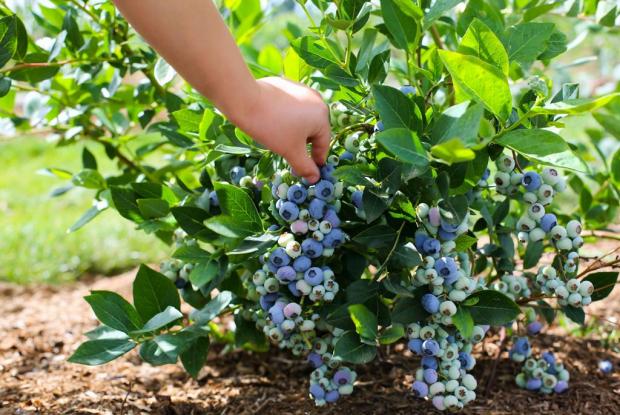
The fruit bush loves abundant sunlight.
Site layout
Yields depend on proper planting practices. Blueberry seedlings should be planted in rows, going from north to south. The distance between tall varieties should be 1 to 2 meters, and between short varieties, about 0.6 meters.
Preparing seedlings
Two- and three-year-old seedlings with a well-developed root system take root best. The tree should be free of rot, mold, or other damage to the bark. Before planting, soak the root system in settled water and then dip it in a clay slurry for a few minutes.
Planting features depending on the season
Seedlings with a closed root system are planted in open ground regardless of the time of year and climatic characteristics of the growing region. Young bushes with bare roots are best planted in early spring, before the sap begins to flow. Spring planting offers more advantages: the planted plants have time to take root and grow strong before winter. If you plan to plant blueberries in the fall, it's best to do so in September or early October.
It's worth noting that late autumn planting of blueberry seedlings in northern regions is not very productive. Frosts arrive very early in Siberia and the Urals, and the root system, which hasn't had time to adapt to the new growing conditions, is unable to withstand even a slight drop in air temperature.
Planting garden blueberries in a summer cottage
Methods for planting garden blueberries
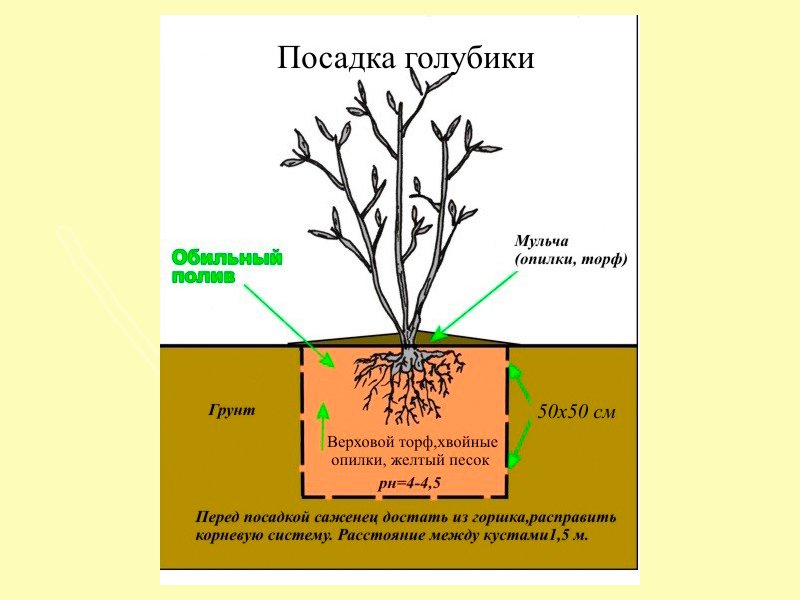
According to experienced gardeners, blueberries grow best in high-moor or transitional peat. However, there are other ways to plant the fruit crop in open ground.
Planting without peat
First, prepare a 60x50 cm planting hole. Then, acidify the soil. Special sulfur-based soil acidifiers, available in almost every gardening store, are used to acidify the soil.
Alternatively, you can acidify the soil using traditional methods. For example, dilute 100 ml of regular table vinegar in 10 liters of water and soak the planting medium in the solution. Acidify the soil under blueberry bushes twice: in spring and fall.
Planting in ridges
If the soil at your dacha is very clayey, young blueberries are planted in raised beds. The planting hole should be no more than 15 cm deep. Form a mound of dry soil, sifted river sand, and peat in the center of the hole. The bush is planted in the center of the mound, with a 10-centimeter layer of sawdust surrounding the stem.
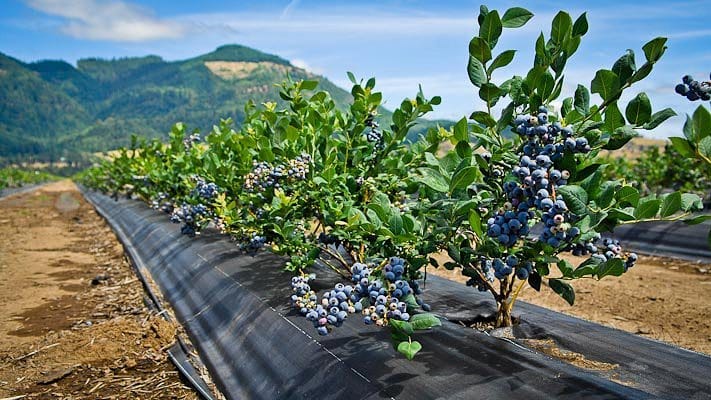
Growing garden blueberries "in ridges"
Planting in pine needles
Coniferous substrate, which includes rotted needles and branches of conifers, soil from forest pine and spruce trees, and garden soil, can be a good substitute for peat. Its airy and loose nature allows the plant to receive maximum oxygen and nutrients. Seedlings can be planted in this substrate in both spring and fall.
Methods of berry propagation
Fruit bushes can be propagated by seeds or vegetative methods. Since seed propagation is not very successful and requires considerable time and effort from the gardener, it is rarely used in practice. Today's article will discuss vegetative methods for dividing blueberries.
Propagation by cuttings
There's an unspoken rule among gardeners: the thicker the blueberry cutting, the faster new roots will form. Cuttings are best taken in early spring before the sap begins to actively flow, or in late fall, after the last leaves have fallen from the bush. The ideal propagation material is dense basal cuttings between 8 and 15 cm long.
The cuttings are kept for several days in a cool basement. They are then planted at an angle in a substrate mixed with river sand and peat (1:3). The cuttings are planted at a depth of about 5 cm. Once planted in the ground, they are half-covered with soil mixed with peat.
By dividing the bush
Growing blueberries by division is one of the simplest methods of propagation. Carefully dig up a mature bush, shake off the soil, inspect the root system, and remove any dried, damaged, or rotten shoots. The mature bush is divided into several equal parts, with the main root of each part being at least 5 cm long. New seedlings should be planted immediately, as any delay will negatively impact the viability of the planting material.
When propagated by cuttings and dividing the bush, garden blueberries begin to bear fruit 3–4 years after planting in a permanent growing location.
Propagation by layering
Dividing blueberries by layering is notoriously unproductive. Branches located closer to the ground are bent and secured with metal arches or staples.
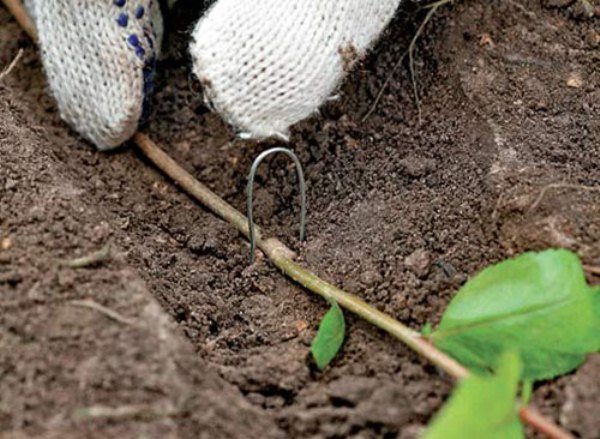
Fixing shoots when propagating by layering
At the points of contact, the shoots are covered with nutrient-rich substrate and sawdust. After 2-3 years, rooting should occur, the first sign of which is a young shoot emerging from the mound. When several leaves form on the young shoot, it is separated from the parent plant and replanted.
Caring for blueberries
It is equally important to know how to properly care for blueberries growing in your garden.
Watering
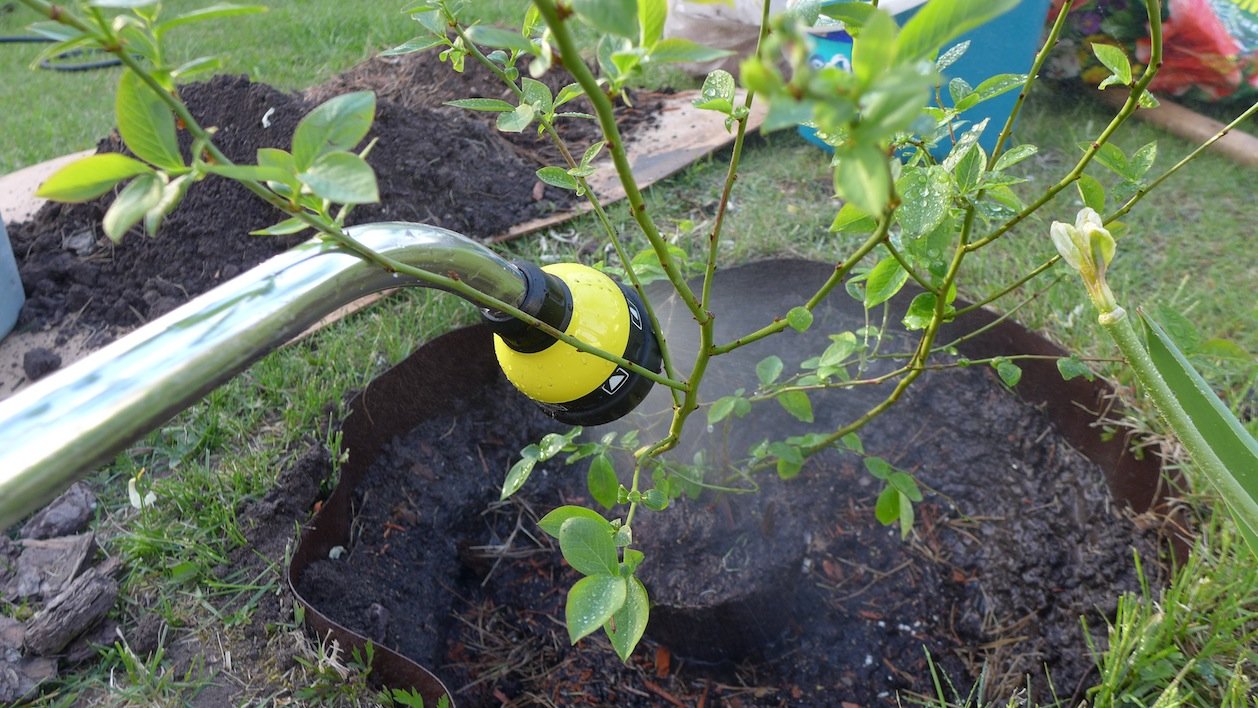
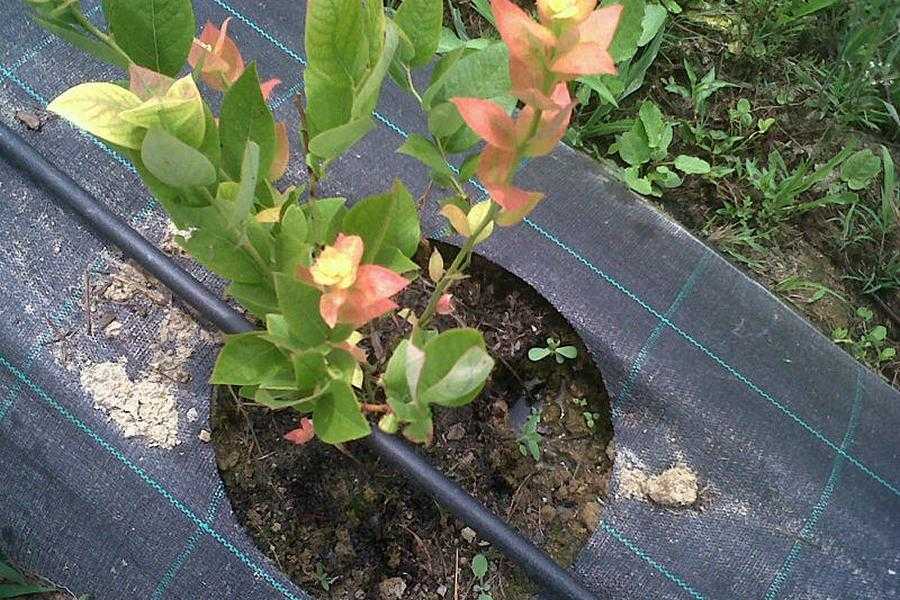
The bush's yield depends on the quality and frequency of watering. Blueberries do not tolerate either too little or too much moisture in the soil. The soil under the bush should be moistened twice a week – morning and evening. The approximate amount of water per mature plant is a bucket. However, if the weather is damp and rainy, it's best to reduce the amount and frequency of watering. If the soil remains moist for two days, the root collar begins to rot irreversibly.
After each watering, loosen the soil to allow oxygen to reach the root system. Loosen the soil to a depth of no more than 8 cm. Loosening the soil more deeply increases the risk of damaging the upper rhizome shoots.
Top dressing and fertilization
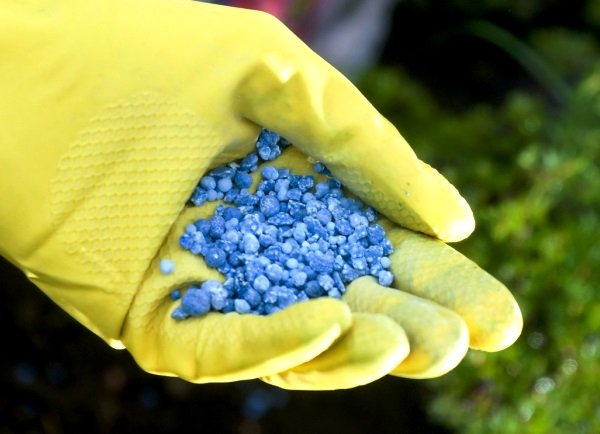
Blueberry bushes grown indoors need to be fertilized. In early spring, when the first buds begin to swell on the branches, apply potassium sulfate, magnesium sulfate, and zinc sulfate to the soil. Note that superphosphate fertilization is divided into two periods. The first 100 g of the preparation is applied in the summer, and the second 100 g in the fall.
Nitrogen-containing fertilizers (such as ammonium sulfate) are added in three stages:
- early spring – 40% of the norm for the age of the bush;
- in the first ten days of May – 35%;
- at the beginning of June – 25%.

Formation
The next stage of garden blueberry cultivation is crown pruning. Formative pruning is performed in the spring. At this stage, all damaged, drooping, diseased, frost-damaged, and weakened branches from winter frosts are removed. When the plant reaches four years of age, all shoots older than five years are removed. This procedure is performed annually and helps increase the plant's fruiting.
Sanitary pruning of the crown is performed throughout the growing season and in the fall. All branches damaged by insects and diseases, those injured by natural disasters, and those that are no longer viable are removed.
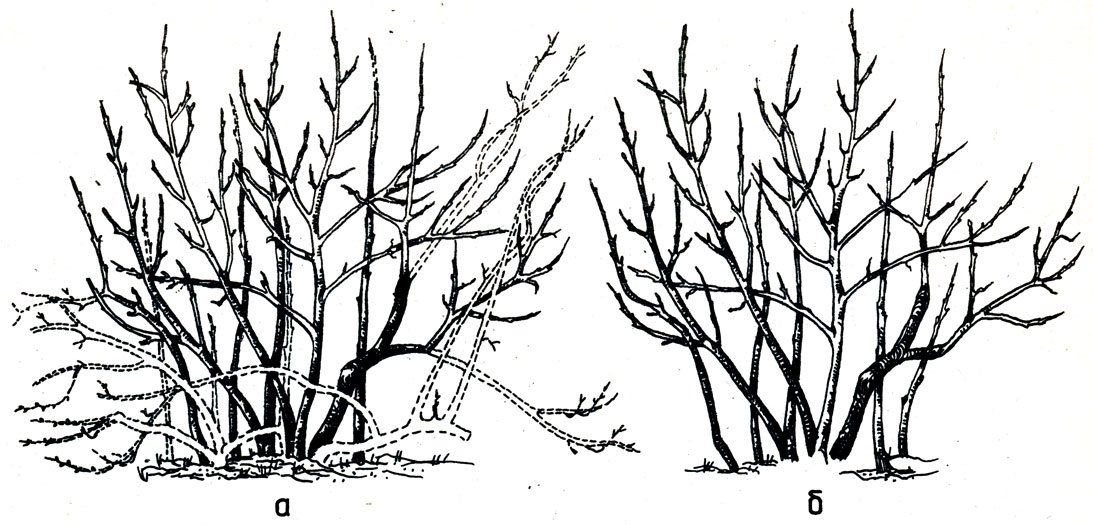
Winter shrub pruning scheme
Mulching
Mulching fruit bushes prevents weed growth, retains moisture around the trunk, and slows bud break in early spring. The height of the mulch layer depends on the age of the plant: the older the blueberry bush, the higher the mulch layer. Hay, straw, peat, dry river sand, pine branches, and spruce branches are used for mulching fruit crops.
It is not recommended to use fallen leaves for mulching fruit plants. Such an environment often harbors harmful insects and pathogens that cause various fungal and bacterial infections.
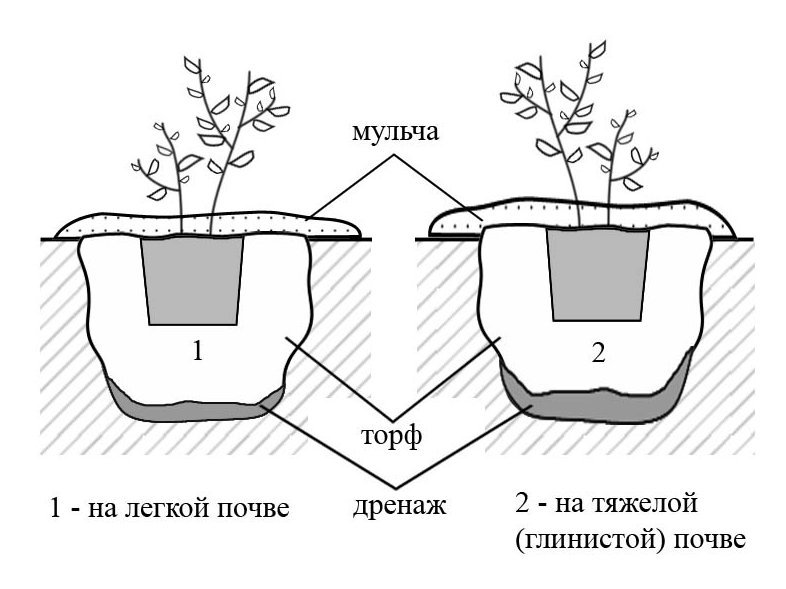
Fruit bush mulching technology
Wintering
Garden blueberries are one of the few fruit crops that can withstand the cold of Siberia and the Urals. However, tall, regionalized varieties are best grown in northern regions.
The plant doesn't fear frost, but rather sudden temperature fluctuations. A sudden thaw and subsequent frosts are detrimental to the viability of fruit bushes. For this reason, it is recommended to cover the plant in advance with burlap, agrofibre, or regular white polypropylene bags. The material must be breathable. Moisture accumulation on the inner walls of the cover will lead to fungal growth on the plant.
The average frost resistance of garden blueberries is -25°C. If the temperature drops below that, it's best to additionally insulate the bush with pine branches.
Pests and diseases
Pest and pathogen control is also crucial. Unfortunately, blueberries are often attacked by birds that feed on the ripe berries. Modern ultrasonic repellents and nets stretched over the crowns of bushes can help repel these birds.
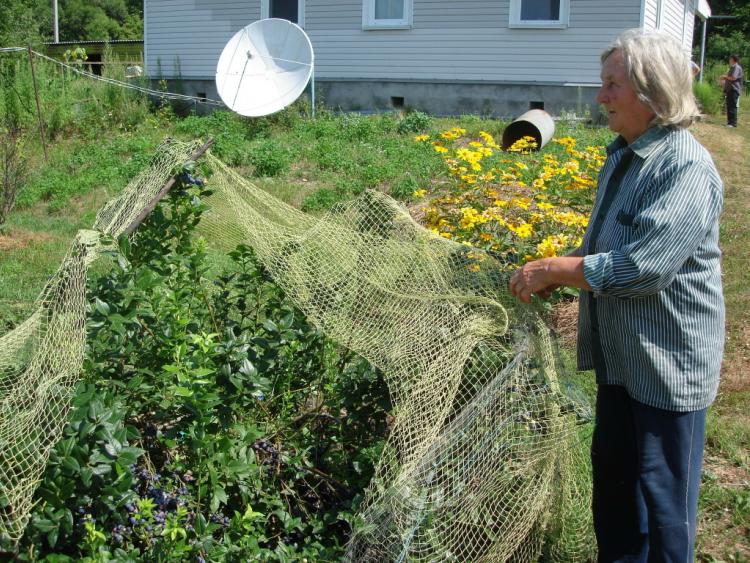
Netting as a method of protecting shrubs from bird attacks
The plant is susceptible to attacks by leaf rollers, aphids, scale insects, and pine silkworms. May beetles, cockchafers, and their larvae also cause significant damage. Treating the shrub with Karbofos and Actellic will help eliminate these pests. The instructions for use and dosage are detailed in the instructions.
Regarding diseases, blueberries have low resistance to double and white spot, gray mold, fruit moniliosis, and stem canker. Fungicidal preparations such as Topaz, Fundazol, and Topsin will help protect the plant. Preventative treatment of the bush with a 3% Bordeaux mixture solution prevents the development of fungal infections.
Growing blueberries in your garden is easy if you know how to properly care for them. The planting, care, and propagation recommendations described above will ensure a healthy and bountiful harvest.