
All about growing large-fruited Thornfree blackberries in your garden
Content
The history of Thornfree blackberry breeding
The history of the large-fruited Maryland blackberry variety Thornfree began in 1966. American breeder Dr. Scott crossed the Eldorado, Brained, and Merton Thornless varieties. The distinctive feature of the hybrid resulting from this breeding experiment is its thornlessness. This is where the name of the fruit variety comes from. Translated from English, "thorn-free" means "without thorns."
Description and characteristics of the variety
In 2006, the Thornfree blackberry was added to the State Register of the Russian Federation. It is recommended for cultivation in all climate zones. However, as gardeners themselves note, its low winter hardiness makes it unsuitable for growing in regions with cold and harsh climates.
Botanical portrait of a bush
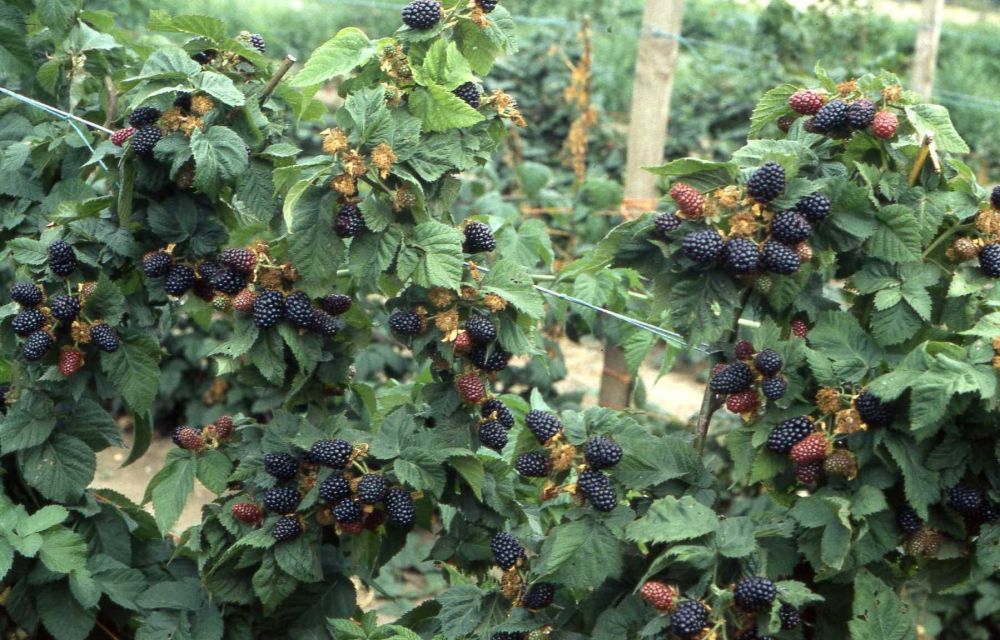
The Thornfree blackberry is a semi-prostrate shrub with strong, vigorous shoots. Branches reach a maximum length of 5 m, so the bush requires pruning. Otherwise, vigorous shoot growth will lead to reduced fruiting.
The bark of young branches is green, while mature branches are purple-cherry. This variety is characterized by large, dark-green leaf blades. The leaves have a complex, three- or five-lobed shape.
During flowering, the bush is covered with large pink inflorescences. The average flower diameter is 3-3.5 cm. According to the variety description, flowering occurs in June.
Description and taste of berries
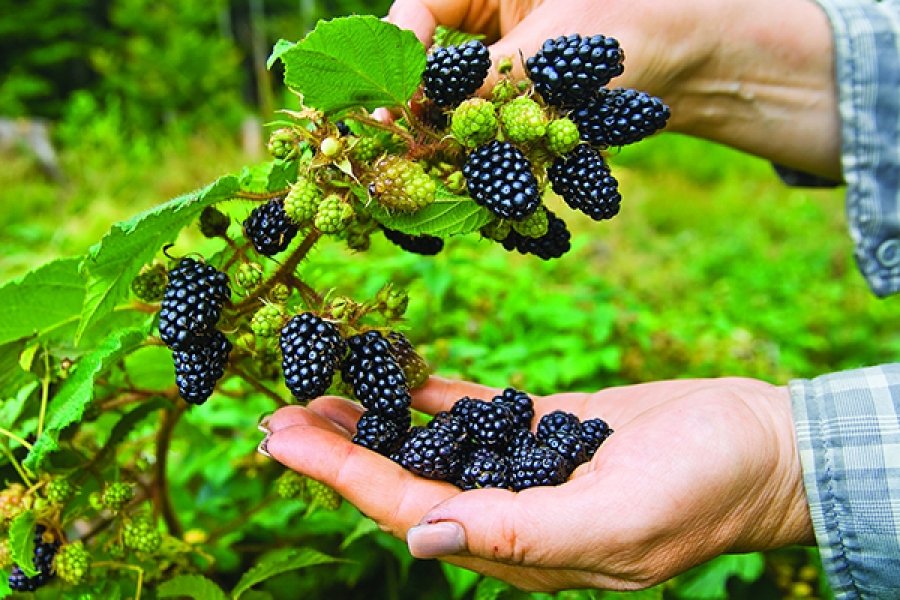
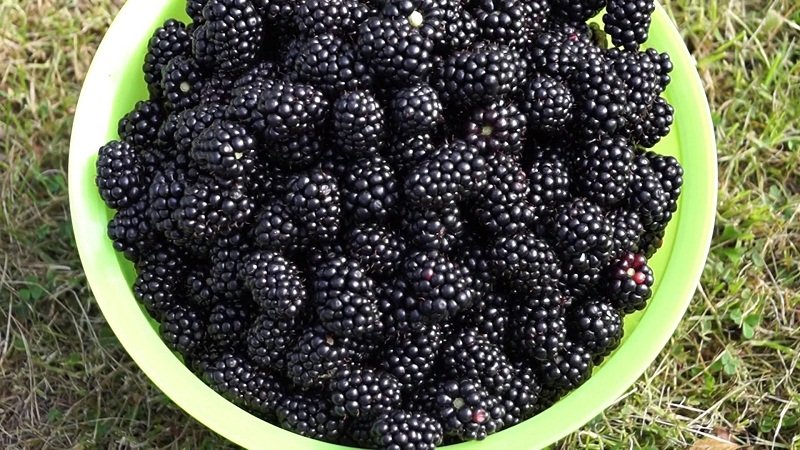
Thornfree fruits are distinguished by their perfectly oval shape. The average weight is approximately 5 g. The berries are characterized by slight pubescence and the presence of drupes. At harvest maturity, the fruits are a rich black color with a distinctive sheen. As the berries ripen, they lose their firmness. For this reason, harvesting should be done at the technical maturity stage.
The flavor of Thornfree blackberries changes as they ripen: from tart and sour to sweet and sour, and cloyingly sweet when overripe. They have a pleasant blackberry aroma.
Application of berries
Thornfree blackberries can be eaten fresh. They are grown commercially for desserts and preserves. They can be frozen, preserving their flavor and nutritional properties.
Fruiting period and yield
Ripening and fruiting times are determined by weather conditions and the growing location. Thornfree is a late-ripening variety. The harvest period is in late August and early September.
At the same time, the fruit and berry yield is extremely high. With a favorable microclimate and proper care, a single bush can yield up to 20 kg of juicy berries.
Advantages and disadvantages of the variety
So, what are the advantages and disadvantages of the Thornfree variety, you ask? Let's find out.
- complete absence of thorns on the shoots;
- high decorative qualities of the bush;
- absence of root growth;
- unpretentiousness in care;
- abundant fruiting;
- increased productivity;
- drought resistance;
- high resistance to diseases and pests.
- poor winter hardiness;
- late fruiting;
- loss of taste and density of berries as they ripen;
- impossibility of propagation by layering;
- difficulties with shelter for the winter.
Video: Growing Thornfree Blackberries
This video presents the basic rules for planting and caring for fruit and berry crops.
Thornfree Blackberry Planting and Care Guidelines
By following a number of simple agricultural practices, which we will discuss below, the Thornfree blackberry will delight you with stable and abundant fruiting.
Recommended timeframes
Planting times vary depending on the growing region. For example, in the north of the country, young blackberry bushes are planted only in the spring. Planting in the fall poses a high risk of freezing. For southern regions, autumn planting is preferable, as the hot summer sun negatively impacts the growth and development of seedlings.
Location, lighting and soil
The bush enjoys full sun. However, in southern regions, it's best to choose a location with partial shade at midday, as strong sunlight can cause sunburn. The blackberry bush should also be protected from wind and drafts.
The groundwater level should be no higher than 1.5–2 meters below the ground surface. Light, loose, and fertile soil is suitable for planting and growing blackberries. The plant thrives in loamy soil and chernozem with slightly acidic or neutral pH.
Selection and preparation of seedlings
High-quality planting material has a fresh and healthy appearance. Shoots are firm, smooth, green or cherry-brown, and free of mechanical damage. The root system should be well-developed.
Before planting in open ground, the seedling's roots are soaked in the growth biostimulant "Kornevin." This promotes rapid rooting.
Planting patterns
Seedlings can be planted in strips or bushes. The latter option is more suitable for small garden plots and small farms. Several seedlings with a low tendency to produce shoots are planted in a single planting hole.
The ribbon planting method is used in large gardening operations. Seedlings with a high rate of shoot formation are planted in trenches at least 50 cm deep and wide. The distance between rows is 1.8–2 m, and between plants, 30–50 cm.
-
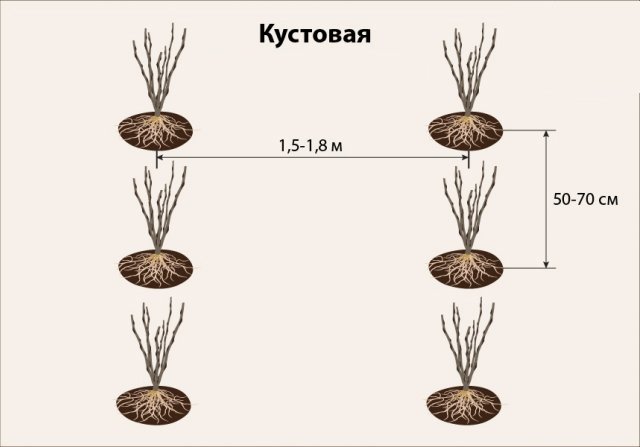
- Bush planting scheme
-
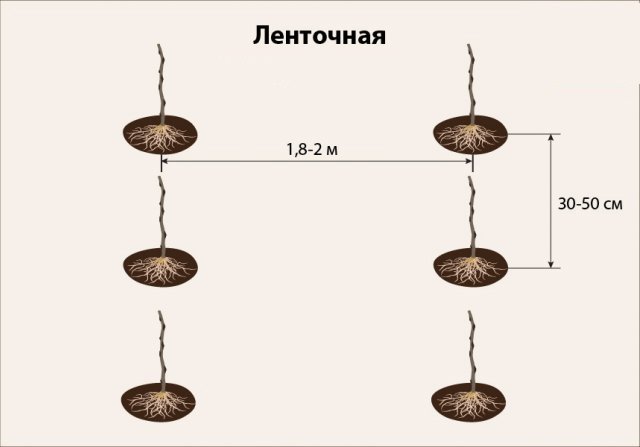
- Strip planting pattern
-
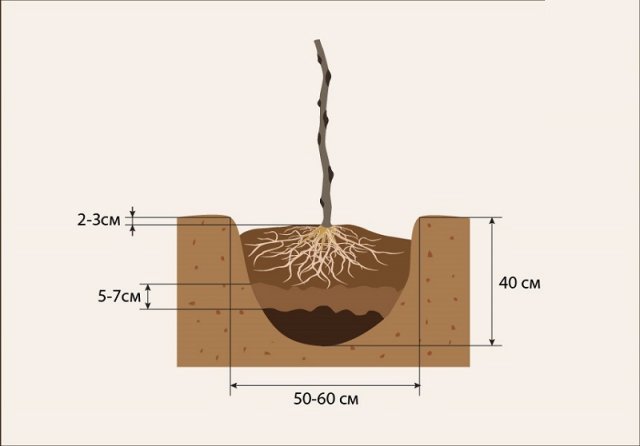
- Scheme of seedling rooting
Subsequent care of the culture
During the growing season, blackberries are watered twice every 7-10 days. About 5 liters of settled, room-temperature water is poured under each bush. After harvesting, stop watering completely.
Soil nutrients can help increase fruiting and yield. The following fertilization schedule can be used for Thornfree blackberries:
- early spring – ammonium nitrate solution (20–30 g per 1 m²);
- beginning of flowering – potassium monophosphate (10–20 g per 1 m²);
- periods of ovary formation and fruit growth – liquid organic fertilizers (1 liter of mullein in a PET container is required per 1 m²);
- in autumn – superphosphates (30–40 g per 1 m²).
Pruning shrubs
Every spring, the shrub undergoes sanitary and rejuvenating pruning. Old, broken, and frozen branches are removed at the root, and five to six of the strongest shoots that survived the winter are retained.
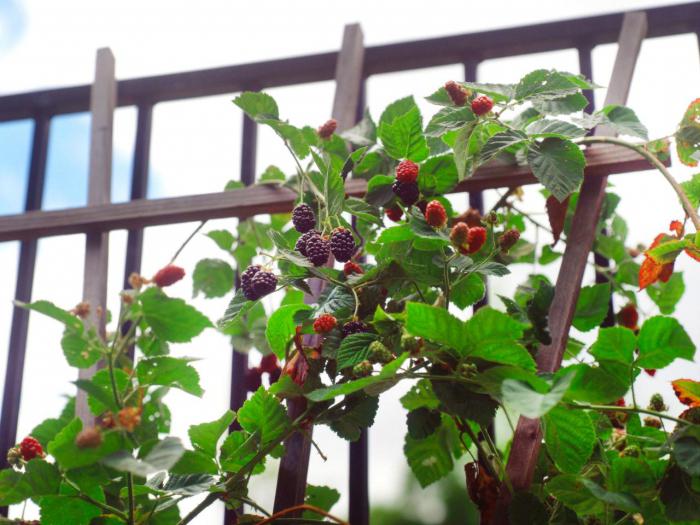
Thornfree blackberry branches, which tend to grow vigorously, are pinched back at the growth stage when they reach a length of 20–30 cm. To give the bush a neater appearance, some shoots can be secured to a trellis.
Forming a bush is a very problematic process, since the thick and elastic stems do not want to take on an “artificial” shape.
Preparing for winter
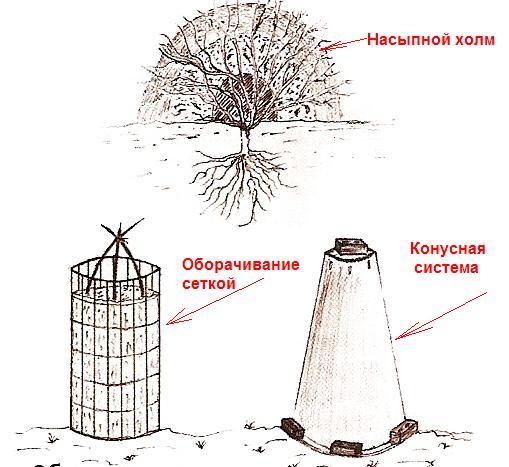
The resilient and powerful shoots of the Thornfree blackberry do not bend easily to the ground, so the bush is protected upright. A wooden frame and dense agrofibre are used as a protective cover.
To insulate the plant, you can use dry fallen leaves and pine branches, which you fill with a covering frame.
Protection from diseases and pests
Thornfree has strong immunity to most fungal, viral, and bacterial infections. If agricultural practices are not followed, the plant may be susceptible to gray mold. Fungicides such as Fundazol, Bayleton, and Strobi are used to treat this fruit crop.
The variety is resistant to pest infestations. To prevent pests, periodically spray the shrub with a 3% solution of Bordeaux mixture or copper sulfate.
Reviews from summer residents
"I've been growing Thornfree blackberries for many years. Among the variety's positive traits are its disease resistance and high yield. The problem is figuring out when to pick the berries."
"Unfortunately, the Thornfree blackberry planted in the spring didn't even survive its first winter. Despite the variety's description, this crop is not suitable for cultivation in our latitudes."
Thornfree blackberries are suitable for growing in regions with warm and mild climates. Cultivation in central and northern regions requires more time and attention from gardeners.