
How to plant and grow early, productive Natchez blackberries in your garden
Content
- 1 History and description of berry crops
- 2 Characteristics of Natchez Blackberries
- 3 Advantages and disadvantages of the variety
- 4 Video "Description of the Natchez Blackberry"
- 5 Agricultural techniques for growing Natchez blackberries
- 6 Methods of control and prevention of diseases and pests
- 7 Reviews from gardeners
History and description of berry crops
The history of the Natchez blackberry variety, named after the Natchez Indian tribe, began in 1998. A group of American breeders, led by Clark, crossed two hybrid forms—Ark. 1857 and Ark. 2005. Experimental work was conducted at the breeding facility of the Arkansas Institute. The first seedling harvest occurred in 2001. The breeding experiment continued with selected promising specimens. It was only in 2007 that the selected specimen, Ark. 2241, was patented and given the name Natchez.
Botanical portrait
The Natchez blackberry is a vigorous, semi-prostrate shrub. During the first year, the branches grow vertically, later becoming arched and horizontal. The branches are slender, with numerous side shoots, and range in length from 4 to 7 m.
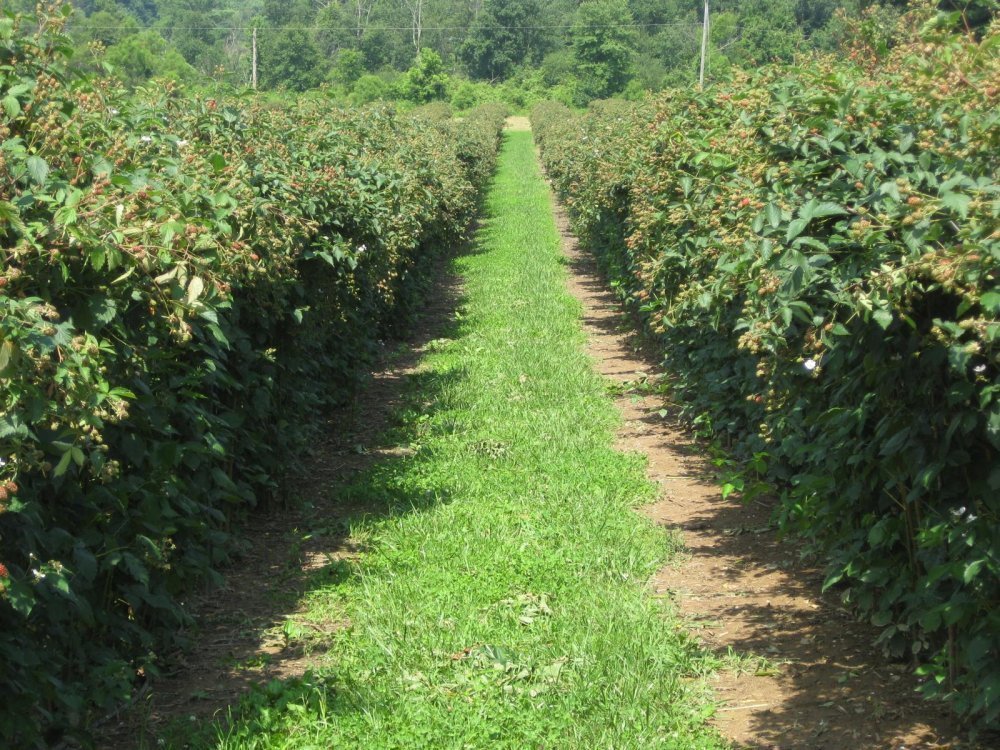
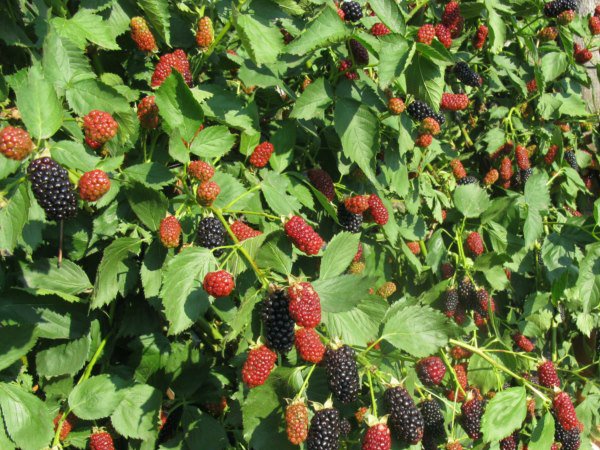
This spreading shrub has a robust and well-branched root system. This variety is characterized by light green leaves with a double outer surface. The leaflets are obovate in shape with serrated edges.
Description and taste of berries
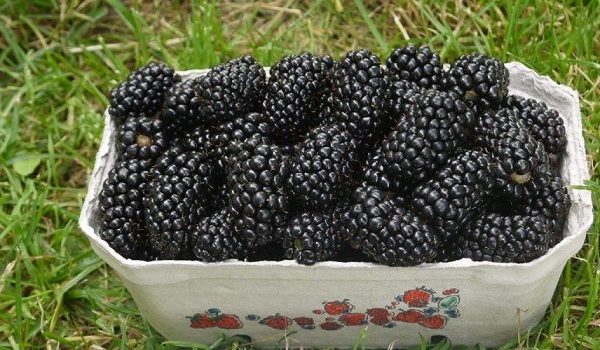
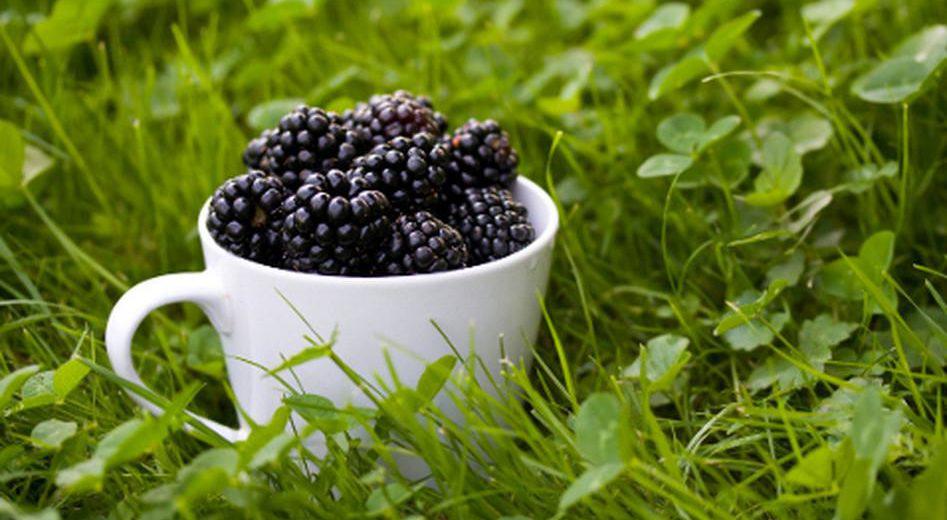
The berries of this variety are large, elongated-cylindrical, bluish-black in color with a characteristic glossy sheen. The average berry length is 4 cm. Depending on the weather and care, the fruit weighs between 9 and 13 g.
Ten to thirty berries form on a fruiting branch. Despite being firmly attached to the stem, the fruit is dry and easy to pick. Natchez blackberries, once ripe for picking, have a delicately sweet flavor, with virtually no tartness.
Characteristics of Natchez Blackberries
A distinctive feature of this variety is the fruit's enlargement as the plant matures. A 5-6-year-old bush produces berries weighing over 18-20 g.
Flowering and fruit ripening
The Natchez hybrid is often considered the earliest of the early varieties. During the budding period, which occurs in the second ten days of May, the bush is densely covered with snow-white flowers with 5-6 petals.
Ripening times vary depending on the climate zone. In southern Russia, the first berries ripen by mid-June, while in central Russia and the Moscow region, they ripen around mid-July. The variety ripens over a long period, from 35 to 45 days.
Yield indicators, fruiting periods
A drawback of this variety is its poor formation of replacement shoots. To enhance fruiting, it is recommended to prune all young shoots during the fruiting season. The following season, there will be no fruit, but the plant will form a large number of new branches. A double wave of fruiting can be expected the following season.
The variety is highly productive. In favorable weather, a single mature bush can yield 15 to 20 kg of juicy berries.
Application of berries
Natchez is a dessert variety. The sweet berries are eaten fresh and used in baked goods. Unfortunately, this variety is not suitable for making single-fruit compotes or juices, as the flavor is too sweet. The berries can be used to make complex drinks and multi-ingredient jams.
Advantages and disadvantages of the variety
The main advantages and disadvantages of Natchez blackberries include the following varietal and quality characteristics.
- high decorative value of the shrub;
- absence of thorns;
- resistance to diseases and pests;
- early and long fruiting;
- high yield rates;
- taste qualities of fruits;
- attractive appearance of berries;
- high transportability;
- long shelf life.
- low frost resistance threshold;
- possibility of overloading shoots;
- fragility of branches;
- difficulties with winter shelter in a horizontal plane;
- high requirements for the growing site.
Video "Description of the Natchez Blackberry"
This video examines the main botanical and varietal characteristics of fruit and berry crops.
Agricultural techniques for growing Natchez blackberries
Natchez blackberries are not a undemanding fruit and berry crop when it comes to growing conditions and care. Failure to properly cultivate them can result in reduced fruit production.
Landing rules
It's best to plant seedlings in the spring, when warm, pleasant weather sets in. Late spring frosts in the ground are detrimental to young root shoots. Fall planting is only possible in regions with warm, mild winters. The actual planting process should be carried out a couple of weeks before the expected frost date.
Natchez loves full sun. Growing the shrub in shade or partial shade is unacceptable. In such conditions, the plant will refuse to bear fruit. When choosing a location, consider the presence of wind, drafts, and nearby crops.
As for soil, blackberries prefer loose, fertile loam with a slightly acidic reaction. The plant does not thrive in heavy or sandy soils. The optimal groundwater depth is no more than 1.5 meters.
As it turns out, the Natchez variety does not propagate well from root cuttings. Propagation by shoots is also not the best option, as this variety produces a small number of replacement shoots. For this reason, propagation by planting seedlings, layering, and pulving is recommended.
Planting diagram
Natchez blackberry planting follows a standard pattern. However, a drainage layer of at least 10–15 cm is essential. Lack of drainage is one of the common causes of fruit bush failure.
The second important aspect of planting is the layout. Since this variety tends to grow vigorously, a distance of 2–3 meters should be maintained between holes and rows. Closer planting will negatively impact fruiting and the marketability of the berries.
-
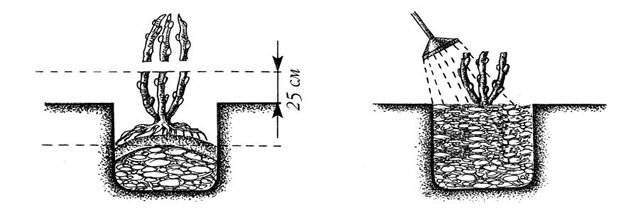
- Planting diagram
-
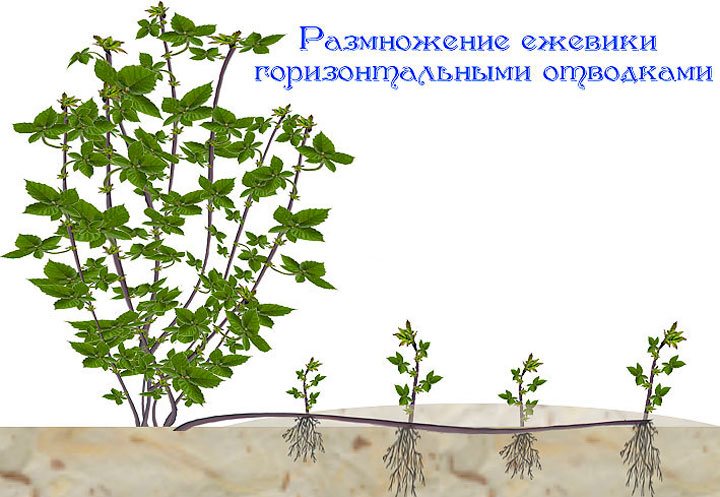
- Propagation by layering
-
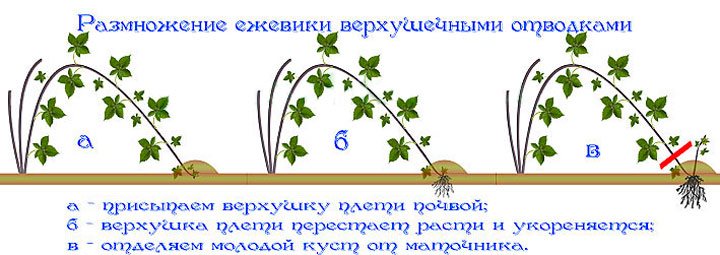
- Propagation by pulverization
Watering rates and fertilizing rules
Fruit bushes thrive on moisture. In spring, water the plant once every 7-10 days. During fruiting, reduce the interval between waterings to once every 3-4 days. The average amount of water needed for one bush is 20-30 liters.
In spring, blackberries are fed with calcium nitrate and other nitrogen-containing fertilizers. During flowering and fruiting, diluted mullein and mineral fertilizers high in potassium, phosphorus, and calcium can be used. In the fall, apply monopotassium phosphate to the soil.
Pruning shrubs
There are several options for pruning blackberries. Many gardeners prefer double pruning, the diagram and procedure for which can be seen in the photo below:
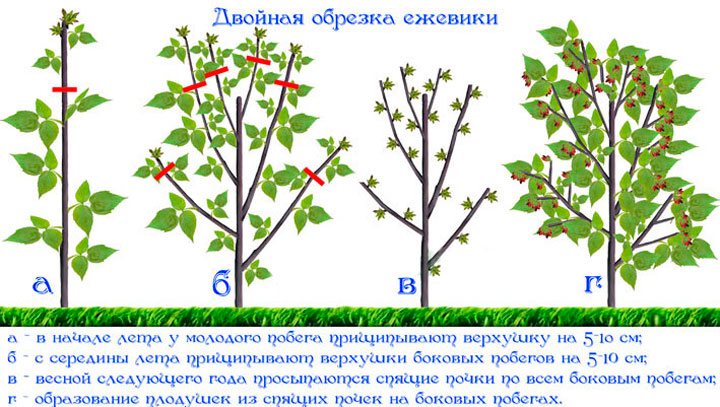
Throughout the growing season, sanitary pruning of the crown is carried out, removing dried and wind-damaged shoots.
Please note that fragile branches can break under the weight of the berries. Timely tying of shoots to supports and trellises will help prevent crop loss.
Preparing for winter
Preparing fruit and berry bushes for winter begins in early autumn, when the shoots, not yet fully ripe, can be secured. The branches are carefully gathered into bundles and bent toward the ground. If preparation for the coming cold weather begins later, the vines can be secured in an upright position.
The collected branches are sprinkled with dry fallen leaves and pine branches. The plant is then covered with agrofibre or burlap.
Methods of control and prevention of diseases and pests
The Natchez variety is unique in its high resistance to diseases and pests. Infestation is only possible with significant violations of agricultural practices. To prevent diseases and insect infestations, periodically spray the crop with a 1% solution of copper sulfate or Bordeaux mixture.
Reviews from gardeners
"I've been familiar with the Natchez blackberry for many years. The plant produces fruit vigorously and pleases with a bountiful harvest of delicious, sweet berries."
"For our region, the Natchez blackberry variety is the ideal solution. The warm, mild winter microclimate poses no threat to the fruit bush."
The Natchez blackberry is a controversial crop. It has high demands on its growing site and care. However, the increased yield and flavor of the berries outweigh the variety's minor shortcomings.